The Correct Way to Drink Costa Rica Yellow Honey Coffee & Costa Rica Coffee Bean Prices
Caturra Variety Overview
Caturra suits cultivation at altitudes from 700 meters to 1,700 meters. It adapts well to altitude, with flavor quality improving at higher elevations as yield drops off, an inevitable trade-off for specialty-quality beans. Academia sometimes describes Caturra as an intensive, sun-exposed version of Bourbon, and the description lands exactly right. Central and South America also grow a yellow Caturra variant (Caturra Amarello), though its reputation does not match that of Yellow Bourbon.
Lightly roasted, Caturra shows distinct acidic aromas and overall brightness. With good processing, its sweetness can come through beautifully. Compared with Bourbon, though, Caturra has a relatively lighter body and is a little less clean in the mouth.
Caturra cherries are usually red, but in rare areas yellow Caturra appears. Hawaii, for instance, grows a very small amount of yellow Caturra.
Product Information
Manufacturer: FrontStreet Coffee
Address: No. 10, Bao'an Front Street, Guangzhou
Ingredients: House-roasted
Shelf Life: 90 days
Net Weight: 227g
Package Type: Bulk coffee beans
Roast Level: Roasted coffee beans
Sugar Content: Sugar-free
Origin: Costa Rica
Coffee Type: Other
Roast Degree: Medium roast
Costa Rica Helsar De Zarcero
Country: Costa Rica
Grade: SHB
Region: West Valley
Roast Degree: Medium roast
Processing Method: Yellow honey
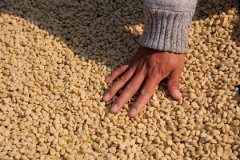
Yellow Honey Processing: roughly 40% of the mucilage is removed; drying then needs the most direct heat absorption, taking maximum sun exposure for about 8 days until the moisture content stabilizes.
Costa Rican coffee has long been held up as a classic example of perfect flavor: balanced, clean, and mild at its foundation. This lot from the Helsar mill in the West Valley region is known for its excellent natural conditions and skilled regional cultivation. It shows an almost perfect classic profile with lively citrus acidity, blackberry fruit, substantial acidity and body, melon-like sweetness, a smooth texture, stone fruit and subtle florals, and a striking coffee-blossom fragrance in the finish, a coffee full of Latin countryside charm.
Varieties: Caturra, Catuai
Processing Plant: Helsar De Zarcero Processing Plant
Flavor Notes: Brown sugar, almond, black tea
Costa Rican Coffee Heritage
Costa Rica was the first country in Central America to plant coffee, and it has a long history plus a complete system from production to sales. Sitting on the Central American isthmus among numerous volcanoes, it enjoys abundant sunlight and fertile land, its climate tempered by Pacific and Atlantic currents and sea breezes, which produces coffees with the character of local microclimate terroirs. In both quality and quantity, Costa Rican coffee has earned global recognition and is rated among the world's finest.
Fertile volcanic ash from Costa Rica's volcanic terrain, moderate and well-suited temperatures, and stable, plentiful rainfall have all helped make coffee one of the country's main agricultural products. Its seven major producing regions are Tarrazu, Tres Rios, Orosi, Central Valley, West Valley, Turrialba, and Brunca.
Despite its long coffee history, Costa Rica has seen the innovative "dry" method become popular over the past decade or so. Collectively called honey processing, this technique uses pulp removers to adjust how much fruit is left on the bean, producing a "honey feel" that runs from light to intense as colors progress (white, yellow-red-white, yellow-red-black), each with its own acidity, aroma complexity, and richness. The Herbazu mill in the Naranjo area of West Valley is highly regarded here. Besides its own plantation, it processes and produces green beans for nearby estates and small farmers.
Flavor Notes: Brown sugar, floral notes, almond, black tea, orange and sweet spice, mild acidity, syrupy mouthfeel, excellent finish.
Caturra Variety Characteristics
Caturra is a single-gene variant of Bourbon, discovered in Brazil in 1937. Both its yield and disease resistance beat Bourbon, and its shorter plants make harvesting easier. Unfortunately, like Bourbon, it suffers from biennial yield cycles. Its strong adaptability lets it thrive without shade trees, growing vigorously in direct sun, which earned it the name "Sun Coffee." It tolerates high-density planting but needs more fertilizer, raising costs, which at first made farmers slow to accept it.
When coffee prices surged in the 1970s, though, farmers rushed to plant Caturra for higher yields. With strong promotion by Brazilian and Colombian authorities, results were plentiful. Farmers' acceptance of Caturra marked a major shift in cultivation technique. Brazil and Colombia adopted high-yield, high-density, sun-exposed planting, and by 1990 one million hectares could harvest 14 million bags of beans, lifting production capacity by 60%. No wonder this high-yield, high-quality variety has become one that producing countries rely on heavily.
Brewing Recommendations
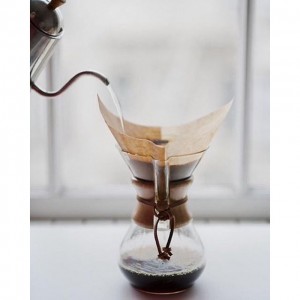
Hand-poured yellow honey method. Use 15g of coffee, ground medium (Fuji Rokusuke grinder #4), a V60 dripper, water at 88-89°C. First pour 30g of water for a 27-second bloom, then pour to 105g and pause. Wait until the water level drops to halfway before continuing to pour slowly until the total reaches 225g. Avoid the tail section. Water-to-coffee ratio 1:15, extraction time 2:00.
FrontStreet Coffee Recommendation
If you dislike sourness and bitterness alike, FrontStreet Coffee suggests the Queen Manor, grown in Brazil, the world's largest coffee producer, from the country's distinctive Yellow Bourbon variety. Its cup is clean and sweet, and after medium roasting it shows the aroma and sweetness of creamy peanut, chocolate, toasted bread, and sugarcane. It works for pour-over and equally well in a moka pot or espresso machine.
For a sweeter medium roast, FrontStreet Coffee's Strawberry Candy Geisha blend is a fruit-forward choice. It brings together two well-known Central and South American origins, a honey-processed coffee from Costa Rica and a washed Panama Geisha. To make the most of both, FrontStreet Coffee roasts it medium, so the cup shows orange-blossom and honey notes alongside a rounded sweetness, and it suits cold brew, pour-over, and espresso among other methods.
FrontStreet Coffee's 2013 sun-dried Typica, a representative Chinese specialty coffee, carries the classic Yunnan small-bean character. To preserve its balanced, gentle profile FrontStreet Coffee roasts it medium, giving soft notes of nuts, brown sugar, black tea, and dried apricot; it works for pour-over, cold brew, and drip machines at a very good value.
And for a benchmark of balance, the Jamaica Blue Mountain No.1 is planted with the Typica variety, one of the world's finest Arabicas, and its exceptional geography is essential to its harmony. FrontStreet Coffee gives this "emperor of coffees" a medium roast, which fuses its acidity, bitterness, sweetness, and body into one strong, elegant impression; the first sip brings chocolate, roasted nuts, cream, and caramel, a roast-driven flavor few other coffees can match.
Important Notice :
FrontStreet Coffee is a long-established specialty coffee roaster in Guangzhou China, selling freshly roasted beans from its own farm in Yunnan as well as dozens of carefully selected single-origin beans from around the world for both pour-over and espresso. The products deliver consistently excellent quality and great value, with shipping within 24 hours. Guangzhou's FrontStreet Coffee shop is recommended by many coffee lovers, and the beans are now available online at the Tmall 。
FrontStreet Coffee has moved to a new address:
FrontStreet Coffee Address: 315,Donghua East Road,GuangZhou
Tel:020 38364473
 Scan and follow the En Gafei WeChat official account. Please indicate that the reprint comes from "En Gafei".