What Does Sidamo G2 Taste Like? How to Brew Sidamo Coffee?

People often praise African coffee, but FrontStreet Coffee believes it is loved not only for its fine quality and diverse varieties, but also for its exceptional value. That is especially true of the celebrated Sidamo coffee.
Unlike most African coffees, FrontStreet Coffee's Sidamo has clear fruit acidity, a smooth mouthfeel, and delicate floral and herbal aromas. The entry is gentle and pleasant, building to a strong sensory impact with the bright lemon acidity that follows. The mouthfeel is uniquely rich and full-bodied, with a distinctive, pleasing sweetness in the aftertaste. The slowly rising finish holds a hint of sweetness that keeps you coming back for more. Below, FrontStreet Coffee lays out Sidamo's strengths from several angles and explores what makes it so exceptional.
Coffee: The Core of Ethiopian Culture
Ethiopia is the birthplace of Arabica coffee. Wild coffee trees can be found in the forests of Ethiopia's Kaffa region. In the Ethiopian language, coffee is called "Bun" or "Buna," and "coffee bean" most likely derives from "Kaffa Bun." The term is commonly considered an Anglicization of "Kaffa bunn," and the English word "coffee" traces back to the Ethiopian place name "Kaffa."

As the most extensive forest area in Ethiopia, the primary forest of the Kaffa Biosphere Reserve is recognized worldwide as the birthplace of coffee and the genetic treasure trove of the Arabica we know today. The "Gesha" in the Geisha origin story is one of the regions of Kaffa, in its western part. Here, countless ancient coffee trees form an essential part of the ecosystem, growing beneath dense, tall shade trees. There are no artificially cultivated crops, only wild plants that have sprouted and spread naturally from fallen seeds. FrontStreet Coffee's Kaffa Forest is washed processed, pouring bright and clean fruit acidity. The entry reveals a distinct sunflower-seed aroma and citrus-like sweet-tart notes reminiscent of orange peel, with incredibly rich flavors.

Back to the main topic. Ethiopia is the world's sixth-largest coffee producer. Reports indicate that in 2018, one hundred million people worldwide were directly or indirectly employed in the coffee industry, and Ethiopian coffee workers accounted for 20% of that number. In 2017 the country produced approximately 470,000 tons of green coffee beans and exported about 160,000 tons. In other words, less than half of Ethiopia's coffee is exported; the rest is consumed at home.
Coffee has been woven into Ethiopia's social fabric for centuries. A common phrase in local social life is "buna tetu," meaning "let's drink coffee." One of the country's most famous proverbs is "buna dabo naw," which means "coffee is our bread."

Coffee cultivation in Ethiopia is concentrated in the western and southern regions, and more than half of it follows smallholder patterns, also known as garden coffee. This is Ethiopia's main production method. Nearly 1.2 million local families depend on coffee cultivation for their livelihood, with each household's growing area no smaller than 4 hectares. Garden coffee means farmers manage coffee trees mixed with other crops in their backyards, typically planted alongside banana trees, creating distinctive green landscapes in front of and behind every home.
Because smallholder coffee volumes are small, there are all kinds of farmers' cooperatives and processing plants of varying sizes locally, mainly responsible for processing green beans in their own areas. Each harvest season, farmers pack the fruit from their coffee trees and send it to nearby water-based processing plants (the cooperatives) for unified processing, and the coffee is then sold under the plant's name. The Gedeb Cooperative beans on FrontStreet Coffee's menu, for example, are collected from coffee fruit grown in Yirgacheffe town, sent there for unified washed processing, and finally produced and sold worldwide under the cooperative's name.

Sidamo Growing Region
Because Ethiopia's topography and altitude vary so greatly, and because it holds so many varieties and unclassified native species, its growing regions differ widely. The cupping profiles of coffee from each region, micro-region, or even farm are quite different as well. That is why coffee buyers base their purchasing decisions on region, altitude, and cupping score rather than on variety when they assess Ethiopian coffee.

The Sidamo growing region sits at altitudes of 1,400-2,200 meters and is a famous specialty coffee area in southern Ethiopia, bordering Kenya. Washed Sidamo beans are light green, small to medium-sized, and oval, with a full-bodied fruit character. Quality is consistently good, with aromatic, rich flavors and an endless aftertaste that shows a wild beauty. Sidamo beans are defined by their extremely diverse flavors: different soil types, microclimates, and countless native varieties create significant differences among the coffees of different towns.
Coffee from the Sidamo region scored 92-94 on Coffee Review (CR), the reputable American coffee evaluation site, for three consecutive years from 2010-2012, a sign of the exceptional quality of the green beans from this area. The region has towering mountains, highlands, plateaus, valleys, and plains, a diverse landscape. Its geology is fertile, well-drained volcanic soil reaching nearly two meters deep, with topsoil that appears dark brown or brown. Its greatest advantage lies in maintaining soil fertility through the cycling of organic matter, using fallen leaves from surrounding trees or plant residue as fertilizer.
Ethiopian Coffee Cultivation
Ethiopian coffee is generally grown with environmentally sustainable methods, mostly as "garden coffee," planted right beside farmers' houses and intercropped with other crops. Local "semi-forest coffee" is also common, a method that involves clearing weeds and shrubs from natural forest, adjusting the shade trees, and then introducing coffee seedlings. It is estimated that only 5% of Ethiopia's coffee production comes from farms that specialize in growing coffee.
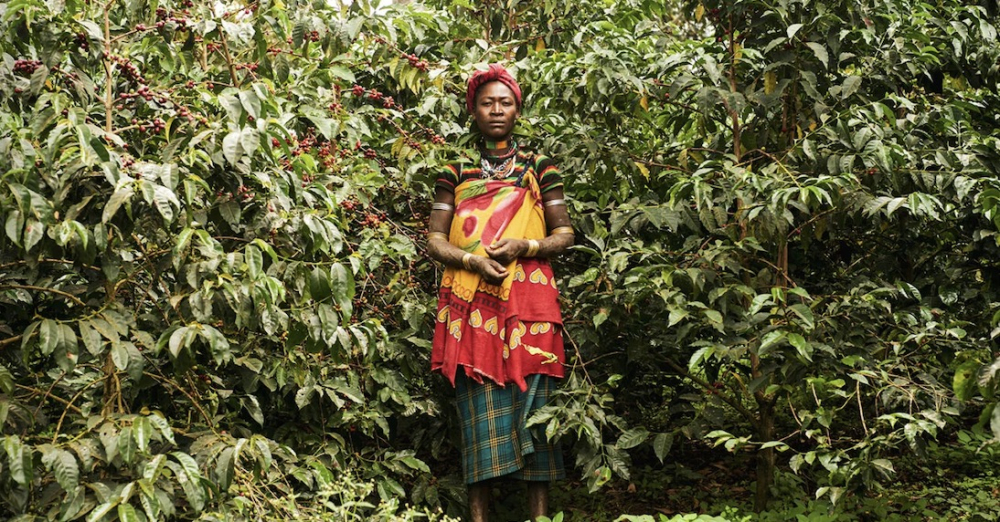
Ethiopia's coffee farmers fall into several categories: contract farmers, plantations, and smallholders. Smallholder groups are organized along cooperative principles, with voluntary participation open to all farmers.
Any smallholder willing to join a cooperative and able to take on shared responsibilities may do so, without discrimination based on gender, social status, ethnicity, disability, religion, or anything else. Cooperatives are democratic organizations run jointly by their members, who take an active part in making policy and decisions together. Every member has an equal vote.
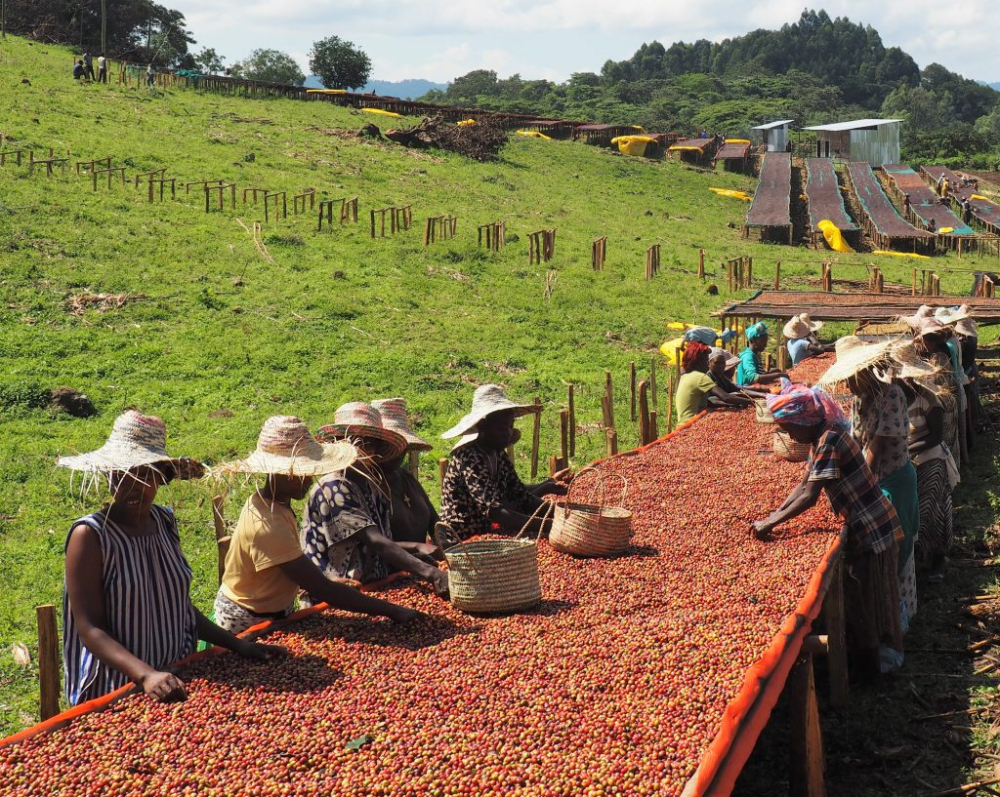
Coffee cooperatives support and encourage smallholders to adopt good agricultural practices, such as harvesting only ripe coffee fruit and using natural or washed processing. Where export capability exists, the profits from exported coffee can be distributed among cooperative members. Two or more primary cooperatives can form a union. In Ethiopia's coffee supply chain, unions support primary cooperatives with harvesting and processing and carry out secondary processing such as hulling, grading, packaging, and export, while sharing profits with their members. This is an effective grading system built on complete, consistent monitoring and strict international quality standards, which matters greatly to specialty coffee buyers.
Ethiopian Coffee Processing Methods
Both washed and natural coffees are common in Ethiopia. In natural processing, farmers spread coffee fruit on flat surfaces to dry in the sun. This usually takes two to six weeks, during which the fruit is turned and raked regularly to dry evenly. Once dry, the seeds are removed from the fruit.
Washed Ethiopian coffees show elegant aromas with floral notes, citrus flavors, and delicate finishes, along with a smooth mouthfeel, though flavor characteristics vary considerably by region.
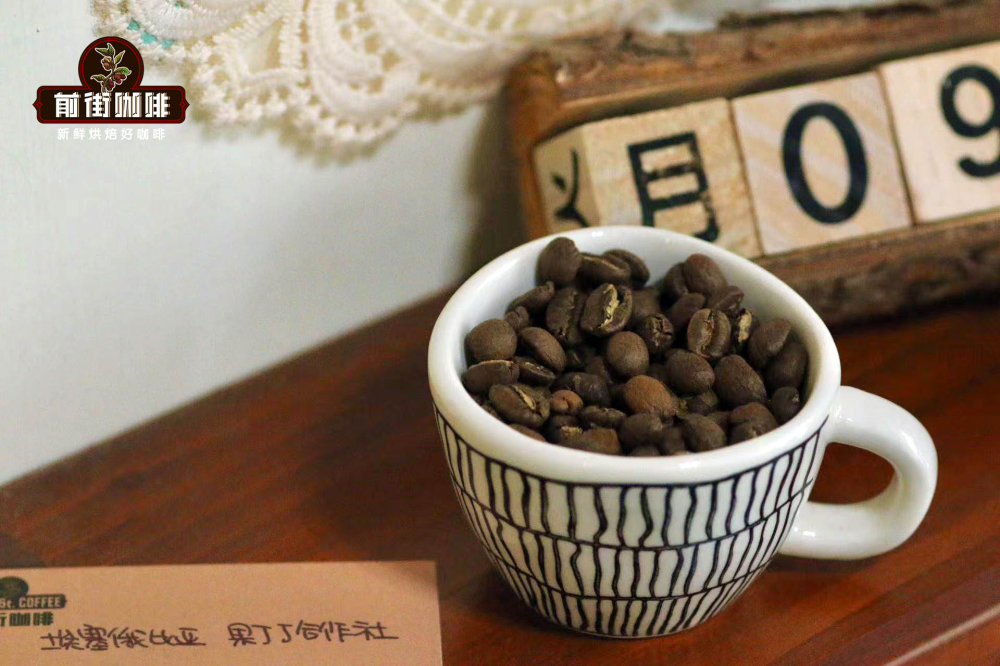
Natural coffees tend to have rich, rounded fruit flavors and deeper profiles. Compared with washed coffees of the same variety, high-quality naturals keep their clean citrus aromas and floral freshness while adding sweetness and body. When you find one of these characteristics, the others are usually not far behind. Ethiopia also now produces more honey-processed coffee, which I attribute to farmers being able to sell directly to market with good results.
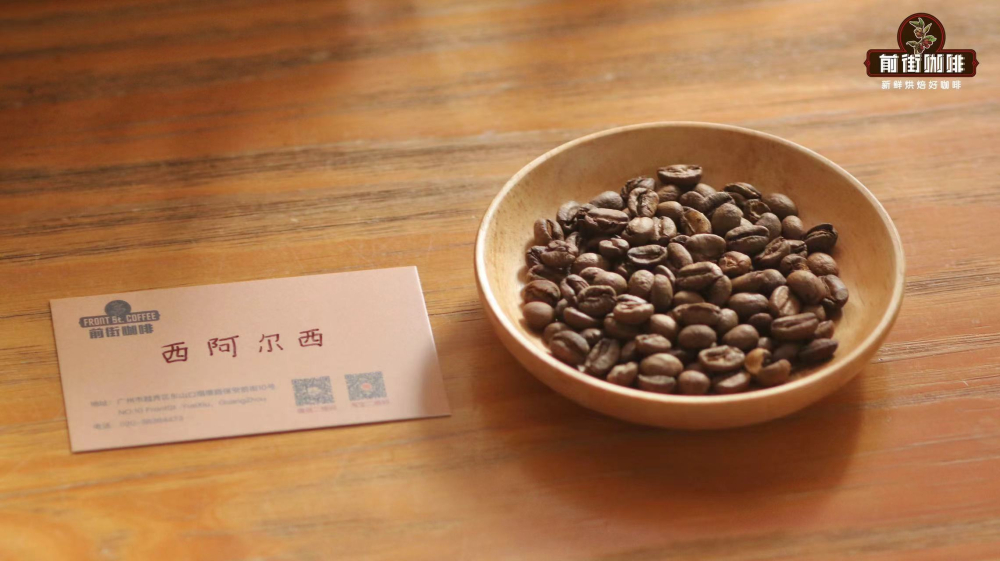
In the Sidamo region, the most famous coffee beans come from the Buku Abel processing plant in the Guji Hambela sub-region. In this article, FrontStreet Coffee uses Flower Queen beans as an example to walk through roasting, brewing, and sharing, so we can experience the charm of Sidamo coffee together.
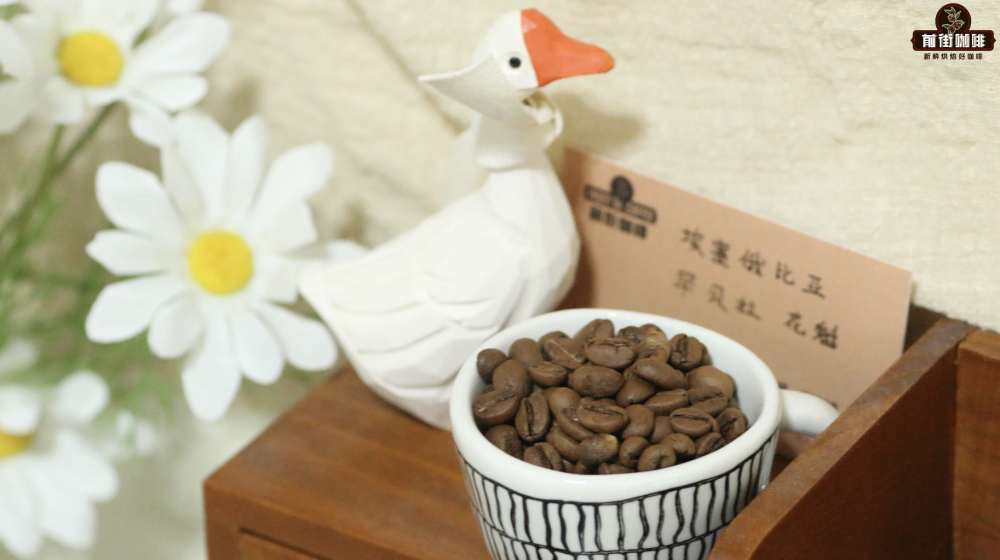
FrontStreet Coffee - Sidamo Flower Queen Coffee Beans
Country: Ethiopia
Region: Sidama
Processing Plant: Buku Abel
Altitude: 1750-2350 meters
Processing Method: Natural Process
Variety: Ethiopian Heirloom
In 2017, Ethiopia's DW green bean company sent its coffee to the TOH (Taste of Harvest) competition hosted by the African Fine Coffee Association. A natural-process lot from the "Buku Abel" processing plant took the Ethiopian TOH championship with its rich strawberry and cream aromas. That year the lot was imported by a Beijing green bean trader and named "Flower Queen" for its championship status.

DW later established additional processing plants in the Dimtu area of the Hambela core: "Buku Abel," "Buku Saysay," "Haro Soresa," and "Tirtiro Goye," with an annual coffee production of roughly 1,100 tons. In terms of growing region and processing plant, only coffee from the "Buku Abel" plant's processing area covers the original small producing area that yielded the natural-process "Flower Queen."
As Flower Queen grew in popularity, many differently priced "Flower Queens" appeared on the market. When buying, be sure to check four key pieces of information: "Sidamo region," "Buku Abel processing plant," "natural processing," and "Ethiopian heirloom variety." All four are essential. Authentic Flower Queen beans can be purchased at FrontStreet Coffee's flagship store and FrontStreet Coffee locations.
FrontStreet Coffee has noticed that natural-process Flower Queen green beans look greenish-yellow with inconsistent sizing overall, which is itself a trait of Ethiopian heirloom varieties. As the birthplace of coffee varieties, Ethiopia holds so many that it is like a natural gene bank for Arabica. On one hand the varieties are numerous and hard to classify; on the other, the Ethiopian government, out of conservation concerns, is unwilling to disclose variety information, so they are grouped together as Ethiopian heirloom varieties. Because of this complexity, mixed planting and mixed harvesting leave the beans of heirloom varieties inconsistent in size.

FrontStreet Coffee Roasting Suggestions
Roaster: Yangjia 800N.
Preheat to 200°C, set the air vent to 3, and heat to 160 with the vent unchanged. Turnaround comes at 1'32"; when the drum temperature reaches 140, adjust the air vent to 4, at which point the bean surface turns yellow, the grassy aroma disappears completely, and the batch enters the dehydration stage. When the drum reaches 168°C, adjust the heat to 140 and keep the vent unchanged.
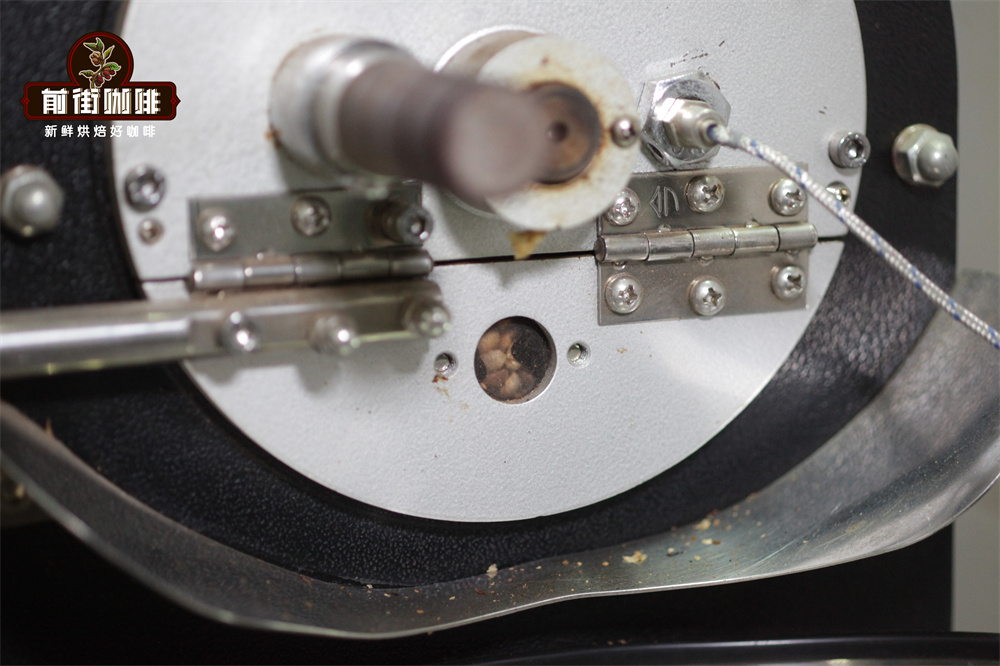
At 8'56", ugly wrinkles and black spots appear on the bean surface, and the toast aroma clearly shifts to coffee aroma, which marks the prelude to first crack. Listen carefully for the first crack sound. At 9'14", first crack begins: reduce the heat to 110 and adjust the air vent to 5. Develop for 1'45" after first crack, then unload at 196°C.
Brewing Methods for Flower Queen Coffee Beans
FrontStreet Coffee's Flower Queen beans suit the Clever Dripper, AeroPress, or V60 pour-over, though good results call for attention to parameters and technique.
Clever Dripper:
The Clever Dripper combines the strengths of the French press and pour-over: simple, convenient, and easy to use. It extracts by immersion and demands little technique. If you cannot yet manage a steady pour but dislike the fine sediment of a French press, the Clever Dripper is an easy-to-operate choice that balances flavor.

Its secret is a piston at the bottom that stays down (held up by four legs) when water is poured in. Under pressure it seals shut, and the piston firmly blocks the flow. Set on a container, the bottom piston is pushed up and the coffee flows out.
Preparation:
1. Fold the filter paper, place it in the Clever Dripper, and wet it with hot water to remove the paper taste.
2. 15g of coffee, medium-fine grind (80% passing a China-standard No. 20 sieve), water at 90°C, water-to-coffee ratio 1:15.

Set the Clever Dripper on the scale (the valve closes automatically) and pour the ground coffee into the center of the filter. First pour 30g of hot water, start the timer, and bloom for 30 seconds. After blooming, pour hot water to 225g and steep for 1'50". When the steep is done, set the Clever Dripper on a container and open the valve to drain. This takes about 15 seconds, for a total extraction time of 2'05".
AeroPress:
The AeroPress is both an ingenious piece of design and a practical product. It combines the immersion extraction of a French press, the paper filtration of pour-over, and the fast, pressurized extraction of espresso. Through pressurized extraction it achieves espresso's richness, pour-over's purity, and the French press's smoothness.

AeroPress Flavor Characteristics:
Clean, smooth mouthfeel: with suitable warm water and proper pressure, it brews coffee that is low in acidity, not bitter, yet full of flavor.
Rich flavors: complete immersion brewing maximizes and evenly extracts the coffee, fully preserving its flavors.
Medium body: perfect coffee in 2 minutes, with an actual press time of only 20-30 seconds, though the pressurized extraction during pressing enhances sweetness and smoothness.
Preparation:
1. Prepare 15g of coffee, medium grind (75% passing a China-standard No. 20 sieve), 89°C, water-to-coffee ratio 1:15, and preheat the AeroPress.
2. Standard AeroPress accessories: body (with rubber seal), funnel, filter holder, filter cap, filter paper, measuring spoon, stirrer, and scale.

Technique: Add the grounds, pour in 40g of water, and stir well (the chamber is narrow, so grounds can cling to the edges; pour in more water to make sure the corner grounds absorb water fully). After 30 seconds, pour water to 200g and stir again to help the grounds keep degassing. At around 1:30, flip and press. Pressing takes about 30 seconds. If the taste is too strong, dilute with 27g of water.
V60 Pour-over Brewing:
The V60 has many ribs for faster drainage, and when the flow stops it extends the extraction time. Use three-stage brewing to separate the front, middle, and back of the flavor profile.
Preparation: 15g of coffee, 90°C, water-to-coffee ratio 1:15, medium-fine grind (80% passing a China-standard No. 20 sieve).
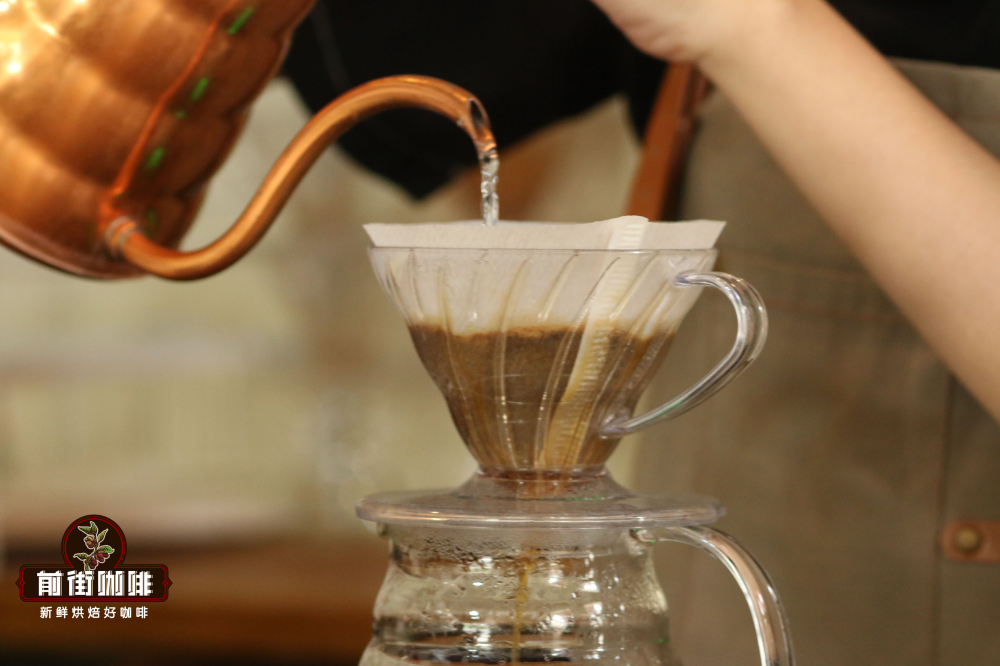
Use three-stage pouring: start the timer, first pour to 30g of water for a 30-second bloom; then begin the second stage with small circular pours to 125g, wait until the water level drops halfway before continuing, and keep pouring in small circles to 225g. Once dripping is complete, the total extraction time is about 2:00-2:10.
There are many brewing methods, but not every one suits Flower Queen beans. Different equipment and different grind sizes exist to bring out particular flavors and mouthfeel, so feel free to experiment.

FrontStreet Coffee advocates a conservative approach to brewing: precise grind, precise temperature, precise weight, and full extraction within a precise time, so that coffee flavors can be presented on a solid foundation. Flower Queen that is fully and appropriately extracted in the right window will express berry and tropical-fruit aromas, a sweet-tart, juicy mouthfeel, and an oolong tea-like aftertaste, with very pleasant acidity.
FrontStreet Coffee Recommendation
This article traced Sidamo back to Ethiopia, the birthplace of coffee, and to the Kaffa forests where the "Gesha" region sits. If that history has you curious about Geisha itself, start with an entry-level bottle from Ethiopia: the FrontStreet Grana Gesha is grown at the Grana Gesha farm on the border of Ethiopia's Kochere and Grana Abaya areas, at a processing station founded in 2014 and surrounded by up to 700 hectares of largely uncultivated, fertile, well-shaded land. The cherries are hand-picked at full ripeness and dried off the ground on raised beds for 14-20 days depending on the weather. Medium-light roasted, it pours bright citrus acidity, an elegant ginger-lily aroma, the full sweetness of ripe fruit, and a silky, delicate body with the refined finish that marks the Geisha variety.
For a step up, look to Gesha Village in Ethiopia, which grows three Geisha varieties: Gori Gesha, Gesha 1931, and Illubabor Forest. The FrontStreet Gesha Village Gold Label is the Gesha 1931 variety, about 10% of the village's total production and its top coffee outside of auction, often chosen by competition baristas. Given a refined natural process, it shows complex, layered flavor, and whether you judge it by the dry aroma or by the slurp, the mouthfeel and finish linger beautifully.
The FrontStreet Gesha Village Red Label, meanwhile, is the Gori Gesha variety, about 15% of production, scoring 88 or above on the SCA 100-point scale. It is the estate's single-terroir series, so every lot carries fully traceable information including the farm block name, the coffee variety, and the processing date.
Important Notice :
FrontStreet Coffee is a long-established specialty coffee roaster in Guangzhou China, selling freshly roasted beans from its own farm in Yunnan as well as dozens of carefully selected single-origin beans from around the world for both pour-over and espresso. The products deliver consistently excellent quality and great value, with shipping within 24 hours. Guangzhou's FrontStreet Coffee shop is recommended by many coffee lovers, and the beans are now available online at the Tmall 。
FrontStreet Coffee has moved to a new address:
FrontStreet Coffee Address: 315,Donghua East Road,GuangZhou
Tel:020 38364473
 Scan and follow the En Gafei WeChat official account. Please indicate that the reprint comes from "En Gafei".