What Does Kenya PB Taste Like & How to Brew Kenyan Coffee

For professional barista exchanges, follow FrontStreet Coffee's official channel.
Kenya: The Cradle of Exceptional Coffee
Located in East Africa, Kenya is one of the world's major coffee-producing countries, with roughly 6 million people engaged in the coffee industry, mostly as smallholders and cooperatives. Kenya's coffee trees grow predominantly at altitudes of 1400 to 2000 meters, in regions including Ruiri, Thika, Kirinyaga, Mt. Kenya West, Nyeri, Kiambu, and Muranga, mainly on the foothills of the Mt. Kenya and Aberdare ranges. In Kenya, many production areas strive to preserve native forest ecosystems, protecting natural gene banks, supporting the spread of wild coffee varieties, and nurturing diverse coffee trees.
Regional Profile
This green coffee comes from the Gaturiri processing station in Nyeri, produced by surrounding family farms. On a 0.5-acre (approximately 2023 square meters) plot, about 250 coffee trees are cultivated. Nyeri has historically been a classic coffee-producing region in Kenya, benefiting from the favorable environment of Mount Kenya, which provides ideal conditions for coffee. The majority of Kenyan coffee comes from smallholders (about 65%), with large farms accounting for about 35%.
Flavor Profile
This coffee shows classic Kenyan characteristics: rich and full-bodied, with high body and notes of caramel, blackcurrant, and apple. The clean, lingering aftertaste is filled with tropical fruit and fresh citrus aromas. The sweet, fresh taste is reminiscent of mango and plum preserves in the mouth. At medium to low temperatures it releases a refreshing lime aroma, like drinking iced fruit tea, and it carries a very distinctive cherry tomato flavor, full of the passionate, bold character of African beans.
Understanding Peaberry
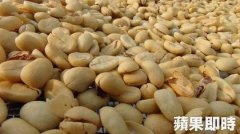
Now let me introduce PB, whose full name is Peaberry, commonly called round bean. Typically, a coffee cherry contains two seeds, the familiar coffee beans with one side curved and the other flat, similar to a peanut shape; we call these flat beans. Peaberries occur when only one bean develops inside a cherry, resulting in an oval shape, and they account for a very small proportion of the tree's total fruit. Peaberries are hand-selected one by one, which ensures overall quality, so it is no surprise that they taste excellent.
Brewing Instructions
Pour-over Kenyan coffee: 15g of coffee ground to a medium-fine consistency (ghost-tooth grinder at setting 3.5), V60 dripper, water temperature 91-93°C. First pour 30g of water for a 27-second bloom, then pour to 105g and pause. Wait until the water level drops to half before continuing to pour. Slowly pour until reaching 225g total. Avoid the tail end. Water-to-coffee ratio 1:15, extraction time 2:00.
Product Information
Manufacturer: FrontStreet Coffee
Shelf Life: 90 days
Net Weight: 227g
Packaging: Bulk coffee beans
Roast Level: Light roast
Sugar Content: Sugar-free
Origin: Kenya
Kenya Nyeri Gaturiri Peaberry
Country: Kenya
Grade: TOP PB
Region: Nyeri
Roast Level: Light roast
Processing Method: Washed
Varieties: SL 28, SL 34
Processing Station: Gaturiri Processing Station
Flavor Notes: Dark plum, green grapes, cherry tomatoes
Kenya Nyeri Thagrini Peaberry Farm Profile
In the early 20th century, French and British missionaries and researchers selected and cultivated these Bourbon-lineage varieties in Kenya. Over the past century they have adapted to Kenya's high-phosphate soil, nurturing the unique acidic aroma of Kenyan beans, distinct from Bourbon varieties in Central and South America. This Kenyan native variety was created in 1930 by Scott Laboratories, abbreviated SL. Agronomists sought a Bourbon variety resistant to disease and pests with high yields, and through experimentation they developed SL28. SL28 is a genetic variant with mixed heritage from French missionaries, Mocha, and Yemeni Typica. The original goal in cultivating SL28 was to mass-produce beans combining high quality with disease and pest resistance. Although SL28's yield later proved lower than expected, its copper-colored leaves and broad bean shape deliver wonderful sweetness, balance, and complex, variable flavors, with prominent citrus and dark plum characteristics. This important variety introduced the world to the unique Kenyan style: intense, rich fruit acidity, a full body, and beautiful balance. Kenya AA is among them.
SL28 is a delicious variety suited to medium and high altitudes where leaf rust is not severe. It can yield 1.8 tons of green beans per hectare. Only by experiencing its charming plum-like acidity can you truly appreciate Kenya's national treasure.
Understanding Kenya AA Grade
Many people know Kenya AA as the most common symbol of Kenyan coffee in the domestic market. In fact, AA is a grade of Kenyan coffee, with lower grades including AB and higher grades including AA+ and AA TOP. If a coffee is simply marked AA, it generally only indicates that it is AA-grade uniform beans, without specific farm or cooperative information, and the flavor may not be the best; it only shows that the bean shape meets the standard and looks good. If the label specifically names a farm, cooperative, or even a purchaser, however, then whether it is AA or AB grade, those beans are worth trying.
FrontStreet Coffee Recommendation
If Kenya's combination of bright acidity and deep sweetness is what you love, FrontStreet's sweeter-leaning coffees make excellent companions. FrontStreet Costa Rica Black Honey is a high-altitude single origin from Costa Rica, a country famous for honey processing. The fruit is floated to remove bad cherries and debris, then depulped with the mucilage left on and dried in the sun; because that mucilage is rich in sugar, it oxidizes and darkens as it dries. Black honey retains the most mucilage and ferments the deepest, giving the highest sweetness, and after a light-medium roast it shows sweet florals, grape, sweet orange, and liqueur chocolate. For a fruitier kind of sweetness, FrontStreet Finca La Frontera Sidra uses an anaerobic natural process that develops complex notes of grape, apricot, passion fruit, and fruit-candy sweetness, with weak bitterness and a wine-like finish; at a light-medium roast it is ideal for those who love intense fruit and dislike bitterness, and it makes a refreshing iced Americano that drinks like grape juice. FrontStreet Strawberry Candy Geisha Blend is another option, blending a honey-processed Costa Rican coffee with an Ethiopian one to give rose, strawberry marshmallow, and dried blueberry aromas, balanced grape and citrus acidity, and an almond-sweet finish.
Brew any of these at a 1:15 ratio with water around 88-91°C; for the honey and natural lots, keep the pour gentle to preserve the sweetness and clean finish.
Important Notice :
FrontStreet Coffee is a long-established specialty coffee roaster in Guangzhou China, selling freshly roasted beans from its own farm in Yunnan as well as dozens of carefully selected single-origin beans from around the world for both pour-over and espresso. The products deliver consistently excellent quality and great value, with shipping within 24 hours. Guangzhou's FrontStreet Coffee shop is recommended by many coffee lovers, and the beans are now available online at the Tmall 。
FrontStreet Coffee has moved to a new address:
FrontStreet Coffee Address: 315,Donghua East Road,GuangZhou
Tel:020 38364473
 Scan and follow the En Gafei WeChat official account. Please indicate that the reprint comes from "En Gafei".