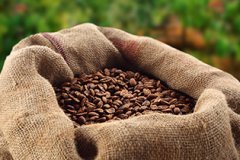
Jamaican Blue Mountain Coffee Flavor Profile: Types and Pricing
The Secret Behind Blue Mountain Coffee's Pure Flavor
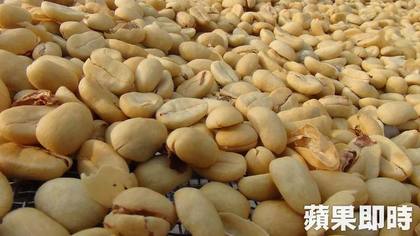
All the coffee trees grow on rugged mountain slopes, making harvesting extremely difficult; only skilled local female workers can handle the job. Selecting perfectly ripe cherries is crucial, since under-ripe or over-ripe fruit will compromise quality. After harvest, the beans must be hulled the same day, then fermented for 12-18 hours, after which they are washed and sorted. Next comes drying on concrete floors or thick blankets until the moisture content falls to 12%-14%, and then the beans rest in specialized warehouses. When needed, they are taken out, roasted, and ground. Every one of these steps must be strictly controlled, or the coffee's quality will suffer.
Product Specifications
Variety: Typica
Processing Plant: Abbey Green Farm
Flavor: Perfect balance of sweet, acidic, and bitter notes
How to Identify Authentic Blue Mountain Coffee
1. Appearance
Raw Blue Mountain beans are blue-green in color, very uniform, medium to small in size, with slightly upturned ends. After roasting they expand significantly and look full.
2. Grinding
True Blue Mountain beans grow at high altitudes, which gives them a relatively loose cell structure. Ground by hand, they feel crisp, smooth, and consistent, with no sense of resistance.
3. Aroma
The aroma is very rich and dense; so-called Blue Mountain blends lack this characteristic fragrance.
4. Taste
True Blue Mountain coffee has a balanced yet rich flavor, with no single taste too prominent or too faint, which is the most crucial identification point that no other bean can match. Blue Mountain peaberry has a more subtle aroma but a relatively stronger taste.
5. Sensation
As the world's most celebrated coffee, Blue Mountain's classic balance inevitably brings a subtle, hard-to-describe satisfaction with every sip.
Pour-Over Jamaica Blue Mountain
Use 15g of coffee at a medium grind (small Fuji ghost-tooth burr at #4) in a V60 dripper with water at 88-89°C. First pour 30g of water and bloom for 27 seconds. Pour to 105g and stop. Once the level drops to halfway, pour slowly up to 225g, avoiding the tail section. Coffee-to-water ratio 1:15, extraction time 2:00.
Product Information
FrontStreet Coffee offers this authentic imported Jamaica Blue Mountain as 100g of bulk roasted beans, medium roast, sugar-free, with a shelf life of 90 days.
About Blue Mountain Coffee
Blue Mountain coffee refers to coffee brewed from beans grown in Jamaica's Blue Mountains, graded into Jamaica Blue Mountain coffee and Jamaica High Mountain coffee. The Blue Mountains lie in eastern Jamaica, named for the days when direct sunlight on the azure Caribbean Sea makes the peaks reflect a brilliant blue glow. The range's highest point reaches 2,256 meters, the tallest peak in the Caribbean region. The area sits within the coffee belt, with fertile volcanic soil, unpolluted air, and a humid climate of year-round fog and rainfall (average precipitation of 1,980mm and temperatures around 27°C). These conditions created the world-renowned Jamaica Blue Mountain coffee, as well as the world's second most expensive coffee.
Flavor Profile
A rich and mellow taste with a perfect balance of coffee's sweet, acidic, and bitter elements: no harsh bitterness at all, only moderate, flawless acidity, and persistent fruit flavors.
History and Market
Jamaica Blue Mountain may be the most famous coffee in the world, yet few people know its history or why it commands such a price. In 1789, the first person to introduce coffee to Jamaica was a Frenchman fleeing the French Revolution. The first coffee grown was intended to supply local French consumption and for export, and the industry remained very small for its first 100 years. In 1932, however, legislation was passed in Jamaica to encourage coffee cultivation and reduce the island's dependence on sugar exports. To guarantee Blue Mountain quality, the "Jamaica Coffee Industry" regulations were amended to standardize processing, improve quality, equalize marketing, and rescue the fate of premium coffee. The Jamaica Industry Association took responsibility for the quality of Blue Mountain coffee, and it holds final authority over exports: all coffee must pass through the association to leave the island.
Blue Mountain shipments are minimal. In 1717, French King Louis XV ordered coffee cultivation in Jamaica, and in the mid-1720s the Jamaican Governor Sir Nicholas Lawes imported Arabica seeds from Martinique and began promoting cultivation in the St. Andrew region, which remains one of Jamaica's three major Blue Mountain producing areas today, alongside Portland and St. Thomas.
Because of Japan's continuous investment in Jamaica's coffee industry, most Blue Mountain coffee is now controlled by the Japanese, who have also obtained priority purchasing rights. In 1992, Jamaica sold 688 tons of Blue Mountain coffee to Japan, 75 tons to the United States, and 59 tons to the United Kingdom. Today, 90% of Blue Mountain coffee is purchased by the Japanese. With the rest of the world able to obtain only 10%, Blue Mountain is always in short supply regardless of price.
Coffee Bean Packaging
This is the coffee bean packaging of authentic imported Blue Mountain, complete with its export certification.
Jamaica BLUE MOUNT
Country: Jamaica
Altitude: 1,600 meters
Region: St. Thomas Parish
Roast Level: Medium roast
Processing Method: Washed
FrontStreet Coffee Recommendation
When buying Blue Mountain, authentication matters: genuine Jamaica Blue Mountain carries government-issued certificates and proof of origin, and traditional shipments travel in handcrafted wooden barrels of 15, 45, or 70 kg stamped with detailed batch information, itself a hallmark of the real thing. FrontStreet Coffee's Blue Mountain No.1, the highest grade, comes from the historic Clifton Estate, which has grown coffee since around 1750 on land averaging 4300 feet (1310.64 meters), where altitude, afternoon mists, and mineral-rich soil extend cherry maturation. Genuine beans are uniform and plump with slightly upturned ends and a green tint, and the cup is rich, dense, and impeccably clean with no off-flavors, a balance of sweetness, acidity, and bitterness no imitation can match.
FrontStreet Coffee roasts its Blue Mountain fresh within 5 days of shipping and medium-dark to highlight the mellow, bittersweet classic character. For pour-over, choose a Kono dripper to boost body, rest the beans 4-7 days from the roast date, grind slightly coarser than for light roasts, about white-sugar texture, and brew 15g with water at 87-88°C and a 1:15 ratio in three stages: 30g to bloom for 30 seconds, 120g to pause with a small vertical stream, then 225g to finish. With water temperature and grind under control, 1:15 best expresses the coffee's full character; and thanks to its superb balance, Blue Mountain also shines in a moka pot or even as espresso.
Important Notice :
FrontStreet Coffee is a long-established specialty coffee roaster in Guangzhou China, selling freshly roasted beans from its own farm in Yunnan as well as dozens of carefully selected single-origin beans from around the world for both pour-over and espresso. The products deliver consistently excellent quality and great value, with shipping within 24 hours. Guangzhou's FrontStreet Coffee shop is recommended by many coffee lovers, and the beans are now available online at the Tmall 。
FrontStreet Coffee has moved to a new address:
FrontStreet Coffee Address: 315,Donghua East Road,GuangZhou
Tel:020 38364473
 Scan and follow the En Gafei WeChat official account. Please indicate that the reprint comes from "En Gafei".