Panama Duncan Estate Pour-Over Data | How to Brew Panama Duncan Estate Coffee

Duncan Pour-Over Recipe
15g of coffee grounds at a medium grind (Fuji ghost tooth blade, #4), a V60 dripper and water at 88-89°C. First pour 30g of water and bloom for 27 seconds. Pour to 105g, then pause. When the water level drops to halfway, slowly pour to a total of 225g. Discard the tail end. Brew ratio 1:15, extraction time 2:00.
Roast Level
Medium roast
Duncan Estate
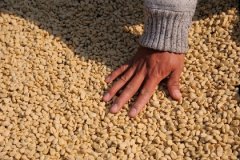
The Duncan estate uses distinctive "Premium Picking" and "Reserva Picking" methods. These lift the coffee to extremely high quality and flavor but significantly reduce the volume produced. Kotowa's "Premium Picking" focuses on harvesting cherries only when they turn a wine-red color (a deep, overripe shade), followed immediately by rapid post-harvest processing. The cost of achieving this flavor is enormous. The other method, "Reserva Picking," is also known as fully ripe picking, or quickly processed.
"Reserva Picking" does not judge by color alone. It also assesses sweetness and the quality of the pulp flavor, so besides being 100% fully red, the cherries must be 100% converted to fruit sweetness before picking, and they must taste velvety sweet at harvest.
Origin Information
Region: Boquete Special Region
Altitude: 1250-1700 meters
Set in the Baru Volcano region, the estate enjoys a unique microclimate and volcanic terrain. The growing season brings abundant rainfall with distinct wet and dry seasons. Combined with lava flows from the volcanic zone, the fertile volcanic black soil and excellent drainage provide exceptionally favorable growing conditions and produce coffee with a particularly captivating aroma. The altitude here exceeds 1700 meters with strong winds, and the estate contains numerous giant coniferous trees over 200 years old.
Kotowa places great importance on ecological conservation and avoids chemical fertilizers entirely. Instead, the estate uses cherry skins and pulp to create high-nutrient compost that feeds the coffee trees and gives back to the land. Kotowa Coffee was nominated by Panama's environmental agency as a winner of the National Environmental Protection Award in 2006, and this approach has also shaped the distinctive flavor of Duncan Estate coffee, producing excellent bean quality that consistently ranks at the top in the BOP.
Flavor Profile
Fruit wine, fermented fruit aroma, honey citrus, malt sweetness, sweet peach, distinct layers, fine texture, candied fruit
Product Information
Manufacturer: FrontStreet Coffee
Shelf life: 90 days
Net weight: 227g
Packaging: bulk coffee beans
Roast level: roasted coffee beans
Sugar content: sugar-free
Origin: Panama
Panama Duncan
Country: Panama
Grade: SHG
Processing: natural
Variety: Caturra
Estate: Duncan Estate
Flavor: fruit wine, fermented fruit aroma, honey citrus
Caturra Variety
Caturra is a single-gene mutation of Bourbon, discovered in Brazil in 1937. It offers better yield and disease resistance than Bourbon, with shorter trees that make harvesting easier. Like Bourbon, unfortunately, it suffers from biennial production cycles. Its strong adaptability lets it thrive without shade trees, flourishing in direct sunlight, which earned it the name "Sun Coffee." It tolerates high-density planting but needs more fertilizer, raising costs, so farmers were initially reluctant to adopt it.
When coffee prices soared in the 1970s, however, farmers switched to Caturra to raise yields. With strong promotion from Brazilian and Colombian authorities, the results were abundant. Farmers' acceptance of Caturra marked a major shift in cultivation technique, and Brazil and Colombia adopted high-yield, high-density sun cultivation. By 1990, one million hectares could harvest 14 million bags of coffee, a 60% gain in productivity. It is no wonder that high-yield, high-quality Caturra became a relied-upon variety in producing countries.
Caturra grows from low altitudes of 700 meters up to 1700 meters, showing strong altitude adaptability. The higher the altitude, the better the flavor, though the yield drops accordingly, which is the fate of specialty coffee. Academics describe Caturra as an intensive, sun-grown version of Bourbon, a remarkably accurate characterization. Central and South America also have a yellow Caturra variant (Caturra Amarello), but its reputation does not match that of Yellow Bourbon.
Light-roasted Caturra shows pronounced acidity and overall brightness. With good processing, its sweetness can be expressed very well, though the body is relatively light compared with Bourbon and the clean finish could be improved.
Caturra usually produces red berries, but in some rare regions a yellow Caturra exists; Hawaii, for example, grows very limited quantities.
FrontStreet Coffee Recommendation
Duncan's natural Caturra, with its wine and fermented-fruit depth, is one of the richer expressions of Panama, and it sits alongside a wider family of Panamanian coffees at FrontStreet Coffee. For a classic, approachable entry to the origin, FrontStreet Coffee Boquete Washed Geisha is planted at 1600 meters on fertile volcanic ash soil and brewed as a pour-over, showing jasmine, green tea, honey, citrus and orange, the orange-blossom and honey character that defines Boquete Geisha.
If you like the idea of a Panama coffee with Geisha character at a friendlier price, FrontStreet Coffee Flower Butterfly is a washed blend of Geisha, Caturra and Catuai grown in the Baru volcano area of Boquete, where ample rainfall, a large day-night temperature difference and volcanic rock soil build good body, citrus acidity and jasmine aroma; it works especially well as pour-over or cold brew. For those who want the top of the range, FrontStreet Coffee Esmeralda Red Label Geisha is harvested from a single plot above 1700 meters and must cup at 91 points for its refined orange-blossom and honey profile, while FrontStreet Coffee Diamond Mountain, drawn from the Jaramillo and Canas Verdes farms of the Esmeralda estate and built on Caturra and Catuai, brings generous fruit aroma and sweetness.
Natural Panama coffees like the Duncan pair especially well with the V60 recipe above. Use a medium grind, water at 88-89°C and a 1:15 ratio: bloom with 30g of water for about 27 seconds, pour to 105g and pause, then finish slowly to 225g once the bed has drained halfway, for a total of about 2:00. Aiming to leave the tail in the dripper keeps the fermented fruit notes clean instead of muddy.
Important Notice :
FrontStreet Coffee is a long-established specialty coffee roaster in Guangzhou China, selling freshly roasted beans from its own farm in Yunnan as well as dozens of carefully selected single-origin beans from around the world for both pour-over and espresso. The products deliver consistently excellent quality and great value, with shipping within 24 hours. Guangzhou's FrontStreet Coffee shop is recommended by many coffee lovers, and the beans are now available online at the Tmall 。
FrontStreet Coffee has moved to a new address:
FrontStreet Coffee Address: 315,Donghua East Road,GuangZhou
Tel:020 38364473
 Scan and follow the En Gafei WeChat official account. Please indicate that the reprint comes from "En Gafei".