Costa Rica Black Honey Pour Over Brewing Data & Methods How to Drink Costa Rica Black Honey Coffee
For professional barista exchanges, please follow Coffee Workshop (WeChat public account: cafe_style)
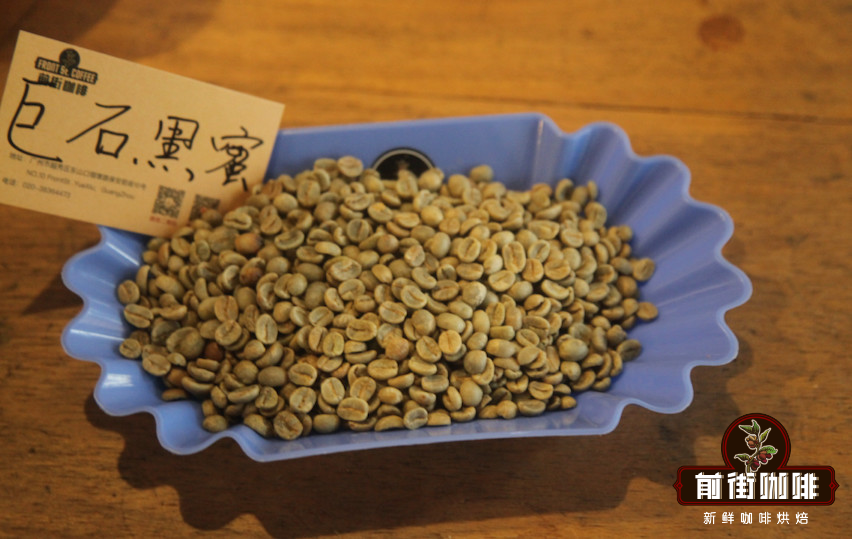
Black honey processing is the highest grade of honey processing in Costa Rica, and FrontStreet Coffee considers it the best of the honey styles in both flavor and mouthfeel. Black honey processing ferments the coffee beans while retaining all of the mucilage, and it demands strict manual supervision throughout the fermentation to succeed. Take FrontStreet Coffee's La Piedra Negra estate black honey as an example — this bean has been sold at FrontStreet Coffee for quite some time. This black-honey coffee carries a subtle fermented wine aroma, wine-like acidity, jackfruit-like tropical fruit notes and honey-like sweetness, making it a coffee of extremely diverse flavors and an extraordinary mouthfeel.
Costa Rica La Piedra Negra Estate
Country: Costa Rica
Estate: La Piedra Negra Estate
Grade: SHB
Processing Method: Black Honey Processing
Altitude: 1700-1800m
Varieties: Caturra, Catuai
Located on the Central American Isthmus, Costa Rica is regulated by Pacific and Atlantic ocean currents and sea winds. With many towering volcanoes reaching 2000 meters in altitude, coffee cherries can ripen slowly in fertile volcanic ash soil and a cool high-altitude environment, developing beans with complete, rich flavors. Costa Rica has two seasons: the dry season from December to April, which is the coffee harvest season, and the wet (rainy) season from May to November. In recent years many micro-mills have been established. Because they need only 5% of the water required by traditional washed processing plants and require neither large water tanks nor drying patios, the investment needed is far smaller. "Honey processed coffee," with its low acidity, improved complexity and rich sweet aroma, has become a competitive target for the coffee industry in recent years. Costa Rica began growing coffee as early as two hundred years ago, first planted on the slopes of the Poas and Barva volcanoes, in what is now called the Central Valley. Today Costa Rica has eight main producing regions: Western Valley, Central Valley, Tarrazu, Tres Rios, Orosi, Brunca, Turrialba and Guanacaste.
Estate Introduction
La Piedra Negra Estate is located in the Brunca region of southern Costa Rica. Because its mountainous terrain connects to Panama, it has diverse microclimates. Near the estate, indigenous stone carvings dating from 200 BC to 1500 AD have been unearthed, known as mysterious stone spheres, and this is why the estate was named "Piedra Negra" (Black Stone).
FrontStreet Coffee Green Bean Analysis
Varieties: Caturra and Catuai — these are relatively common varieties among American beans, especially in Central America.
Caturra: Caturra is a Bourbon variety discovered in Brazil in 1937. It has better yield and disease resistance than Bourbon, and its plants are shorter, making harvesting convenient. It is highly adaptable and does not require shade trees — it can thrive directly under intense sunlight, commonly known as "Sun Coffee." Caturra suits cultivation from low altitudes of 700 meters up to high altitudes of 1700 meters, showing strong altitude adaptability. The higher the altitude, the better the flavor, though yield decreases accordingly — this is the destiny of specialty beans.
Catuai: Catuai is also an Arabica hybrid, a cross between Mundo Novo and Caturra. It has better resistance to natural disasters, particularly wind and rain. It inherits Caturra's advantage of short plant height, offsetting Mundo Novo's weakness. Another advantage is its firm fruit set, which does not easily fall in strong winds, compensating for Arabica's fragile nature.
Processing Method
Honey processing, also called Honey Process or Miel Process — many people hearing the name assume it uses honey, or that the coffee will taste of honey after processing, but that is not the case. Honey processing removes the pulp and then dries the fruit with the parchment left on. During drying, the moisture in the gelatinous substance on the seed surface evaporates, leaving it sticky like honey, hence the name.
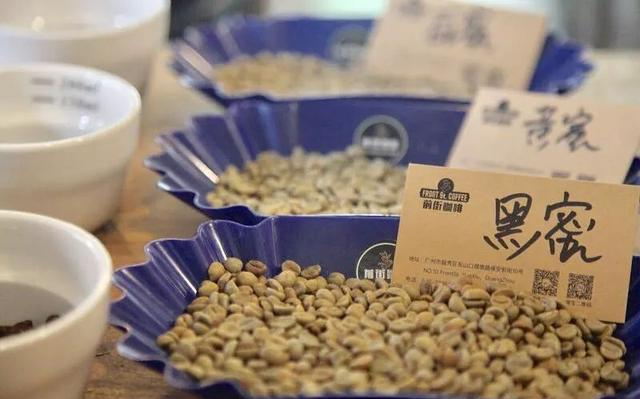
Yellow Honey: About 40% of the mucilage is removed; drying requires the most direct heat absorption and the maximum sunlight, taking about 8 days to reach a stable moisture content.
Red Honey: About 25% of the mucilage is removed; compared with yellow honey, drying takes longer and direct sun exposure is reduced, sometimes using shade nets, taking about 12 days.
Black Honey: Almost no mucilage is removed; drying takes the longest, at least 2 weeks, using coverings to limit sunlight so the beans do not dry too quickly and the sugar conversion can be more complete.
FrontStreet Coffee Roasting Analysis
Roaster: Yangjia 800N (Batch size: 500g)
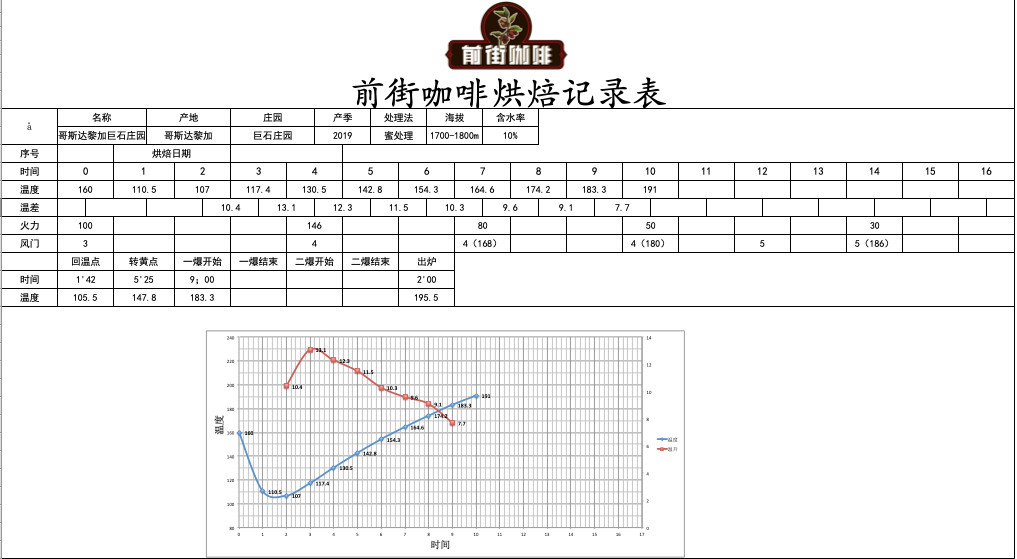
This bean belongs to the SHB (Strictly Hard Bean) category, with a hard bean texture and medium moisture content. The yellowing point comes at 5'25", entering first crack at 9 minutes. Development runs 2 minutes after first crack before discharge. The beans enter the drum at 160°C with heat power 100 and damper at setting 3; the return temperature comes at 1'42", and when the drum temperature reaches 146°C the damper opens to 4 with heat unchanged; when the drum temperature reaches 153.6°C the bean surface turns yellow, the grassy aroma disappears completely and the dehydration stage begins. When the drum temperature reaches 168°C, heat is adjusted to 80°C with the damper at 4; at 8'09" ugly wrinkles and black spots appear on the bean surface, and the toast aroma clearly transforms into coffee aroma, which can be defined as the prelude to first crack. At this point listen carefully for the sound of first crack. First crack starts at 9'00", the damper stays unchanged, and after 2 minutes of development the beans are discharged at 195.5°C.
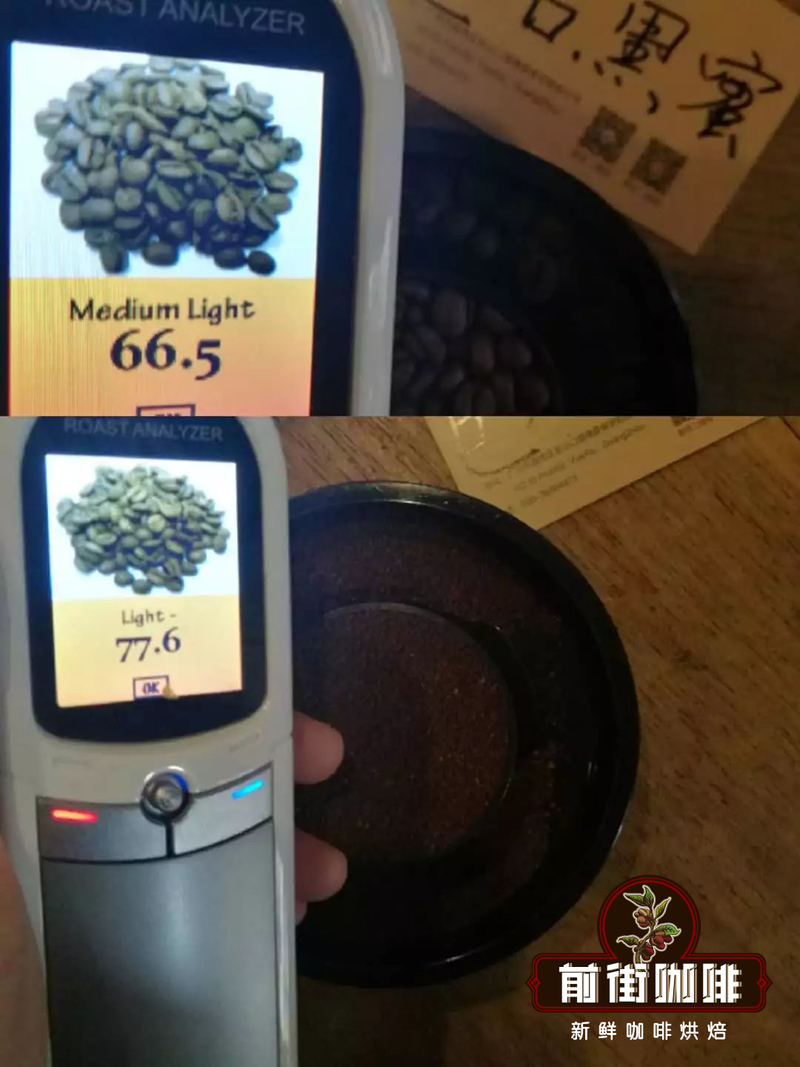
Agtron bean color value 66.5 (upper image), Agtron ground color value 77.6 (lower image), Roast Delta value 11.1.
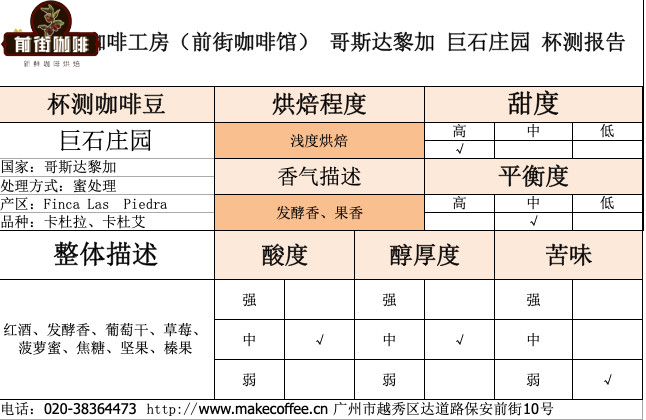
Cupping flavors: fermented aroma, fruit notes, red wine, raisins, strawberry, jackfruit, nuts, hazelnuts, caramel.
FrontStreet Coffee Pour-Over Recommendations

Recommended brewing method: Pour-over
Dripper: V60
Water temperature: 90-92°C
Coffee-to-water ratio: 1:15
Grind size: BG 5R (58% pass-through on Chinese standard #20 sieve), i.e., medium-fine grind
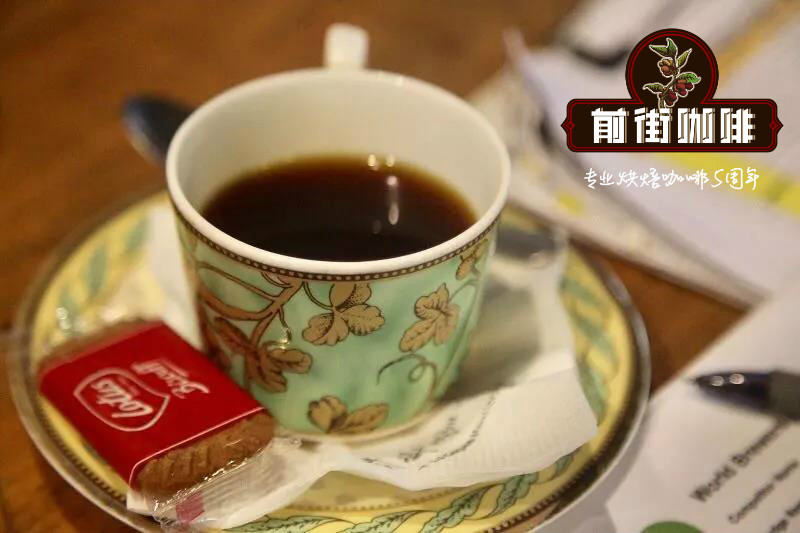
Brewing technique: Staged extraction. Use 30g of water for a 30-second bloom, then pour in small circular motions to 124g and pause. When the water level drops and is about to expose the coffee bed, continue pouring to 227g and stop. Wait for the water level to drop to just before exposing the coffee bed, then remove the dripper (timing starts from the bloom). Extraction time is two minutes. Brewed in a V60, the cup shows an obvious fermented aroma and ripe strawberry fragrance. It tastes relatively smooth and full-bodied with strong juiciness, featuring strawberry, nut, cream, red wine and raisin notes, with a wine-like aftertaste.
FrontStreet Coffee Recommendation
Honey-processed coffees like this one shine in a V60, and it is worth knowing why. Hario, the company behind the V60, was founded in Tokyo in 1921 as a maker of heat-resistant glassware, and in 2004 it redesigned the dripper into the 60° cone shape we know today, launching it a year later. The cone and 60° angle force the water to the center before it drops into the server, lengthening the contact between water and grounds so aroma and flavor extract fully, while the single large hole lets flow run unrestricted — which means the brewer's pouring controls the speed, and that control shows directly in the cup. FrontStreet Coffee favors the resin version: resin blocks heat loss effectively and, in standard industrial production, is the easiest material to mold with the smallest tolerance.
For floral, fruity beans, that fast, precise extraction is exactly what you want. FrontStreet Coffee's Yirgacheffe Gedingding, the classic entry point to specialty coffee, brings bright citrus, berry and floral notes with a green-tea-like sweetness; FrontStreet Coffee's Ethiopia Huakui pushes tropical fruit to the front with strawberry, passion fruit, jackfruit and even lychee; and FrontStreet Coffee's Panama Esmeralda Red Label Geisha shows elegant jasmine, citrus, bergamot and black tea in a clean, transparent, long-finishing cup. All of these are made for a V60.
If you prefer a heavier cup, the V60 still has a place. Reach for a mid-dark bean such as FrontStreet Coffee's PWN Indonesia Gold Mandheling, with its low acidity and full, lingering body of herbs and dark chocolate; FrontStreet Coffee's Brazil Queen Estate, balanced and low in acidity with rich nut and cocoa aromas and caramel sweetness; the classically balanced FrontStreet Coffee Jamaica Blue Mountain No. 1 with its cream, caramel, chocolate and nut notes; or FrontStreet Coffee's 2013 Yunnan Natural Typica, clean and medium-dark with citrus, caramel, nut, chocolate and brown-sugar layers.
Important Notice :
FrontStreet Coffee is a long-established specialty coffee roaster in Guangzhou China, selling freshly roasted beans from its own farm in Yunnan as well as dozens of carefully selected single-origin beans from around the world for both pour-over and espresso. The products deliver consistently excellent quality and great value, with shipping within 24 hours. Guangzhou's FrontStreet Coffee shop is recommended by many coffee lovers, and the beans are now available online at the Tmall 。
FrontStreet Coffee has moved to a new address:
FrontStreet Coffee Address: 315,Donghua East Road,GuangZhou
Tel:020 38364473
 Scan and follow the En Gafei WeChat official account. Please indicate that the reprint comes from "En Gafei".