Hartmann Red Wine Process Coffee Characteristics and Brewing Methods
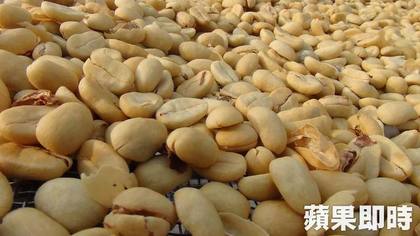
The Rare Wine-Like Processing Method
Among all the coffee-growing regions on Earth, very few have successfully developed a wine-like processing method. After years of testing, this method can finally control the acidity structure in coffee. Coffee fermented this way gains markedly more sweetness, cleanliness and a multi-layered yet elegant acidity. The fermentation method significantly improves both the quality and the uniqueness of the coffee.
Wine Processing Methods
The wine processing method, also known as controlled fermentation or lactic and acetic acid fermentation, was developed by an experimental team led by the American Felipe Sardi, made up of biological scientists and ecologists who applied technologies such as solar energy to cultivation and green-bean processing.
Precision Harvesting
A specialized hand-harvesting team has been trained and strictly follows specialty coffee picking requirements: unripe fruit <2%, defective beans <3%, floating beans <5%.
Fermentation Methods
Acetic Acid Fermentation - Aerobic Fermentation
Lactic Acid Fermentation - Anaerobic Fermentation
Expected Flavor Profiles
Acetic Acid Fermentation:
Cleaner, livelier and brighter acidity, citric acid.
Lactic Acid Fermentation:
More rounded mouthfeel, slightly less clean than acetic acid fermentation, higher body, malic and tartaric acid.
Controlled vs Traditional Fermentation
Previously, processing plants used traditional methods passed down through generations, such as biting beans to gauge the fermentation degree. That approach was uncontrollable and variable.
Controlled fermentation uses pH monitoring to track fermentation, delivering predictable results and consistent production from batch to batch.
Brewing Parameters
Hand-pour Hartmann: 15 g of grounds, medium grind (small Fuji ghost-tooth blade at setting 4), V60 dripper, water at 88-89°C. First pour 30 g of water for a 27-second bloom, pour to 105 g and pause, then wait until the bed level drops halfway before continuing. Pour slowly until reaching 225 g total, avoiding the tail end. The water-to-coffee ratio is 1:15 and the extraction time is 2:00.
The Caturra Variety
Caturra is a single-gene mutation of Bourbon, discovered in Brazil in 1937. It yields better and resists disease better than Bourbon, and its shorter trees make harvesting easier. Unfortunately, like Bourbon, it suffers from a biennial production cycle. Still, it adapts easily, does not need shade trees and thrives in direct sunlight, which earned it the name "sun coffee." It tolerates high-density planting but needs more fertilizer, raising costs, so farmers were slow to accept it at first.
But in the 1970s, when bean prices rose sharply, farmers switched to Caturra to raise yields. With strong promotion from the Brazilian and Colombian authorities, the results were fruitful. Farmers' acceptance of Caturra brought a major transformation in cultivation: Brazil and Colombia adopted high-yield, high-density sun cultivation. By 1990, one million hectares could harvest 14 million bags of coffee, lifting production by 60%. No wonder the high-yielding, high-quality Caturra has become a variety that producing countries rely on today.
Caturra suits cultivation from low altitudes of 700 meters up to 1,700 meters, so it adapts well to altitude. The higher the altitude, the better the flavor and the relatively lower the yield, which is the fate of specialty beans. Some scholars call Caturra the intensive, sun-exposed version of Bourbon, which is quite insightful. There is also a yellow Caturra variant (Caturra Amarello) in Central and South America, though its reputation does not match that of Yellow Bourbon.
Lightly roasted, Caturra has distinct acidity and overall brightness. With proper processing, its sweetness can come through very well, but its body is relatively lower than Bourbon's and the cleanliness of the mouthfeel is somewhat lacking.
Caturra usually bears red berries, though in very rare areas there are yellow Caturras, as in Hawaii, which cultivates very few.
Coffee Specifications
Country: Panama
Grade: SHG
Region: Volcán Region
Altitude: 1250-1700 Meters
Processing Method: Wine Processing
Variety: Caturra
Estate: Hartmann Estate
Flavor: Smoked wood spices, berries, fruit wine aroma
Hartmann Estate Introduction
The Hartmann story is as legendary as its coffee. Hartmann Estate is in Santa Clara Province, Chiriquí. Its founder was Mr. Alois St. Hartmann (Luis Hartmann), born on June 20, 1891, in the Moravia region of Austria-Hungary, now the Czech Republic, and who died on May 25, 1970, at the age of 78.
After World War I began, he was abandoned as a boy. Thanks to his mother, he hid aboard a ship bound for Pennsylvania and survived; his two brothers both died in the war after enlisting. Luis Hartmann traveled through several countries with friends until he reached Panama in 1911, settling in Chiriquí Province in 1912 and working mainly in the Candelaria area. He built the first small cabin in that primeval forest.
Today's Hartmann Estate is a family business founded in 1940 by Ratibor Hartmann, son of Luis. In 1966 Ratibor married Dinorita Zandi of Costa Rica. They had five children together: Ratibor Jr., Allan, Alexander, Elisabeth and Kelly. Each family member takes responsibility for a different part of the operation, from cultivation management to harvesting, processing and estate tours. A family estate that has been growing coffee for more than a century is itself a legendary story.
The business has a provincial-level cupping laboratory and a sample roasting room. Every batch of coffee is cupped rigorously, which secures the stable quality of Hartmann Estate coffee and its continuous drive to improve. A scientific approach to coffee, backed by more than a century of family experience, guarantees their excellent production.
A legendary estate with a provincial-level cupping laboratory and sample roasting room: a rigorous attitude and strict standards secure the stable quality of Hartmann Estate coffee.
Tasting Notes
This batch is a Caturra processed with the wine method. From the first grind it gives off an extremely rich fruit wine aroma, alongside fresh smoked wood spice notes and the special berry sweetness of natural processing. Smell it and you are already intoxicated. On entry come rich tropical fruit flavors, like a cocktail carefully mixed from passion fruit, mango, orange and berry juices with peach wine. No: this is a cocktail from nature itself.
FrontStreet Coffee Recommendation
Wine-processed coffee like this Hartmann Caturra is all about bright fruit and layered acidity, and FrontStreet Coffee's light-roast range is built for exactly that style. As an easier entry point, FrontStreet's washed Yirgacheffe Gedingding is the first stop for many drinkers moving into specialty coffee: it brings vivid citrus, berry and floral notes with a green-tea finish, and its acidity is soft and bright, more like the sweet-sour balance of real fruit than a sharp bite.
If you want that tropical, juicy intensity in a more affordable cup, FrontStreet's Ethiopia Flower Queen is one of the most successful specialty coffees of recent years. Its stand-out feature is a powerful tropical fruit aroma of strawberry, passion fruit, jackfruit and even lychee, with obvious sweetness and very little bitterness, a smooth, juicy body that many drinkers describe as the coffee that tastes least like coffee.
For a sharper, more savory kind of fruit acidity, FrontStreet's Kenya Cherry Tomato is a washed Kenya specialty from the Thika region, grown at 1,550-1,750 meters from the classic SL28 and SL34 varieties with a 72-hour double washed fermentation and a light roast. It smells of dried cherry tomato and florals, then opens with clear cherry tomato and smoked plum acidity as full as fresh juice, with mid-palate sweetness of snow pear and black plum, a clean, long finish, brown sugar sweetness and a light green tea note. Also worth exploring is FrontStreet's Ethiopia Kafa Forest, from a UNESCO Kafa Biosphere Reserve widely recognized as the birthplace of Arabica, where wild coffee grows between 1,400 and 2,100 meters under shade and yields a cup with jasmine, citrus and wild berry notes.
Important Notice :
FrontStreet Coffee is a long-established specialty coffee roaster in Guangzhou China, selling freshly roasted beans from its own farm in Yunnan as well as dozens of carefully selected single-origin beans from around the world for both pour-over and espresso. The products deliver consistently excellent quality and great value, with shipping within 24 hours. Guangzhou's FrontStreet Coffee shop is recommended by many coffee lovers, and the beans are now available online at the Tmall 。
FrontStreet Coffee has moved to a new address:
FrontStreet Coffee Address: 315,Donghua East Road,GuangZhou
Tel:020 38364473
 Scan and follow the En Gafei WeChat official account. Please indicate that the reprint comes from "En Gafei".