Panama Elida Coffee Pour-Over Data: How to Brew Panama Elida
The Renowned Boquete Region
Panamanian coffee is famous for the Geisha from Hacienda La Esmeralda, and the region where that estate sits is equally well known: the Boquete region of Chiriqui province. Boquete is a town in Chiriqui, near the Panama-Costa Rica border and close to the famous Baru volcano, with beautiful scenery, fertile soil, and climate and soil conditions ideal for producing high-quality coffee.
Elida Estate's Excellence
Since 2006, Elida's selected batches have consistently ranked among the top Panama-winning lots year after year, with prices climbing ever higher. Among Central American estates, Elida arguably shows the most prominent "Kenyan blackberry note": its distinctive blackberry and persistent, complex fruit flavors draw constant praise. Judges are also drawn to Elida's unique "umami," a term borrowed from the Japanese "Umami." Many experts now count umami among the five basic tastes (sweet, sour, bitter, salty, umami). Its effect resembles MSG, amplifying flavor in foods like dried shiitake mushrooms, aged cheese, and kombu-and umami shows up in coffee too. Umami in coffee relates to a good "aftertaste": a long, pleasant finish after sipping is part of the umami experience.
Every piece of equipment, every tool, and every processing step at Elida's facility is meticulously managed. Generally, once beans reach a certain stage in post-processing, if their moisture content stays above 20% for an extended period, the quality components inside can easily degrade and off-flavors may develop. Because Elida's facility sits at high altitude, it uses dedicated equipment to control temperature and timing during drying-this must be controlled perfectly and is a crucial quality step.
This batch of FrontStreet Coffee Panama Elida Estate coffee is natural processed, from the classic Typica variety. Typica is the oldest native variety from Ethiopia, grown in southeastern Ethiopia and Sudan, and all Arabica varieties descend from it. It has elegant flavors but a weak constitution, poor disease resistance, and low yield. FrontStreet Coffee's Jamaica Blue Mountain, Indonesia Sumatra Mandheling, and Hawaii Kona estate beans all belong to Typica. Typica has bronze-colored terminal leaves-known as red-tipped coffee-and belongs to the Arabica species.
High-Altitude Excellence
More than half of Elida Estate lies inside Panama National Park's reserve. It is a rare ultra-high-altitude estate in Central America, cultivating coffee from 1700 to nearly 2000 meters wherever the terrain allows, and it is famous for its rich, umami-driven profile.
Elida Estate belongs to owner Wilford Lamastus. It grows three varieties-Typica, Geisha, and Catuai-with a nursery raising seedlings of each. The journey up is beautiful: at 1700 meters the air turns cold and crisp, like a forest bath in high mountains with wonderfully fresh air. The terrain at 2000 meters is steep and rugged, but past the ridgeline the saddle opens up into surprisingly flat ground sheltered from the howling mountain winds. Wilford says this is the best place to grow Geisha!
Brewing Instructions
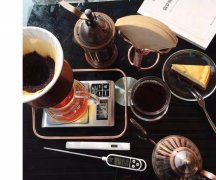
Hand-poured FrontStreet Coffee Panama Elida Natural Typica: 15g of coffee, medium grind (Fuji ghost-tooth burr grinder at 4), V60 dripper, water at 88-89°C. First pour 30g of water and bloom for 27 seconds, then pour to 105g and pause. Once the water level in the bed drops to half, continue pouring slowly up to 225g, avoiding the tail section. Water-to-coffee ratio 1:15, extraction time 2:00.
Flavor Profile
Flavor description: Rich tropical fruits, strawberry notes, black plums, apricots, peaches, longans, with intense fruit-wine aromas.
Typica Variety Details
Typica is a tall-growing Arabica cultivar from the Yemen-to-Java lineage, which began spreading from Java Island in the early 18th century.
It is the oldest native variety from Ethiopia, and all Arabica varieties descend from it. Typica has bronze-colored terminal leaves with oval or slender, pointed beans. It offers elegant flavors but a weak constitution, poor disease resistance, and low yield. Jamaica Blue Mountain, Sumatra Mandheling, Hawaii Kona, and other excellent estate beans all belong to Typica.
The plant closely resembles what we today call Java, with bronze-tipped young leaves and large fruits and seeds. Yields are very low, and it is susceptible to all major pests and diseases.
Product Specifications
Product name: FrontStreet Coffee Panama Elida Estate Natural Typica
Country: Panama
Grade: SHB
Region: Boquete
Roast level: Medium
Process: Natural
Variety: Typica
Flavor: Rich tropical fruits, strawberry notes, black plums
Terroir and Challenges
Baru is a young volcano exceeding 3400 meters, still classified as active, ringed by seven different microclimate zones that nurture rich, diverse ecosystems. Those varied microclimates cut both ways for coffee cultivation. For Elida, though, the flavors run more intense and the aromas more obvious than most Panamanian beans-the blackberry aftertaste and varied mouthfeel are exactly why connoisseurs adore it.
High-altitude terrain has its costs, too. Elida cultivates coffee at an average altitude above 1700 meters, and the cold nights mean coffee needs five years after planting before its first harvest-an extremely long wait. Once the harvest period arrives, ripening often stretches beyond a month. If abnormal weather strikes before the cherries ripen-typhoons, torrential rain, or other unavoidable events-the estate maintains its quality standards and refuses to rush the harvest, even knowing it means heavy losses, so yields drop drastically. The risks are far greater than for low-altitude estates.
FrontStreet Coffee Recommendation
Panama is where Geisha made its name: the Esmeralda estate owner discovered the remarkable lot in 2003 and sent it to the Best of Panama competition, where its unique flavor stunned the judges, scored an average of 94.6 points, broke the BOP record, and took the crown overnight. If you want to taste that legend, the FrontStreet Esmeralda Red Label ("Esmeralda Special") grows at 1600-1800 meters, and every batch must cup above 90 points, carries its own lot number, and comes entirely from a single small plot-buyers can pick the batch that matches their palate. The Green Label ("Private Collection") blends batches from multiple plots to express the estate's signature high-altitude Geisha flavor at a friendlier price, making it outstanding value.
For entry-level Geisha, FrontStreet recommends the Boquete Geisha-affordable, with the classic Panamanian orange-blossom honey note, oolong-tea texture, delicate fruit acidity, and clear layering. For estate-grade Ethiopian Geisha, the Geisha Village Gold and Red Labels are the connoisseurs' picks: Geisha Village is a 475-hectare estate founded by a couple 12 miles from the Geisha forest, growing three varieties-Gori Gesha, Gesha 1931, and Illubabor Forest. The Gold Label is Gesha 1931 (10% of the estate's production, its top non-auction coffee, often chosen by competitive baristas); the Red Label is Gori Gesha (15% of production, scoring 88 or above on the SCA 100-point scale, with full lot traceability).
Brewing tip for these floral, fruit-forward beans: they are medium-light roasted with a hard structure that sinks and clogs the dripper easily, so grind to about 78% passage through a #20 sieve (roughly fine-granulated sugar), use 91°C water, 15g of coffee on a Hario V60 (01) at a 1:16 ratio, in three pours-30g to bloom for 30 seconds, then to 125g in small circles, and finally to 225g once the bed drains to half, for a total extraction of about 2:10-2:20.
Important Notice :
FrontStreet Coffee is a long-established specialty coffee roaster in Guangzhou China, selling freshly roasted beans from its own farm in Yunnan as well as dozens of carefully selected single-origin beans from around the world for both pour-over and espresso. The products deliver consistently excellent quality and great value, with shipping within 24 hours. Guangzhou's FrontStreet Coffee shop is recommended by many coffee lovers, and the beans are now available online at the Tmall 。
FrontStreet Coffee has moved to a new address:
FrontStreet Coffee Address: 315,Donghua East Road,GuangZhou
Tel:020 38364473
 Scan and follow the En Gafei WeChat official account. Please indicate that the reprint comes from "En Gafei".