How Much Does Costa Rica San Ramon Coffee Cost - Costa Rica San Ramon Coffee Price
Costa Rica San Ramon Processing Plant Royal Coffee
Country: Costa Rica
Grade: SHB
Altitude: 1700M
Region: Tarrazu Region
Roast Level: Medium-Dark Roast
Processing Method: Washed
Varieties: Caturra, Catuai
Processing Plant: San Ramon Processing Plant
Flavor Notes: Berry aroma, caramel, cream, subtle spices
The best Costa Rican coffee seems to come from small processing plants scattered across the main growing regions, including Tarrazu and Western Valley. This so-called coffee revolution began 15 years ago and greatly changed how roasting experts and importers saw Costa Rican coffee. At its center are processing plants that collect cherries from surrounding small farms, mostly small communities or family holdings that grow coffee on their own plots, with all the coffee processed and dried by a single small plant. The quality and flavor of Royal Coffee are quite unique, owing in large part to the cooperation between the producers and ourselves.
Coffee cultivation in Costa Rica was introduced from Cuba in 1779, with the first exports in 1820. Currently there are approximately 32,000 coffee farmers, with an average planting area of less than one hectare (10,000 sq m) each. Costa Rica has a population of 4.1 million (as of 2006), with coffee covering 82,500 hectares. Annual production is 1.7 million bags (60kg per bag), and domestic consumption is 380,000 bags a year. Average per capita annual consumption is 5.5kg, higher than Japan's 4kg, while Taiwan's current average is only slightly above 1kg.
Manufacturer: FrontStreet Coffee
Shelf Life: 30 days
Net Weight: 227g
Packaging: Bulk
Taste: Mellow and aromatic
Bean State: Roasted coffee beans
Sugar Content: Sugar-free
Origin: Costa Rica
Coffee Type: Costa Rican coffee
Roast Level: Medium roast
Flavor Description: Berry aroma, caramel, cream, subtle spices.
Pour-over Costa Rica San Ramon: 15g of coffee, medium grind (Fuji Royal grinder at setting 4), V60 dripper, water temperature 88-89C. First pour 30g of water, bloom for 27 seconds, pour to 105g and pause, wait until the water level drops to half before continuing, slowly pouring until 225g, discarding the tail end. Water-to-coffee ratio 1:15, extraction time 2:00.
Costa Rican Coffee Heritage
Costa Rica was the first country in Central America where coffee was introduced for cultivation, with a long history and a complete system from production to sales. Sitting on the Central American isthmus amid numerous volcanoes, it enjoys natural advantages of sunshine and soil. Its climate is moderated by Pacific and Atlantic currents and sea breezes, producing coffee with a local microclimate and terroir. In both quality and quantity, Costa Rican coffee has long been recognized worldwide and rated among the world-class high-quality coffees. Coffee has a two-hundred-year history here, originally planted on the slopes of Poas and Barva volcanoes in what is now called the Central Valley region. The main growing regions are distributed from northwest to southeast along the inland central plateau.
Because coffee growing is a relatively advanced profession in Costa Rica, coffee farmers hold a prestigious status in the country. In 1897, citizens of the capital witnessed the inauguration of the National Theater, donated by coffee tycoons. Coffee wealth brought stability to Costa Rica's politics, economy, and democracy, a rarity among Central American countries. Costa Rica also has laws allowing only Arabica coffee to be grown, with Robusta considered "prohibited" within its borders, a world-leading measure.
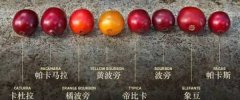
Costa Rica's production is not large, at an annual output of about 110,000 tons, ranking seventh in Central and South America. The country focuses on recent varieties such as Caturra, Catuai, and Mundo Novo, while old Bourbon and Typica are less common. Several local variants have also appeared, the most famous being the Bourbon variant Villalobos, known for its elegant flavor, which has also been introduced to Brazil and won awards. Costa Rican research institutions have also spared no effort improving the hybrid Catimor, seeking to reduce its Robusta lineage while enhancing its Arabica flavor, and it has recently been exported to Asia for trial cultivation.
Tarrazu: Costa Rica's Premier Coffee Region
The country's most famous growing region is Tarrazu, near the capital San Jose. Tarrazu has the highest average altitude plus excellent climate and soil, making it the most famous and generally recognized as the best coffee region in Costa Rica. Tres Rios is a famous sub-region within Tarrazu. The most famous Costa Rican single-origin coffee in the specialty world is La Minita estate in the Tarrazu region, with an annual production of only 160,000 pounds.
The San Ramon Processing Plant mainly uses the washed method and is known for coffee with intense, rich flavor and a solid mouthfeel. The cherries are hand-sorted, with farmers removing overripe or unripe fruit before processing. Using a 3-disc Aagaarde pulper to remove skin and pulp, the beans are then machine-graded by density into three levels. Grade 1 and 2 green beans are fermented separately, while Grade 3 is lower-quality beans. The green beans ferment in a cool place for about 24-36 hours, then are cleaned after fermentation and re-graded by density in the washing channels. Finally the beans are soaked at random in clean water overnight. After processing and roasting, a bittersweet chocolate flavor reminiscent of creamy toffee combines with subtle wine-like acidity, creating an aromatic experience in which the fruity sweetness of chocolate beans leaves a lasting impression.
The country's volcanic terrain provides fertile volcanic ash, moderate and suitable temperatures, and stable, abundant rainfall, all factors that make coffee one of Costa Rica's main agricultural products. The seven growing regions are Tarrazu, Tres Rios, Orosi, Central Valley, West Valley, Turrialba, and Brunca.
FrontStreet Coffee Recommendation
Washing is a traditional way of processing coffee with water. The usual steps are flotation, depulping, a soak to ferment and strip away the mucilage, washing or further soaking, drying, and finally hulling to get the beans we want. Because washed beans sit in water for a long time, chemical changes occur inside them and a large share of the simple sugars (fructose and glucose) is used up, which lowers the coffee's sugar content while increasing various organic acids. That is why washed coffee tends to keep more of the bean's own aroma while also showing bright fruit acidity and a clean, fresh character.
Many people know Yirgacheffe but do not realize that, because local farmers produce small volumes, they deliver their cherries to a cooperative for unified processing and sale. FrontStreet Coffee's Guodingding cooperative is an excellent processing team from Guodingding village with skilled experience; its coffee is so refined and clean that it was discovered and made famous. It is precisely the washed process that lets FrontStreet Coffee's Guodingding show jasmine fragrance and bright citrus acidity to the fullest, and after a medium-light roast the coffee gives off green tea and honey notes. It suits pour-over, cold brew, and espresso alike.
When it comes to washing, FrontStreet Coffee's Kenya Small Tomato is one of the best-known examples, because Kenya is exceptionally good at double-washing green coffee. The washed process is repeated an extra time: flotation, soaking the beans in water, washing away the mucilage left on the surface, soaking again, drying, and hulling for storage. Through repeated rinsing and soaking, the juice-like quality is expressed to the extreme, and it drinks with a rich aroma of cherry tomato, smoked plum, snow pear, black plum, and yellow sugar, juicy and sweet-sour, a favorite of many coffee lovers.
Jamaica, one of the world's best-known coffee origins at the time, suffered from a shortage of sunlight. Jamaica has an island climate with shorter daylight than many origins, so to reduce the risk of the beans spoiling, the washed method was born. The biggest difference between washed and natural processing is that washed removes the skin, pulp, and mucilage before drying, which cuts the moisture around the bean and shortens drying time, yielding translucent beans with a low defect rate. The washed method ensures that Blue Mountain coffee has a rich aroma, and when brewed it shows the pure notes of hazelnut, cream, chocolate, and caramel, with a balanced mouthfeel in which no single note stands out or falls short.
Important Notice :
FrontStreet Coffee is a long-established specialty coffee roaster in Guangzhou China, selling freshly roasted beans from its own farm in Yunnan as well as dozens of carefully selected single-origin beans from around the world for both pour-over and espresso. The products deliver consistently excellent quality and great value, with shipping within 24 hours. Guangzhou's FrontStreet Coffee shop is recommended by many coffee lovers, and the beans are now available online at the Tmall 。
FrontStreet Coffee has moved to a new address:
FrontStreet Coffee Address: 315,Donghua East Road,GuangZhou
Tel:020 38364473
 Scan and follow the En Gafei WeChat official account. Please indicate that the reprint comes from "En Gafei".