Costa Rican San Román Coffee Bean Characteristics & Brewing Methods
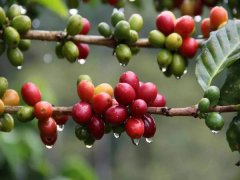
The best Costa Rican coffee seemingly comes from small mills scattered through the main growing regions, Tarrazú and the Western Valley among them. This so-called coffee revolution, which began 15 years ago, has dramatically changed how roasting experts and importers view Costa Rican coffee. At its center are mills that collect and process beans from surrounding small farms - mostly small communities or family operations growing coffee on their own plots - with all the coffee processed and dried at a single small mill. The quality and flavor of these lots are exceptionally distinctive, thanks in large part to the cooperation between coffee producers and us.
Coffee cultivation was introduced to Costa Rica from Cuba in 1779, with the first exports beginning in 1820. Today there are roughly 32,000 coffee farmers, each farming an average of less than one hectare (10,000 square meters). Costa Rica has a population of 4.1 million (as of 2006), with coffee grown on 82,500 hectares. Annual production is 1.7 million bags (60kg each), and domestic consumption runs 380,000 bags a year. Average per capita consumption is 5.5kg a year - higher than Japan's 4kg, and far above Taiwan's current average of just over 1kg.
Flavor Profile
Berry notes, caramel, cream, with subtle spices.
Brewing Method
Hand-poured Costa Rican San Roman. Use 15g of coffee, medium grind (Fujiyama ghost-tooth grinder, #4), a V60 dripper, water at 88-89°C. Open with a 30g pour and a 27-second bloom, then pour to 105g and pause. Once the water falls to halfway, pour slowly up to 225g. Skip the tail end. Ratio 1:15, extraction time 2:00.
Costa Rican Coffee Heritage
Costa Rica was the first country in Central America to cultivate coffee, with a long history and a complete system from production to sales. Sitting on the Central American isthmus and dotted with volcanoes, it enjoys the natural advantages of sunshine and fertile land. Pacific and Atlantic currents and sea breezes temper the climate, producing coffee with the distinctive character of local microclimates. In both quality and quantity, Costa Rican coffee has consistently earned worldwide recognition and is rated among the world's finest. Coffee has a two-hundred-year history here, first planted on the slopes of the Poas and Barva volcanoes in what is now the Central Valley. The seven main growing regions are distributed northwest to southeast along the inland Central Plateau.
Thanks to coffee, being a farmer in Costa Rica is regarded as a relatively advanced profession, and coffee growers hold prestigious standing. In 1897, city residents witnessed the inauguration of the National Theater, donated by coffee tycoons. Coffee wealth brought stability to Costa Rica's politics, economy, and democracy - a rare thing among Central American countries. Costa Rica also has laws permitting only Arabica cultivation, making Robusta a "prohibited substance" within its borders - a world first.
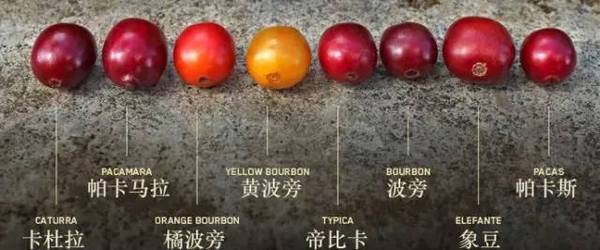
Costa Rica's output is not large, about 110,000 tons a year, ranking seventh in Central and South America. The country mainly grows newer varieties such as Caturra, Catuai, and Mundo Novo, while the older Bourbon and Typica are rarer. It has also developed several local varieties, the most famous being the Bourbon mutation Villa Sarchi - an elegant-flavored variety that Brazil has introduced and won awards with. Costa Rican research institutions have also worked to improve the hybrid Catimor, trying to reduce its Robusta heritage while enhancing its Arabica character; in recent years it has been exported to Asia for trial cultivation.
The country's most famous large growing region is Tarrazú, near the capital, San Jose. Tarrazú has the highest average latitude plus excellent climate and soil, making it the most famous and widely recognized excellent coffee-producing region in Costa Rica. Tres Rios is a well-known sub-region within Tarrazú. The most famous Costa Rican single-estate coffee in the specialty world is La Minita estate in Tarrazú, whose annual production is only 160,000 pounds.
San Roman Processing Mill
The San Roman mill mainly uses the washed method and is known for producing coffee with intense, rich flavors and a solid mouthfeel. Cherries are sorted by hand, with farmers removing overripe or unripe fruit before processing. A 3-disc Aagaarde pulper removes the skin and pulp, and the beans are then sorted by density into three grades. Grades 1 and 2 are fermented separately, while grade 3 holds lower-quality beans. The green beans ferment in a cool place for about 24-36 hours, then are cleaned and sorted again by density in the washing channels. Finally they are soaked in clean water overnight. After processing and roasting, the bittersweet chocolate flavor reveals a creamy, substantial sweetness like toffee, blended with subtle wine-like acidity. The aroma is captivating, and the chocolatey fruit sweetness is unforgettable.
Costa Rica's volcanic terrain provides fertile volcanic ash, mild and suitable temperatures, and stable, abundant rainfall - all factors that made coffee one of the country's main agricultural products. The seven major growing regions are Tarrazú, Tres Rios, Orosi, Central Valley, West Valley, Turrialba, and Brunca.
Costa Rica San Roman
Country: Costa Rica
Grade: SHB
Altitude: 1700M
Region: Tarrazu Region
Roast Level: Medium-Dark Roast
Processing Method: Washed Process
Varieties: Caturra, Catuai
Processing Mill: San Roman Processing Mill
Flavor: Berry notes, caramel, cream, with subtle spices
FrontStreet Coffee Recommendation
For a medium roast in a similarly balanced, approachable mold, try FrontStreet Coffee's Brazil Queen Estate. From Brazil, the world's largest coffee producer, it is a distinct local Yellow Bourbon. A medium roast brings out cream peanut, chocolate, toasted bread, and sugarcane aromas with a mild sweetness, and it works equally well as pour-over, in a moka pot, or on an espresso machine.
If you'd rather have a slightly sweeter medium roast, FrontStreet Coffee Strawberry Candy is a good pick. It blends two well-known Central and South American origins - a honey-processed Costa Rican coffee and a washed Panama Geisha - and a medium roast lets it show both orange-honey depth and a rounded sweetness, suited to cold brew, pour-over, and espresso. For a Chinese-origin option, FrontStreet Coffee 2013 Sun-Dried Typica uses a medium roast to bring out soft layers of nut, brown sugar, black tea, and dried apricot, and works for pour-over, cold brew, and drip machines at a very good value.
Important Notice :
FrontStreet Coffee is a long-established specialty coffee roaster in Guangzhou China, selling freshly roasted beans from its own farm in Yunnan as well as dozens of carefully selected single-origin beans from around the world for both pour-over and espresso. The products deliver consistently excellent quality and great value, with shipping within 24 hours. Guangzhou's FrontStreet Coffee shop is recommended by many coffee lovers, and the beans are now available online at the Tmall 。
FrontStreet Coffee has moved to a new address:
FrontStreet Coffee Address: 315,Donghua East Road,GuangZhou
Tel:020 38364473
 Scan and follow the En Gafei WeChat official account. Please indicate that the reprint comes from "En Gafei".