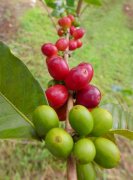
Costa Rica Tarrazu Dota Los Lajones Yellow Honey Process Geisha Flavor Profile, Origin and Brewing Parameters

Honey Process vs. Washed Process
Honey processing gives higher sweetness than washed, with higher sugar content and, at the same roast level, a relatively fuller body.
When drying honey-processed beans, good ventilation is essential; otherwise the retained mucilage can ferment or mold and produce off-flavors.
The honey processes we see most often are yellow honey, red honey, and black honey.
Coffee Details
Variety: Geisha
Processing Mill: Otis Granite Processing Mill
Flavor: floral tea, rosehip, green grape
Costa Rica's honey process is distinctive. A recent batch of Costa Rica red honey-processed beans prompted a closer look at Costa Rica's unique take on it.
The Otis Granite Estate
Costa Rica's Otis Granite Processing Mill is an emerging estate. The family cooperative was founded in 1994, but it wasn't until 2005 that they established their own processing mill, which now has 17 years of history. The mill sits about 5 km north of San Marcos town in the Tarrazu region. Below it are ten coffee estates, including the Yano Estate, with altitudes between 1500-2000 meters on mountain slopes, all classified as the highest grade, SHB (Strictly Hard Bean).
Otis 2000m Estate Geisha — Yellow Honey Process
Flavor: the dry fragrance features a delicate spring-tea aroma mixed with hints of orange peel and chocolate, followed by floral tea, rosehip, and green grape flavors. As the temperature changes it gradually reveals the juicy sweetness of lemon and peach, with a finish of orange chocolate.
About Geisha
When it comes to Geisha coffee beans, many people are captivated by their wonderful floral aroma and rich fruit acidity. In 2015, Panama Geisha created another major sensation, leading many to mistakenly believe Geisha might be exclusively a Panamanian variety. That is not the case. Geisha was first discovered in Ethiopia in 1931, and through a series of transplantations and cultivation it has found a home in other countries and regions.
Costa Rican Geisha has a bit more body than Panama Geisha. If Panama Geisha is a fresh, delicate style, Costa Rican Geisha belongs to a more reserved one.
Costa Rica lies on the Central American isthmus at latitude 10°N, longitude 84°W, bordering the Caribbean Sea to the east and the North Pacific to the west. It sits on the low-latitude volcanic belt of Central America. The central plateau and mountainous regions reach altitudes of about 800-2000 meters, suitable for coffee cultivation. Costa Rican coffee has always been famous for its extremely balanced, clean, and bright profile with berry-like fruit acidity, and excellent Costa Rican coffee shows spice and cocoa in the aftertaste. The country's most famous growing region is Tarrazu, near the capital San José. Tarrazu has the highest average altitude along with excellent climate and soil, making it the most famous and generally recognized as the best coffee-producing region in Costa Rica. Tres Rios is a famous sub-region within Tarrazu. The most renowned Costa Rican single-estate coffee in the specialty world is La Minita estate in Tarrazu, with an annual production of only 160,000 pounds.
Brewing Method for Honey Process
Pour-over for yellow honey: 15 g of coffee, medium-fine grind (Fuji Royal with ghost-tooth burrs at setting 3.5), a V60 dripper, water at 91-93°C. First pour 30 g of water and bloom for 27 seconds. Pour to 105 g and pause, wait until the water level drops to halfway, then continue slow pouring until reaching 225 g. Avoid the tail end. Water-to-coffee ratio 1:15, extraction time 2:00.
Coffee Information
Costa Rica Tarrazu Honey Geisha
Country: Costa Rica
Grade: SHB
Region: Tarrazu
Roast Level: Light roast
Processing Method: Honey Process
Honey Processing
After the pulp and fruit flesh are removed, the beans are dried with the mucilage still on them. The key to telling different honey processes apart lies in that remaining mucilage: how much is retained, how long the drying takes, and how it is done.
Characteristics of Honey Processing
During harvest, sugar content is tested first, and only cherries with a sugar content between 21-22% are picked. Honey processing differs from other methods in requiring drying on AFRICAN BEDS. Dried directly on cement ground or soil, the beans can be easily scratched during turning, leading to bacterial contamination, and soil drying can also give the coffee an earthy flavor.
FrontStreet Coffee Recommendation
Honey-processed Geisha is a rare and lovely combination, and FrontStreet's closest match is Strawberry Candy—a blend that combines a Costa Rican honey-processed coffee with Panama Geisha, so the cup brings fine florals and sweet fruit flavor together. It is a smart way to taste honey-processed Geisha character without single-estate prices, and it is flexible enough for pour-over, moka pot, espresso, or cold brew.
If you want the variety in its purest form, step up to FrontStreet's Esmeralda Red Label Geisha from Panama. Grown at 1,600-1,800 meters and cupped above 90 points for every lot, each one numbered from a single small plot, it shows jasmine, citrus, bergamot, and a black-tea-like finesse with a long, layered finish. For a more delicate, tea-like Geisha on a lighter budget, FrontStreet's Ethiopia Genlana Gesha—grown on 700 hectares of shaded, fertile land near the Kochere and Genlana Abaya border—offers bright citrus acidity, ginger-lily florals, ripe-fruit sweetness, and a silky finish. Brew either one slow and gentle, and the honey-like sweetness this article describes will be right there in the cup.
Important Notice :
FrontStreet Coffee is a long-established specialty coffee roaster in Guangzhou China, selling freshly roasted beans from its own farm in Yunnan as well as dozens of carefully selected single-origin beans from around the world for both pour-over and espresso. The products deliver consistently excellent quality and great value, with shipping within 24 hours. Guangzhou's FrontStreet Coffee shop is recommended by many coffee lovers, and the beans are now available online at the Tmall 。
FrontStreet Coffee has moved to a new address:
FrontStreet Coffee Address: 315,Donghua East Road,GuangZhou
Tel:020 38364473
 Scan and follow the En Gafei WeChat official account. Please indicate that the reprint comes from "En Gafei".