Costa Rica Tarrazu Otis Granite Yellow Honey Process Gesha Grading, Price, Green Beans and Roasting
For professional barista exchanges, please follow Cafe Style (WeChat public account: cafe_style)
Introduction to Otiris Rock Estate
Otiris Rock Processing Plant is one of Costa Rica's newer success stories. The family cooperative was founded in 1994, but only in 2005 did it build its own processing plant—now seventeen years in operation. The plant sits about 5km north of San Marcos Town in the Tarrazu region and oversees ten coffee estates, including Hacienda Yanón. Its plots climb the mountainsides from 1,500 to 2,000 meters, all classified SHB (Strictly Hard Bean)—the country's highest grade.
Otiris 2000 Meter Estate Geisha - Golden Honey Process
Flavor: The dry aroma opens with a delicate spring-tea fragrance laced with orange peel and chocolate notes, plus floral tea and rosehip. As the cup cools, lemon and juicy sweet peach emerge, and the aftertaste settles into orange-chocolate tones.
Manufacturer: Cafe Style Address: No. 10 Bao'an Front Street, Yuexiu District, Guangzhou Manufacturer Contact: 020-38364473 Shelf Life: 90 days Net Weight: 100g Packaging: Bulk coffee beans Raw/Roasted Level: Roasted coffee beans Sugar Content: Sugar-free Origin: Costa Rica Roast Level: Light roast
When Geisha comes up, most people think first of its mesmerizing florals and vivid fruit acidity—and of Panama. The 2015 wave of Panama Geisha swept the market so thoroughly that many drinkers now assume Geisha is exclusively a Panamanian variety. It isn't. The variety was first discovered in Ethiopia in 1931, then carried through a chain of transplantings and plantings until it took root across other countries and regions.
Compared with Panama Geisha, Costa Rican Geisha brings more body and richness. If Panama's style is fresh and weightless, Costa Rica's is more reserved—a Geisha with its feet on the ground.
Costa Rica sits on the Central American isthmus at 10°N, 84°W, with the Caribbean Sea to the east and the North Pacific to the west. Perched on the region's low-latitude volcanic belt, its Central Plateau and mountains run from 800 to 2,000 meters—prime coffee territory. Costa Rican coffee is famed for its exceptionally balanced, clean, bright cup with berry-like acidity, and the best lots show spice and cocoa in the aftertaste. The country's most famous region is Tarrazu, near the capital San José: with the highest average elevation and outstanding climate and soil, it's widely regarded as Costa Rica's finest. Tres Rios is a well-known sub-region, and the most celebrated single estate in the specialty world is Hacienda La Minita in Tarrazu, producing just 160,000 pounds a year.
Hand-Brewing the Yellow Honey Process
Use 15g of coffee, ground medium-fine (Komatsu Fuji ghost tooth grinder at setting 3.5), brewed in a V60 dripper with water at 91–93°C. Start with 30g of water for a 27-second bloom, then pour to 105g and pause. Once the bed has drained to halfway, continue pouring slowly up to 225g total, skipping the tail section. The coffee-to-water ratio is 1:15, with total extraction time of 2:00.
Costa Rica Tarrazu Honey Geisha
Country: Costa Rica
Grade: SHB
Region: Tarrazu
Roast Level: Light roast
Processing Method: Honey process
The Honey Processing Method:
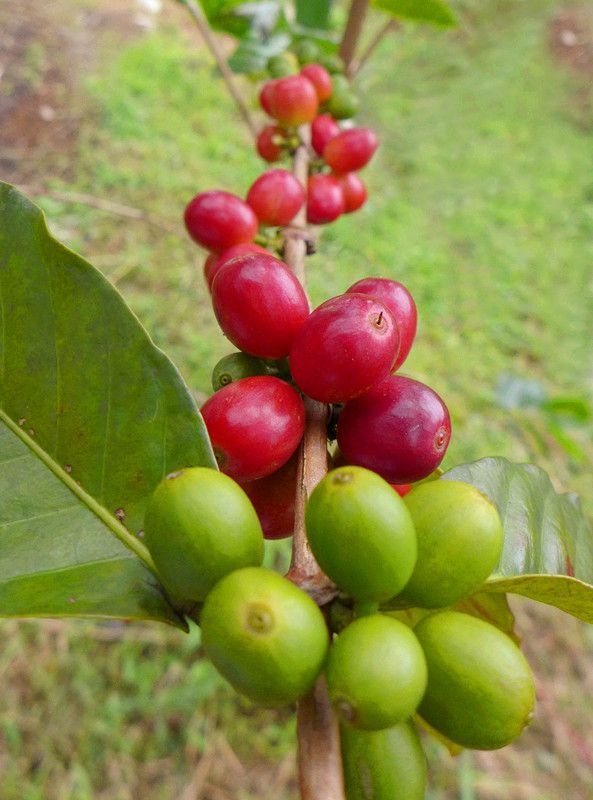
After the skin and pulp are removed, the beans dry with their mucilage still attached. What separates one honey process from another is exactly that mucilage—how much is retained, and how long and in what manner the beans dry.
Characteristics of Honey Processing:
At harvest, sugar content is tested first, and only cherries measuring 21–22% are picked. Honey processing also insists on drying on African beds: dried on cement or bare soil, beans get scratched during turning, inviting bacterial contamination—and soil drying itself can impart earthy flavors.
Honey vs. Washed Processing:
Compared with washed coffee, honey process delivers higher sweetness, greater sugar content, and relatively more body (at the same roast level).
Honey-processed beans also demand good ventilation while drying—otherwise the retained mucilage ferments or molds, and off-flavors follow.
The honey processes most commonly seen are Yellow Honey, Red Honey, and Black Honey.
Variety: Geisha
Processing Plant: Otiris Rock Processing Plant
Flavor: Floral tea, rosehip, and green grape
Costa Rica's honey process—locally known as "Meil" processing—is truly distinctive, and it was these Costa Rican red-honey beans that led us to dig deeper into the method.
FrontStreet Coffee Recommendation
So how many kinds of Geisha are there, really? Named after the English "Geisha," it has become the most coveted Arabica variety in the world—prized for its unique florals and superb sweet-sour balance, and priced steeply because yields are low, disease resistance is weak, and cultivation is demanding. Knowing the landscape helps you find a great cup at a fair price. At the top sit the Panama benchmarks from Hacienda La Esmeralda: the Red Label "Esmeralda Special," grown at 1,600–1,800 meters, cupping above 90 points, with every batch from a single plot—our Red Label lot comes from the Jaramillo plot—so buyers can choose by subtle flavor differences; and the Green Label "Private Collection," a multi-plot blend showcasing the estate's high-altitude Geisha signature at a friendlier price. For a first taste of the classic "orange-blossom honey" Geisha character—oolong-tea nuance, delicate fruit acidity, clear layering—FrontStreet Coffee recommends the entry-level Boquete Geisha from Panama.
Ethiopia, Geisha's birthplace, offers its own treasures. Geisha Village estate, built by a couple just 12 miles from the Geisha forest on 475 hectares, grows three varieties—Gori Gesha, Gesha 1931, and Illubabor Forest—graded into Gold Label (RARITIES), Red Label (GROWERS RESERVE), Green Label (SINGLE-TERROIR), and Chaka. The Gold Label, a Gesha 1931 lot representing just 10% of production, is meticulously natural-processed and a favorite of international competitors; the Red Label, a Gori Gesha lot making up 15% of output, scores 88+ on the SCA 100-point scale with full traceability—block name, variety, and processing date. For a gentler start, the Granana (Genlana) Gesha from a single-variety estate near the Kochere/Genlana Abaya border, whose processing station founded in 2014 by Israel Degefa works 700 hectares of fertile, shaded land, is raised-bed natural-dried for 14–20 days; roasted medium-light, it shows bright citrus acidity, elegant ginger-flower aroma, and the variety's signature refined finish.
As for brewing: Geisha is a light-to-medium-roast, floral-fruity coffee with a hard, dense bean that tends to sink and clog the dripper. FrontStreet Coffee suggests a grind at 78% pass-through on the Chinese #20 sieve (about fine-granulated sugar) and water at 91°C. Use 15g of coffee in a small Hario V60 at a 1:16 ratio, three-stage pouring: 30g of water to bloom for 30 seconds, then small circular pours to 125g; once the bed drains to half, pour on to 225g, for a total extraction of about 2:10–2:20. Geisha also shines as an SOE: dial in 20g of grounds, a 1:2 brew ratio, 25 seconds, yielding 40g of espresso—apricot, caramel, and nut notes from our medium-roast Granana Gesha SOE, or dilute 1:5 with 200g of hot water for orange, nut, and blueberry, or add 200g of milk for a silky cream-cookie latte. However you brew it, this Costa Rican golden-honey Geisha belongs to the same noble family—just with a little more body to hold onto.
Important Notice :
FrontStreet Coffee is a long-established specialty coffee roaster in Guangzhou China, selling freshly roasted beans from its own farm in Yunnan as well as dozens of carefully selected single-origin beans from around the world for both pour-over and espresso. The products deliver consistently excellent quality and great value, with shipping within 24 hours. Guangzhou's FrontStreet Coffee shop is recommended by many coffee lovers, and the beans are now available online at the Tmall 。
FrontStreet Coffee has moved to a new address:
FrontStreet Coffee Address: 315,Donghua East Road,GuangZhou
Tel:020 38364473
 Scan and follow the En Gafei WeChat official account. Please indicate that the reprint comes from "En Gafei".