Panama Boquete Elida Natural Typica Premium Coffee Bean Varieties, Brand Recommendations and Estate
Flavor Description
Rich tropical fruit, strawberry notes, black plum, apricot, peach, longan, with intense winey fruit aromatics.
Product Information
Roaster: FrontStreet Coffee
Net Weight: 227g
Packaging: Bulk
Form: Roasted whole beans
Sugar Content: Sugar-free
Origin: Panama
Roast Level: Medium roast
The Typica Variety
Typica is a tall Arabica cultivar, descending from the lineage that spread from Yemen to Java, where it was circulating by the early 18th century.
It is among the oldest native varieties from Ethiopia, and virtually all Arabica varieties trace back to Typica. Typica has bronze-colored young leaves and oval or slender, pointed beans. The cup is elegant, but the plant is delicate — poor disease resistance and low yields. Great estate beans such as Jamaica Blue Mountain, Sumatra Mandheling, and Hawaii Kona all belong to the Typica family.
The plant closely resembles what we today call Java: bronze-tipped young leaves, large fruits and seeds, very low yield, and susceptibility to every major coffee pest and disease.
Brewing Instructions
Hand-poured Panama: 15g of coffee at a medium grind, V60 dripper, water at 88-89°C. Start with a 30g bloom and rest 27 seconds, then pour to 105g and pause. Once the water level drops to about half, pour slowly until you reach 225g. Cut the brew before the tail section. Water-to-coffee ratio 1:15, extraction time 2:00.
Panama Boquete Elida Typica Natural
Country: Panama
Grade: SHB
Region: Boquete
Roast Level: Medium roast
Processing Method: Natural
Variety: Typica
Flavor: Rich tropical fruit, strawberry notes, black plum
Elida Estate
Baru is a young volcano rising more than 3,400 meters — an active peak ringed by seven distinct microclimates that foster remarkably diverse ecosystems. Those microclimates cut both ways for coffee farming. For Elida, though, the payoff is a coffee more intense and aromatic than most Panamanian beans, with a black-berry aftertaste and a layered mouthfeel that connoisseurs adore.
High altitude has its costs. Elida's coffee grows at an average altitude above 1,700 meters, where cool nights stretch the cycle to five years from planting to first harvest — a long wait. During harvest season, ripening often takes over a month. If bad weather threatens before the cherries are ripe — a storm or heavy rains — the estate refuses to rush the harvest despite the losses, holding its quality line even at the price of sharply reduced yields. The risk is far greater than for any low-altitude farm.
The Boquete Region
Panama coffee is famous for the Geisha of Hacienda La Esmeralda, and the region that estate calls home is equally renowned: Boquete, in Chiriqui Province. Boquete is a town near the Panama–Costa Rica border, close to Baru Volcano, with beautiful scenery, fertile soil, and climate and soil conditions ideal for producing high-quality coffee.
Awards and Recognition
Since 2006, Elida's select lots have ranked consistently among Panama's winning batches, with prices climbing year after year. Among Central American estates, Elida may be the most "Kenyan black-berry" in character; its black-berry and persistent complex fruit flavors draw constant praise. Judges are also drawn to Elida's unique savory note — umami. Umami is now widely counted among the five basic tastes (sweet, sour, bitter, salty, umami), and works much like MSG, enhancing flavor; it is found in foods such as dried shiitake mushrooms, aged cheese, and kombu used for broth. In coffee, umami is tied to a good "aftertaste" — a long, pleasant sensation that lingers after each sip, all part of the savory experience.
Processing Facilities
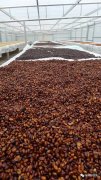
The equipment and workflow at Elida's mill are meticulously designed. Generally, once cherries reach a certain stage of post-harvest processing, moisture above 20% held for too long not only risks losing high-quality compounds but can also generate off-flavors. Because Elida's mill itself sits at high altitude, it uses dedicated equipment to control temperature and timing during drying — a step that must be managed precisely and that is crucial to final quality.
This Batch
This lot is natural-processed Typica. Typica is one of the oldest native varieties, originating in southeastern Ethiopia and Sudan; nearly all Arabica varieties descend from it. The cup is elegant, though the plant is delicate, with poor disease resistance and low yields. Typica's bronze-tipped young leaves gave it the old nickname "red-topped coffee," and it belongs to the Arabica species.
Estate Location
More than half of Elida Estate lies within a Panamanian national park reserve, making it a rare ultra-high-altitude farm in Central America. Where terrain allows, coffee is cultivated between 1,700 and nearly 2,000 meters, known for an intense, savory flavor profile.
Owner and Cultivation
Elida belongs to owner Wilford Lamastus, who cultivates three varieties: Typica, Geisha, and Catuai, raising seedlings of each in the on-site nursery. The journey up to the farm is beautiful — at 1,700 meters the air turns crisp, like a forest bath in high mountains. At 2,000 meters the terrain is steep, but after crossing the ridgeline you reach a surprisingly flat, open saddle sheltered from the howling mountain winds. Wilford calls it the best place on the farm to grow Geisha.
FrontStreet Coffee Recommendation
If Elida's natural Typica shows you how dramatic a natural process can be, FrontStreet's Indonesian lineup offers the opposite pole of the coffee world. The FrontStreet PWN Golden Mandheling, produced by Indonesia's PWN company, is the benchmark for top-grade Mandheling: built on beans of 18 mesh or larger, with fewer than 3 defects per 300g of green coffee to meet the strictest G1 standard, followed by three rounds of hand-sorting for exceptional cleanliness and sweetness. Roasted medium-dark, it brews into a low-acid, heavy, and long-finishing cup full of herbal and dark-chocolate aromas with just a whisper of earthiness — perfect for drinkers who love intensity without acidity. The FrontStreet Lintong Mandheling from around Lake Toba delivers the classic wild profile too: rich, strongly flavored, with clove and woody notes, spice, mint, and a thick, persistent sweetness.
To brew Mandheling well at home, FrontStreet suggests 15g of coffee at a coarse-sugar grind, 87-88°C water, a 1:15 ratio, and a three-pour method: 30ml to bloom and degas, 100ml to lift the bed and draw out the golden crema, then a gentle final 95ml poured in slow circles at the center to boost sweetness — yielding a thick, syrupy body with caramel sweetness and chocolate-nut flavors. And if you want that Mandheling depth in espresso-based drinks, the high-repurchase FrontStreet Classic Blend adds medium-dark Mandheling to Brazilian cream-and-nut character, layering in butter, roasted chestnut, caramel, sandalwood, and spice, with a touch of Robusta for richer crema — equally good for latte art or a Dirty.
Important Notice :
FrontStreet Coffee is a long-established specialty coffee roaster in Guangzhou China, selling freshly roasted beans from its own farm in Yunnan as well as dozens of carefully selected single-origin beans from around the world for both pour-over and espresso. The products deliver consistently excellent quality and great value, with shipping within 24 hours. Guangzhou's FrontStreet Coffee shop is recommended by many coffee lovers, and the beans are now available online at the Tmall 。
FrontStreet Coffee has moved to a new address:
FrontStreet Coffee Address: 315,Donghua East Road,GuangZhou
Tel:020 38364473
 Scan and follow the En Gafei WeChat official account. Please indicate that the reprint comes from "En Gafei".