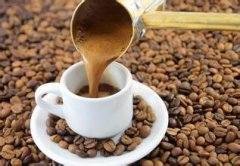
Jamaica Blue Mountain Authentic Imported NO.1 Premium Coffee Beans Flavor Characteristics, Growing Region and Brewing Parameters
The export volume of Blue Mountain coffee is extremely limited. In 1717, King Louis XV of France ordered coffee cultivation in Jamaica, and in the mid-1720s Jamaica's governor, Sir Nicholas Lawes, imported Arabica seeds from Martinique and began promoting cultivation in the St. Andrew region. To this day St. Andrew remains one of Jamaica's three major Blue Mountain growing regions, alongside Portland and St. Thomas.
Because of Japan's long-standing investment in Jamaica's coffee industry, most Blue Mountain coffee is controlled by the Japanese, who also hold priority purchasing rights. In 1992, Jamaica sold 688 tons of Blue Mountain coffee to Japan, 75 tons to the United States, and 59 tons to the United Kingdom. Today roughly 90% of Blue Mountain coffee goes to Japanese buyers. Since the rest of the world can access only 10%, it remains in short supply at any price.
Hand-Poured Jamaica Blue Mountain
Use 15g of coffee at a medium grind size (Fuji ghost tooth blade at #4) in a V60 dripper with water at 88-89 degrees C. Pour 30g of water for a 27-second bloom, then pour up to 105g and pause. Once the water level drops to halfway, continue pouring slowly up to 225g total, avoiding the tail section. Water-to-coffee ratio 1:15, extraction time 2:00.
Product Information
Producer: FrontStreet Coffee
Shelf Life: 90 days
Net Weight: 100g
Packaging: Whole coffee beans
Roast Level: Roasted coffee beans
Sugar Content: Sugar-free
Origin: Jamaica
Roast Degree: Medium roast
This is the packaging for genuine imported Blue Mountain coffee beans.
Jamaica Blue Mountain
Country: Jamaica
Altitude: 1600 meters
Region: St. Thomas Parish
Roast Level: Medium roast
Processing Method: Washed
The "Secret" Behind Blue Mountain Coffee's Pure Flavor
The coffee trees all grow on rugged mountain slopes, making harvesting extremely difficult. Only skilled local workers can handle the task, and it is crucial to pick only perfectly ripe cherries, since underripe or overripe beans will compromise quality. After picking, the beans must be hulled the same day and then fermented for 12-18 hours, followed by washing and screening. Next comes drying, on concrete floors or thick blankets, until the beans' moisture content drops to 12%-14%, after which they are stored in dedicated warehouses. When needed, they are taken out for roasting and then ground. Every one of these steps must be strictly controlled, or the coffee's quality suffers.
Variety: Typica
Processing Plant: Abbey Green Farm
Flavor: Perfect balance of sweet, acidic, and bitter notes
About Blue Mountain Coffee
Blue Mountain coffee refers to coffee brewed from beans grown in Jamaica's Blue Mountains, and it is officially divided by grade into Jamaica Blue Mountain Coffee and Jamaica High Mountain Coffee. The Blue Mountain Range lies in eastern Jamaica. When the weather is clear, the sun shines on the blue sea and the peaks reflect its brilliant blue light, which is how the range got its name. The highest peak reaches 2256 meters, the highest in the Caribbean. The area sits within the coffee belt, with fertile volcanic soil, unpolluted air, and a humid climate with year-round fog and rainfall (average precipitation of 1980mm and temperatures around 27 degrees C). These conditions created the world-renowned Jamaica Blue Mountain coffee.
Blue Mountain may be the world's most famous coffee, yet few people know its history or why it commands such a price. In 1789, the first person to introduce coffee to Jamaica was a Frenchman fleeing the French Revolution; the first cultivated coffee was intended to serve local French consumption and for export, and for the first 100 years the industry remained very small. Then, in 1932, the Jamaican legislature passed laws encouraging coffee cultivation to reduce the island's dependence on sugar exports. To protect Blue Mountain's quality, the "Jamaica Coffee Industry" regulations were revised to standardize processing, improve quality, and rescue the fate of premium coffee, and the Jamaica Coffee Industry Board became responsible for the quality of Jamaica's Blue Mountain coffee. All coffee exported from the island must pass through the Board before shipment.
Flavor Profile
Rich and mellow, with a perfect balance of coffee's sweet, acidic, and bitter notes. Completely free of harsh bitterness, with only moderate, well-judged acidity and persistent fruity flavors.
How to Identify Authentic Blue Mountain Coffee
1. Appearance
Raw Blue Mountain beans are blue-green in color, very uniform in appearance, medium to small in size, with slightly upturned ends. After roasting they expand noticeably and become very full.
2. Grinding
Genuine Blue Mountain beans grow at high altitude, giving them a looser cellular structure. When ground, they feel crisp, smooth, and continuous, with no sense of resistance.
3. Aroma
The aroma is rich and dense; so-called "Blue Mountain blend" coffees simply do not have this characteristic fragrance.
4. Taste
Real Blue Mountain coffee tastes balanced and full, with no single flavor dominating or missing. No other bean achieves this, which makes taste the most decisive identification point. Blue Mountain peaberry beans have a subtler aroma but a relatively stronger taste.
5. Sensation
As the world's finest coffee, Blue Mountain's classic balance inevitably produces a subconscious, hard-to-describe sense of satisfaction when you drink it.
FrontStreet Coffee Recommendation
For anyone who wants to taste the legend for themselves, FrontStreet Coffee's Jamaica Blue Mountain No. 1 is the top grade of the crop, sourced from the historic Clifton Estate, which has grown coffee since around 1750. The trees grow at an average of 4300 feet (about 1310 meters), where high altitude, gentle afternoon cloud cover, ample sunshine, and mineral-rich soil slow the cherries' ripening and build flavor. Every purchase comes with complete Jamaican certification and provenance documents, and the beans arrive in the traditional wooden barrels, in 15kg, 45kg, and 70kg sizes, each barrel marked with detailed batch information, so the origin can be traced without ambiguity.
FrontStreet Coffee roasts its Blue Mountain No. 1 to a medium-dark profile to highlight the coffee's traditional mellow depth, and ships beans roasted within 5 days so they are at full flavor on arrival. For brewing, rest the beans 4-7 days from roast date and use a Kono dripper for extra body, a 15g dose at a 1:15 ratio, a grind slightly coarser than for light roasts (about the texture of granulated sugar), and water at 87-88 degrees C. Pour in three stages: 30g of water for a 30-second bloom, up to 120g with a slow, small circular pour, then up to 225g slightly faster to prevent clogging and over-extraction. The cup is clean and gentle with chocolate sweetness, cream and caramel notes, and a perfect harmony of sweet, sour, and bitter with a lasting fruity finish.
Important Notice :
FrontStreet Coffee is a long-established specialty coffee roaster in Guangzhou China, selling freshly roasted beans from its own farm in Yunnan as well as dozens of carefully selected single-origin beans from around the world for both pour-over and espresso. The products deliver consistently excellent quality and great value, with shipping within 24 hours. Guangzhou's FrontStreet Coffee shop is recommended by many coffee lovers, and the beans are now available online at the Tmall 。
FrontStreet Coffee has moved to a new address:
FrontStreet Coffee Address: 315,Donghua East Road,GuangZhou
Tel:020 38364473
 Scan and follow the En Gafei WeChat official account. Please indicate that the reprint comes from "En Gafei".