Pour-Over Brewing Parameters for Panama Hacienda La Esmeralda Geisha Blue Label Washed Specialty Coffee Beans
For hand-poured Blue Label, use 15g of coffee grounds at a medium-fine grind (Fuji ghost tooth blade grinder, setting 3.5), a V60 dripper and water at 91-93°C. First pour 30g of water for a 27-second bloom, then pour to 105g and pause. When the water level drops halfway, slowly pour until reaching a total of 225g. Avoid the tail section. Brew ratio 1:15, total extraction time 2:00.
Panama Geisha (Hacienda La Esmeralda)
Country: Panama
Grade: Blue Label
Region: slopes of Baru Volcano
Roast level: light
Processing method: washed
Variety: Geisha
Estate: Hacienda La Esmeralda
Flavor notes: oolong tea aroma, peach fragrance, honey sweetness
Panama Hacienda La Esmeralda Geisha Coffee Beans
Origin: Panama
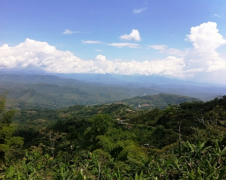
Region: the slopes of Baru Volcano, Panama's highest peak to the west
Estate: Hacienda La Esmeralda
Grade: Blue Label
Growing altitude: 1,450 meters
Processing method: fine washed
Special certification: Rainforest Alliance Certified
Roast level: light roast (City-)
What is the Panama Coffee Auction?
In 1996, when international coffee prices were at their lowest, seven coffee estates in the Boquete and Volcan regions caught sight of the coming specialty coffee era and formed the Panamanian Association of Special Coffees of Panama (SCAP). In 2013, the highest bid for washed Geisha at the BOP (Best of Panama) auction exceeded $160 per pound, while the highest bid for natural Geisha went to a Hacienda La Esmeralda natural Geisha at over $350 per pound.
Hacienda La Esmeralda's Three Geisha Brands
Hacienda La Esmeralda has three Geisha brands, classified by altitude:
Auction Geisha (Esmeralda Special, Red Label): selected from altitudes above 1,550 meters
Boquete Geisha (Green Label): selected Geisha from 1,500 meters
Esmeralda 1,500 (Blue Label): selected Geisha varieties from around 1,500 meters
The History of the Geisha Variety
The Geisha variety was discovered in the Geisha forest of Ethiopia in 1931 and then sent to the Coffee Research Institute in Kenya. In 1936 it was introduced to Uganda and Tanzania, and Costa Rica brought it in 1953. For a long time few people paid it much attention until Don Pachi originally brought it from the small town of Gesha in southwestern Ethiopia to Costa Rica. Geisha afterward entered Panama along the southern route, and Hacienda La Esmeralda separated it from other varieties and went on to win the national coffee competition championship.
Geisha's Exceptional Characteristics
Geisha has rich sweetness, an extremely clean mouthfeel, and abundant aromas that run from berries and citrus to mango, papaya and peach. A very distinct bergamot-like aftertaste is another typical cupping characteristic. To date, Geisha has remained the champion among coffee varieties.
Panama is the most important region on the world coffee map. Coffee beans from its annual auctions consistently fetch prices exceeding hundreds of dollars per pound.
Geisha is pronounced the same as the Japanese word "geisha," so it is also known as Geisha coffee. Because the trees are taller than typical coffee varieties, they were originally planted in a small area of the estate and used as windbreaks. The estate owner's son, wanting to enter the annual Panama Best Coffee competition, tested every coffee variety on the property, which is how Geisha got its chance to take center stage. Since then it has competed around the world, winning a total of eleven championships.
Flavor Description
Oolong tea aroma, peach fragrance and honey sweetness: refreshing and comfortable, bright yet balanced, with extremely strong aromatic layers. The whole aroma is wrapped in caramel sweetness. On entry, the tip of the tongue picks up distinct fruit acidity that softens and smooths in the mouth. The fruity sweetness and aftertaste are intense, like drinking a cup of fresh fruit tea. The lower the temperature, the more delicate the acidity. The flavor lasts remarkably long.
Product Information
Manufacturer: FrontStreet Coffee
Shelf life: 90 days
Net weight: 100g
Packaging: bulk
Origin: Panama
FrontStreet Coffee Recommendation
Hacienda La Esmeralda's labels trace altitude, and the Blue Label above sits at the accessible end of that ladder, but the estate's Geisha story continues across the whole range at FrontStreet Coffee. FrontStreet Coffee Esmeralda Red Label Geisha is the top of the line, sold under the Esmeralda Special name and grown on a single plot at 1600-1800 meters, with every lot required to cup above 90 points; FrontStreet Coffee Esmeralda Green Label Geisha (originally Private Collection) blends lots from several plots to show the estate's signature high-altitude Geisha character at a friendlier price and, being washed, drinks cleaner and fresher than the natural Red Label.
Ethiopia, where the variety began, offers a brighter contrast. FrontStreet Coffee Genlana Gesha comes from a processing station founded in 2014 on roughly 700 hectares near the Yirgacheffe coffee area, with cherries hand-picked and dried on raised beds for 14-20 days; a light-to-medium roast brings out citrus acidity, elegant ginger-flower aroma and ripe-fruit sweetness. For the collector, FrontStreet Coffee Geisha Village Gold Label is the Gesha 1931 variety and makes up 10% of the village's output, while Geisha Village Red Label is Gori Gesha, 15% of production and scoring 88 or above on the SCA scale. FrontStreet Coffee Boquete Geisha rounds out the range as a washed, entry-level Panamanian Geisha with the classic orange-blossom honey, oolong tea and fine fruit acidity; if you want Geisha flavor in a more everyday blend, FrontStreet Coffee Strawberry Candy pairs Costa Rica honey-processed coffee with Panama Geisha.
Geisha is a dense, hard bean, so FrontStreet Coffee suggests a grind around a Chinese standard #20 sieve with a 78% pass rate, close to fine caster sugar, and water at 91°C. A common recipe is 15g in a small Hario V60 at a 1:16 ratio, poured in three stages: a 30g bloom for 30 seconds, a slow circular pour to 125g, a pause as the bed drains, then a final slow pour to 225g, for a total of about 2 minutes 10 seconds to 2 minutes 20 seconds. Bridging the roast and the brew this way keeps the floral aromatics and the sweet, bright acidity in balance.
Important Notice :
FrontStreet Coffee is a long-established specialty coffee roaster in Guangzhou China, selling freshly roasted beans from its own farm in Yunnan as well as dozens of carefully selected single-origin beans from around the world for both pour-over and espresso. The products deliver consistently excellent quality and great value, with shipping within 24 hours. Guangzhou's FrontStreet Coffee shop is recommended by many coffee lovers, and the beans are now available online at the Tmall 。
FrontStreet Coffee has moved to a new address:
FrontStreet Coffee Address: 315,Donghua East Road,GuangZhou
Tel:020 38364473
 Scan and follow the En Gafei WeChat official account. Please indicate that the reprint comes from "En Gafei".