Costa Rica Yellow Honey Elsha Rocadura Premium Coffee Beans Flavor Profile and Aroma Characteristics
Flavor Profile
Flavor: brown sugar, floral notes, almond, black tea, orange and a sweet spice sensation, with mild acidity, a syrupy texture and an excellent finish.
Product Information
Manufacturer: FrontStreet Coffee
Shelf Life: 90 days
Net Weight: 227g
Packaging: Bulk coffee beans
Roast Level: Roasted coffee beans
Sugar Content: Sugar-free
Origin: Costa Rica
Roast Degree: Medium roast
Coffee Details
Costa Rica Helsar de Zarcero
Country: Costa Rica
Grade: SHB
Region: West Valley
Roast Level: Medium roast
Processing Method: Yellow Honey
Varieties: Caturra, Catuai
Processing Mill: Helsar de Zarcero Mill
Flavor: Brown sugar, almond, black tea
Costa Rican Coffee Heritage
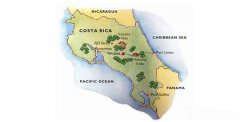
Costa Rica was the first country in Central America to cultivate coffee, and it has both a long history and a complete system running from production through to sales. Sitting on the Central American isthmus among numerous volcanoes, the country enjoys natural advantages in sunlight and soil. Its climate is shaped by Pacific and Atlantic currents and sea breezes, which together produce coffee with the distinct characteristics of its local microclimates. In both quality and quantity, Costa Rican coffee has consistently won global recognition and ranks among the world's best.
Terrain and Growing Regions
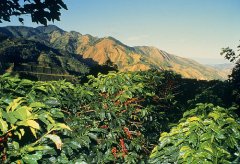
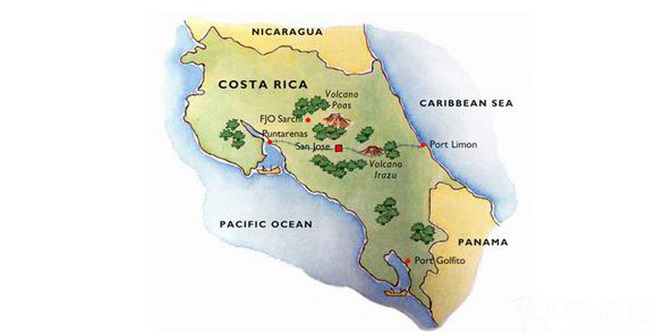
Fertile volcanic ash from Costa Rica's volcanic terrain, mild and suitable temperatures and steady, abundant rainfall all help make coffee one of the country's main agricultural products. The seven major growing regions are Tarrazú, Tres Rios, Orosi, Central Valley, West Valley, Turrialba and Brunca.
Innovative Processing Methods
Costa Rica has a long coffee history, but over the past decade innovative "dry" processing methods have become the trend. The new family of methods, collectively called honey processing, uses pulping machines to adjust how much pulp is removed, producing a honey sensation that ranges from light to intense as the color moves from light to dark, through white, yellow, red and black. Each variation offers a different level of acidity, a different aromatic complexity and a different body, and each has its own merits. The Helsar de Zarcero processing mill, in the Naranjo area of the West Valley, is highly regarded in this region. Alongside its own plantations, it processes and produces green beans for nearby estates and smallholder farmers.
Yellow Honey Processing
Yellow Honey Processing: approximately 40% of the mucilage is removed. The drying method requires the most direct heat absorption, receiving maximum sunlight, and takes about 8 days to reach a stable moisture content.
Cupping Notes
Costa Rican coffee has long been treated as a classic model of perfection, with balance, cleanliness and mildness as its foundation. This lot from the Helsar de Zarcero Mill in the West Valley benefits from excellent natural conditions and skilled regional cultivation management. It delivers a nearly perfect classic profile: vibrant citrus acidity, blackberry fruit aroma, generous acidity and body, a melon-like sweetness, a smooth mouthfeel, stone fruit and subtle florals, and a remarkable coffee flower fragrance in the aftertaste. It is a coffee full of Latin American rural character.
How the Honey Scale Actually Works
Honey processing sits between washed and natural, and the color words describe how much mucilage is left on the parchment, not the color of the bean. A pulper set to rinse aggressively leaves less behind; a pulper set to rinse lightly leaves more. Yellow honey removes roughly 40% of the mucilage, which leaves a thin layer that dries quickly under full sun, about 8 days. Red honey, further up the scale, removes less and usually needs shade nets and a longer, slower dry. Black honey removes almost none and can take 2 weeks or more under cover. The more mucilage stays, the more sugar is available to the bean, so sweetness and fruit rise together, and so does the difficulty of the dry.
Why This Lot Reads as Balanced Rather Than Sweet
Caturra and Catuai, the two varieties here, both keep the cup structured: they bring a clean acidity and a firm body without the floral extravagance of a Geisha. Combined with a yellow honey process that leaves only a light coating, and a medium roast that develops sugars without roasting them into caramel, the result is a coffee where sweetness, acidity and body sit in balance rather than one dominating. That is why the notes lean toward brown sugar, almond and black tea instead of jam or syrup, and why the orange and spice stay in the background. Brewing it a little cooler, around 88-89°C, keeps the citrus bright and the finish clean.
FrontStreet Coffee Recommendation
This Helsar de Zarcero lot is a good argument for medium roasting: it develops the sugars enough to round off the acidity without flattening the citrus or the floral top note. That balance is what FrontStreet Coffee aims for with its medium-roast selection. Brazil Queen Estate is the most straightforward companion. Grown in Mogiana on fertile red volcanic soil, it is a rare yellow bourbon and pours a fresh, clean sweetness that is hard to find in other origins, with cream peanut, chocolate, toasted bread and sugarcane over a soft, rounded body. It is equally at home as a pour-over, in a moka pot or on an espresso machine. Jamaica Blue Mountain No. 1 takes the same idea of balance in a different direction. A Typica grown in Jamaica, it avoids the sharp fruit acidity of some African coffees and the heavy bitterness of a dark roast, sitting instead between acidity, sweetness, bitterness and aroma, with cream, caramel, chocolate, nut and a light fruit note over a supple, rounded body.
If you would rather push the fruit forward while keeping the roast in the middle, Strawberry Candy Geisha Blend is the one to try. It combines two high-altitude origins, a honey-processed Costa Rican coffee and a washed Panama Geisha, and the medium roast preserves the floral and fruit notes of both while adding a subtle roasted aroma. In the cup it shows caramel, raisin and candied fruit along with an intense rose floral note, and it works as a cold brew, a pour-over or an espresso. FrontStreet Coffee 2013 Yunnan Typica rounds out the group as a Chinese single origin: grown on our own estate and roasted medium to bring out its balanced, gentle character, it carries nut, brown sugar, black tea and apricot, and suits a pour-over, a cold brew or an American-style drip machine at a very reasonable price. Between them, these four cover the range that a good medium roast can reach.
Important Notice :
FrontStreet Coffee is a long-established specialty coffee roaster in Guangzhou China, selling freshly roasted beans from its own farm in Yunnan as well as dozens of carefully selected single-origin beans from around the world for both pour-over and espresso. The products deliver consistently excellent quality and great value, with shipping within 24 hours. Guangzhou's FrontStreet Coffee shop is recommended by many coffee lovers, and the beans are now available online at the Tmall 。
FrontStreet Coffee has moved to a new address:
FrontStreet Coffee Address: 315,Donghua East Road,GuangZhou
Tel:020 38364473
 Scan and follow the En Gafei WeChat official account. Please indicate that the reprint comes from "En Gafei".