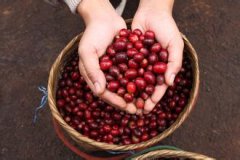
A Concise Guide to Costa Rican Tarrazú Specialty Coffee Bean: Flavor Clarity, Grind Size, Roast Level, and Processing Methods
Costa Rica's coffee industry was originally controlled by the Instituto del Café de Costa Rica (ICAFE), but has since been taken over by the Oficina del Café. Among exported coffees, those deemed substandard are dyed blue with plant-based dyes before being returned for domestic sale. Coffee consumed domestically — dyed or not — accounts for roughly 10% of total production, and local per-capita coffee consumption is twice that of Italy or the United States.
Costa Rican Coffee
This coffee-producing region cultivates various grades and types of coffee that together account for one-third of global consumption, occupying a significant place in the world coffee trade. Although Costa Rica faces natural disasters several times more severe than other regions, its available cultivation area is enough to compensate.
The varieties here are numerous, but industrial policy focuses on quantity and affordability, so premium specialty coffees are relatively rare. They do, however, serve as excellent choices for blending with other coffees.
The most famous Costa Rican coffee has a fragrant, mellow, neutral flavor profile. It can be brewed on its own or blended with other beans to create excellent blends.
Other coffee types such as Rio and Paraná require minimal care and can be mass-produced. Though their flavor is somewhat coarse, they remain cost-effective. Distributed across the country, quality varies considerably, which led to independent standards: classification by impurity content from NO.2 to NO.8, by bean size from NO.13 to NO.19, and six flavor grades. Nearly all Arabica varieties offer excellent quality and stable prices, with "Costa Rican" the most renowned. Since ancient times it has been an essential component of blended coffees, familiar to the general public.
Premium Costa Rican Coffee
Exceptional Costa Rican coffee is known as "Strictly Hard Bean," which can grow at altitudes above 1,500 meters. Altitude has always been a challenge for coffee growers. Higher-altitude beans are superior not only because increased elevation enhances acidity and thus flavor, but also because lower nighttime temperatures at higher elevations slow tree growth, resulting in more concentrated flavor. Large elevation differences also provide abundant rainfall, which greatly benefits coffee trees. The downside is higher transport costs, which can make coffee production unprofitable. Costa Rica's coffee industry has adopted new technologies to increase efficiency, including using "electric eyes" to select beans and identify irregular-sized ones. Coffee has been an important economic source for Costa Rica since its introduction in 1808, giving it a 200-year cultivation history.
Economic and Social Impact
As Costa Ricans say, related industries have transformed the country and enabled it to enjoy a prosperous environment, and coffee has indeed made an outstanding contribution. Although Costa Rica's land area ranks third from the bottom among Central American countries, its economic environment surpasses half the region's nations. Because of the people's prosperity and social stability, there is also capacity to address environmental issues, with over 30 national parks established across the country.
Coffee was introduced to Costa Rica from Cuba in 1808. Today its coffee industry is one of the best organized in the world, with yields reaching up to 1,700 kilograms per hectare. Costa Rica has a population of only 3.5 million but more than 400 million coffee trees. Coffee exports account for 25% of the country's total export value. Costa Rica's volcanic soil is extremely fertile and well-drained, particularly in the Central Plateau, where the soil consists of several consecutive thick layers of volcanic ash and dust. As a result, Costa Rica became the first Central American country to grow coffee and bananas commercially, and the two are the country's main export commodities.
FrontStreet Coffee Costa Rican Coffee
FrontStreet Coffee Costa Rican coffee features full-bodied beans, ideal acidity, and a unique intense aroma.
FrontStreet Coffee Costa Rican coffee consists entirely of Arabica beans, processed using the washed method. Its style is bright and aromatic, as clear as wind chimes swaying in a gentle breeze, featuring mild acidity and excellent sweetness.
Thanks to its sweetness, it remains delicious even when cooled, which is a distinctive feature of FrontStreet Coffee Costa Rican coffee. When tasting it, it is best to add only small amounts of sugar and creamer so as to appreciate its pure flavor. In Costa Rica, only Arabica coffee trees are cultivated, and through improvement the beans' quality has become better and more stable. For convenient harvesting, the trees are continuously pruned to maintain a height of about 2 meters. What we consume is the flavor released from the seeds within the fruit when steeped in water. After harvesting, raw beans must undergo de-pulping, removal of fruit flesh and parchment, and sun-drying before the seeds can be roasted. Some steps can be replaced by machines, greatly increasing production speed, but coffee harvesting cannot be mechanized and must be done by hand.
FrontStreet Coffee Recommendation
Costa Rica's clean, sweet, neutral cup is what makes it such a reliable blender, and FrontStreet Coffee's Brazilian single origins offer a similarly balanced, low-acid profile. The Cerrado red Bourbon is a classic: a mid-roast that brings out creamy peanut, toast, caramel, and hazelnut, round and full-bodied with gentle bitterness and little acidity, and versatile enough for pour-over, moka pot, espresso SOE, siphon, and French press. The Queen's Estate is a rarer yellow Bourbon from Mogiana, with a sugarcane sweetness and fruit and chocolate notes that few other regions can match.
If what you want is that balanced style in an espresso blend, FrontStreet Coffee's Classic Blend, nutty Premium Blend, and Black Cocoa Blend all include Brazilian beans, whose chocolate and cream aromas and soft sweet-sour-bitter balance make extraction steadier and more forgiving.
Important Notice :
FrontStreet Coffee is a long-established specialty coffee roaster in Guangzhou China, selling freshly roasted beans from its own farm in Yunnan as well as dozens of carefully selected single-origin beans from around the world for both pour-over and espresso. The products deliver consistently excellent quality and great value, with shipping within 24 hours. Guangzhou's FrontStreet Coffee shop is recommended by many coffee lovers, and the beans are now available online at the Tmall 。
FrontStreet Coffee has moved to a new address:
FrontStreet Coffee Address: 315,Donghua East Road,GuangZhou
Tel:020 38364473
 Scan and follow the En Gafei WeChat official account. Please indicate that the reprint comes from "En Gafei".