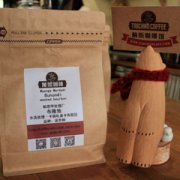
Premium Authentic Imported Jamaican Blue Mountain Coffee Beans No.1 - Gourmet Coffee Beans
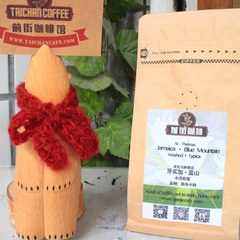
Manufacturer: Coffee Workshop Address: No. 10 Bao'an Qian Street, Dongshankou, Yuexiu District, Guangzhou Contact: 020-38364473 Shelf Life: 90 days Net Weight: 100g Packaging: Bulk coffee beans Raw/Roasted: Roasted coffee beans Sugar Content: Sugar-free Origin: Jamaica Roast Level: Medium roast
Coffee Information
Country: Jamaica
Altitude: 1600 meters
Region: Saint Thomas Parish
Roast Level: Medium roast
Processing Method: Washed
Variety: Typica
Processing Mill: Abbey Green Farm
Flavor: Perfect balance of sweet, acidic, and bitter notes
Blue Mountain Coffee
Blue Mountain Coffee is the name given to coffee grown in Jamaica's Blue Mountains. By grade it splits into Jamaica Blue Mountain Coffee and Jamaica High Mountain Coffee. The range rises in the east of the island; on a clear day the sun beats down on the azure Caribbean, and the peaks throw that colour back, which is how the mountains earned the name. The highest summit reaches 2,256 meters, the tallest point in the Caribbean.
The range sits inside the coffee belt, with fertile volcanic soil, clean unpolluted air and a humid climate of year-round mist and rain (average precipitation of 1,980mm and temperatures around 27°C). Those conditions created the Jamaica Blue Mountain Coffee the world knows, and they help make it the second most expensive coffee in the world.
The "Secret" Behind Blue Mountain Coffee's Pure Flavor
The coffee trees grow on steep, rugged slopes, which makes harvesting unusually hard work; only skilled local pickers can manage it. Choosing properly ripe cherries at harvest is critical, since underripe or overripe fruit drags down quality. Once picked, the cherries are hulled the same day and fermented for 12 to 18 hours. The beans are then washed and sorted. Drying comes next, on concrete patios or heavy blankets, until moisture drops to 12% to 14%, after which the beans go into dedicated warehouses. They are taken out only when needed, then roasted and ground. Every one of these steps has to be tightly controlled, or the coffee suffers.
Blue Mountain Coffee is exported in very small volumes. In 1717 King Louis XV of France ordered coffee planted in Jamaica. In the mid-1720s the island's governor, Sir Nicholas Lawes, brought Arabica seed from Martinique and began promoting cultivation around St. Andrew. St. Andrew is still one of the three main growing regions for Jamaica Blue Mountain Coffee, alongside Portland and St. Thomas.
How to Identify Authentic Blue Mountain Coffee
1. Appearance
Green Blue Mountain beans are blue-green, remarkably uniform, medium to small in size and slightly curved at the ends. After roasting they expand noticeably and look very full-bodied.
2. Grinding
Authentic Blue Mountain beans grow at high altitude, which leaves their cell structure relatively loose. Ground by hand they feel crisp and smooth, breaking down evenly with no resistance.
3. Aroma
The aroma is intense and dense. So-called blended Blue Mountain coffee simply does not carry that signature fragrance.
4. Taste
Authentic Blue Mountain tastes balanced and rich, with no single note shouting over the others or dropping out. This is the most important test of all, and no other bean matches it. Blue Mountain peaberries are more restrained on the nose but comparatively stronger on the palate.
5. Sensation
As the world's finest coffee, Blue Mountain's classic balance inevitably delivers a subconscious, hard-to-describe sense of satisfaction in the cup.
Flavor Profile
Rich and mellow, with a perfect balance of coffee's sweet, acidic and bitter notes. Bitterness is essentially absent, leaving only moderate, well-judged acidity and a lingering fruity finish.
FrontStreet Coffee Recommendation
Not every bag labelled "Blue Mountain" is the real thing. FrontStreet Coffee's Jamaica Blue Mountain No. 1 comes from Clifton Estate and ships with certification from the Jamaica Coffee Industry Board, along with origin documentation. Jamaica is the only origin that still packs green coffee in traditional wooden barrels, and FrontStreet's barrels carry the estate's printed name and the green frog logo, so the packaging itself is part of the proof. Traditional Blue Mountain barrels come in 15 kg, 45 kg and 70 kg sizes.
The production behind that label is genuinely scarce. Jamaica's entire Blue Mountain region yields under 2,500 tonnes a year, and Japan has historically bought more than 70% of it, so the volume reaching the rest of the world is smaller still. FrontStreet roasts its Blue Mountain No. 1 with a medium-dark profile that lets the classic balance come through: nut, dark chocolate, cream caramel and a soft sweetness unfold in layers, with acid, sweet, bitter and aromatic notes in tune rather than one dominating.
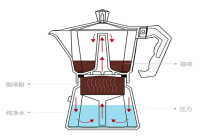
Blue Mountain is more versatile than its reputation suggests. Pour-over is the clearest way to taste the terroir, and FrontStreet suggests a 1:15 to 1:16 brew ratio, water at 87-88°C and a medium-coarse grind. A moka pot works just as well for anyone who wants more weight: grind slightly finer than for pour-over, start with hot water in the base, heat over medium-low, and pull it off the heat as the last of the coffee rises. Either way you get the chocolate, caramel and nut character that has kept this coffee legendary for decades.
Important Notice :
FrontStreet Coffee is a long-established specialty coffee roaster in Guangzhou China, selling freshly roasted beans from its own farm in Yunnan as well as dozens of carefully selected single-origin beans from around the world for both pour-over and espresso. The products deliver consistently excellent quality and great value, with shipping within 24 hours. Guangzhou's FrontStreet Coffee shop is recommended by many coffee lovers, and the beans are now available online at the Tmall 。
FrontStreet Coffee has moved to a new address:
FrontStreet Coffee Address: 315,Donghua East Road,GuangZhou
Tel:020 38364473
 Scan and follow the En Gafei WeChat official account. Please indicate that the reprint comes from "En Gafei".