A Sweet and Rich Honduras San Juan Cidra Premium Coffee Bean: Origin, Development, History, and Culture
Ask FrontStreet Coffee which coffee was the hottest thing going at the end of 2019, and the answer is without hesitation the whiskey barrel-treated Sherry from Honduras. It became so sought-after that cafés scrambled for allocations and it commanded premium prices. The reason is simple: an intense sherry-barrel character carried on rich, complex layers. But Sherry is not the only Honduran coffee worth your attention — have you tried San Juan Cidra?
Country Profile
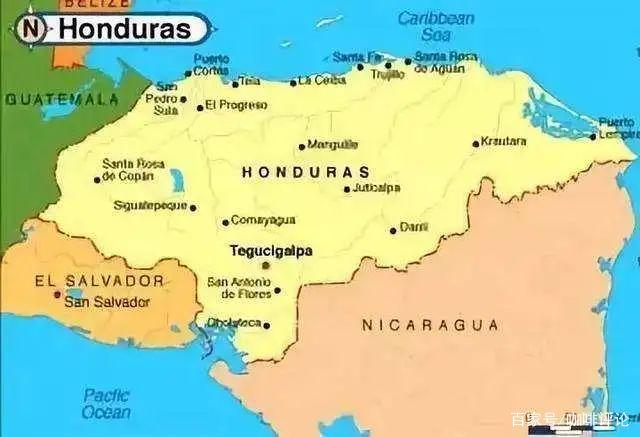
Honduras sits in northern Central America, with the Caribbean Sea to the north and the Gulf of Fonseca on the Pacific to the south. Nicaragua and El Salvador lie to the east and south, Guatemala to the west. The country is mostly mountain and plateau, and a tropical climate of moderate temperatures and generous rainfall makes it ideal coffee country.
Honduras produces two exceptionally well-regarded grades. One is "Highland Coffee," grown between 1,000–1,500 meters; the other is "Selected Highland Coffee," grown at 1,500–2,000 meters, the country's highest expression. Most exports head to the United States and Germany.
In growing conditions Honduras is the equal of neighbors like Guatemala and Nicaragua. The country has 280,000 hectares of coffee farms, overwhelmingly small operations — most under 3.5 hectares — and these small plantations account for sixty percent of total production. In the mountain regions beans are hand-picked and carefully processed to a high standard. Honduras harvests three million bags a year, delivering both quantity and quality, and ranks among the world's top ten coffee-exporting countries.
Honduran beans are large, uniform, and evenly colored with a healthy gloss. For easier picking, farmers prune trees to no more than 150 centimeters — taller trees would mean ladders, wasted time, and branches damaged by bending. Because cherries on the same branch ripen at different times, everything is picked by hand to protect quality, with ripe fruit sorted out carefully; a single branch can take several weeks to harvest completely.
Coffee Regions
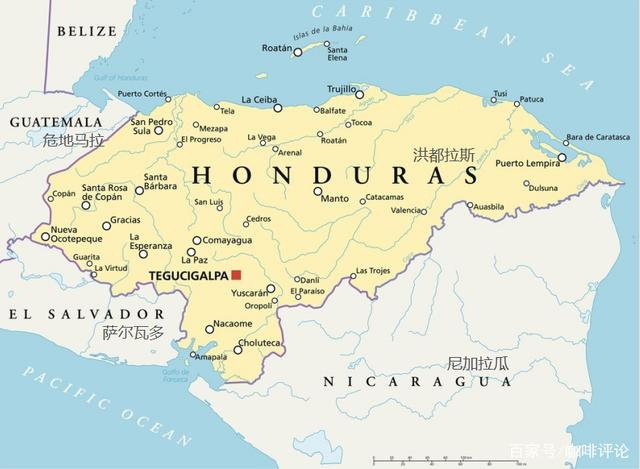
Honduras has six main coffee regions: five contiguous areas in the west — Santa Bárbara, Copán, Ocotepeque, Lempira, and La Paz — plus El Paraíso in the southeast. Honduran coffee generally leans toward low acidity with heavy caramel sweetness, and each of these regions adds its own twist — a touch more acidity here, a distinct aroma there. Quality is already excellent, yet prices remain competitive as the country keeps building its reputation.
Premium Honduran coffee is washed. The process begins with a soak: defective cherries float and are discarded, the good fruit goes into a depulper where spinning drums strip the skin, and the depulped beans are machine-screened to select the best — larger fruit generally meaning better maturity. Sun-drying finishes the job and lends the cup a subtle fruit aroma.
Region and Estate
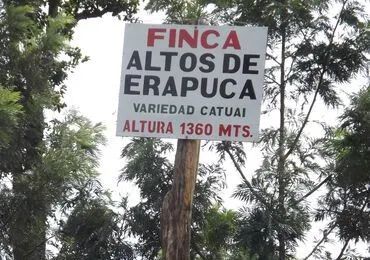
San Juan Cidra is a small village about 40 kilometers northeast of Tegucigalpa, the Honduran capital, inside the buffer zone of La Tigra National Park — a rainforest ecosystem whose parkland acts as a giant water reservoir. The coffee grows in the shade of banana, avocado, and papaya trees.
Finca Altos de Erapuca is a cooperative organized by hundreds of coffee farmers in the San Juan Cidra area. Its farm runs its own washed processing plant and fermentation tanks.
The Washed Process
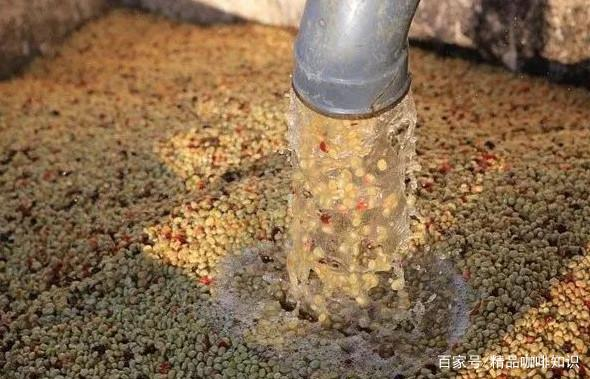
Premium Honduran coffee is hand-picked, with ripe cherries selected over several weeks. Washing starts with a soak to float off defective beans, then the pulp is removed mechanically — local farmers treat larger fruit as the mark of better maturity. The beans ferment for 10–12 hours, are washed thoroughly, and dry on African raised beds for 8–10 days. Yields are high and the flavor carries a subtle fruit aroma with lively acidity.
Variety: Catuai
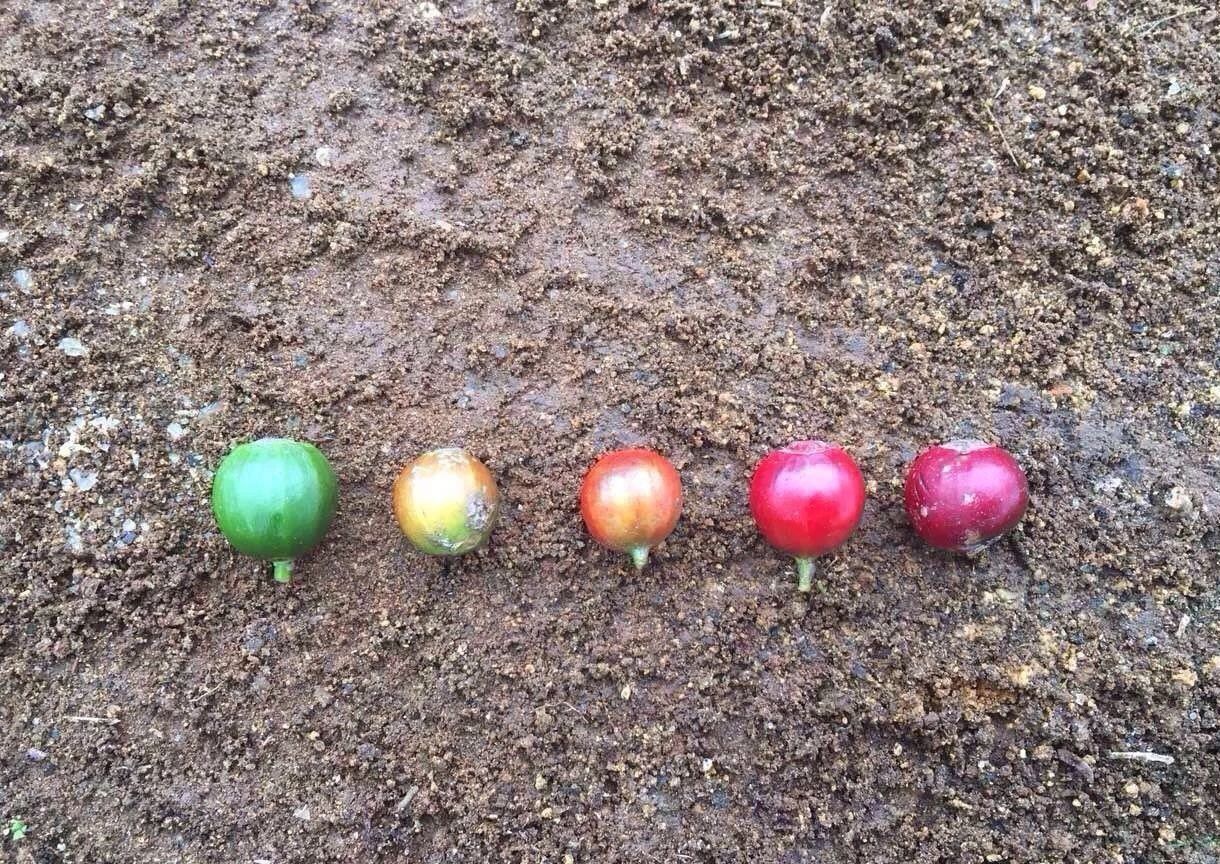
Catuai is a hybrid of Mundo Novo and Caturra. Its fruit resembles Bourbon in shape, but the plants yield more, and the cup shows good acidity.
FrontStreet Coffee's Roast Profile

Charge the drum at 200°C with airflow at 3. After 1 minute drop the heat to 170°C, holding airflow steady. At 5'45", when the probe reads 151.7°C, the bean surface turns yellow and the grassy aroma disappears completely — dehydration is done. Cut the heat to 140°C and raise airflow to 4. At 9'00" the bean surface shows wrinkles and the occasional dark spot, and the toast aroma unmistakably turns to coffee aroma — the prelude to first crack. Listen closely from here: first crack begins at 9'23". Drop the heat to 80°C, open the airflow fully (adjust heat with great care to keep the crack alive), and drop the beans at 202°C.
Cupping Notes
Excellent sweetness — caramel especially — over a rich, oily mouthfeel that builds a full body, with cream, roasted nuts, milk chocolate, and just a hint of bitterness.
Honduras San Juan Cidra
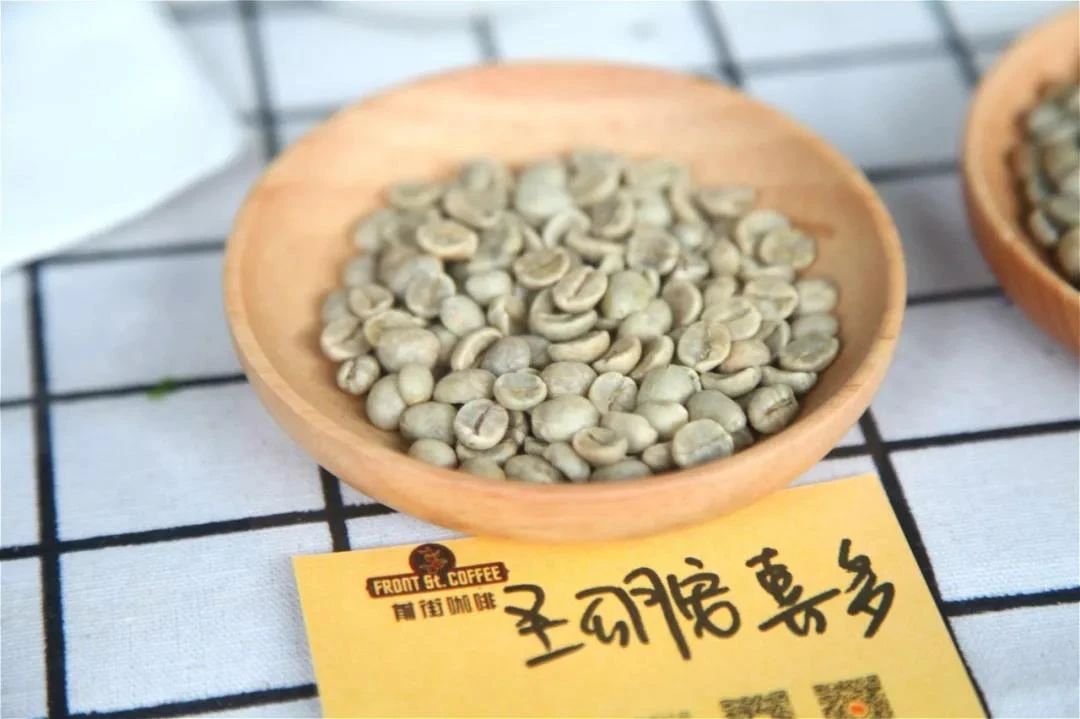
Country: Honduras
Region: San Juan Cidra
Estate: Finca Altos de Erapuca
Altitude: 1,300 m
Variety: Catuai
Processing: Washed
FrontStreet Coffee's Brewing Method
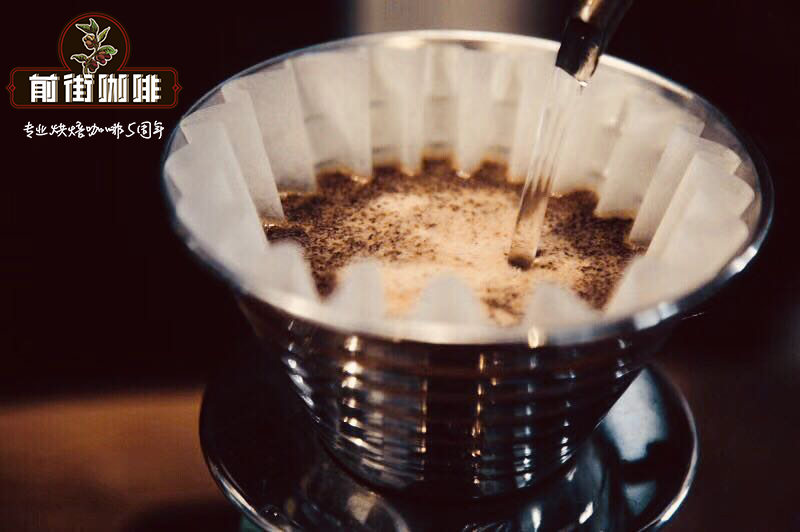
Dripper: V60
Water Temperature: 88–89°C
Grind Size: Fuji grinder setting 4
Coffee-to-Water Ratio: 1:15
Brewing Technique

Bloom for 30 seconds, then pour in stages at 30–125–225 grams.
Why It Brews This Way
San Juan Cidra is roasted slightly darker, so to keep bitterness in check FrontStreet Coffee grinds to a raw-sugar texture and lowers the water temperature, drawing out a full-bodied liquor that shows off its caramel, cream, and nut sweetness.
During the bloom and the first pour, keep the stream close to the coffee bed. At this stage the grounds swell as they absorb water, gas escapes vigorously, and the gaps between particles are wide — a high pour would race through the grounds without extracting enough. On the second pour, raise the stream a little to agitate the fines at the bottom of the filter and keep it from clogging.
FrontStreet Coffee Recommendation
More High-Sweetness Beans to Try
If the caramel sweetness of San Juan Cidra is your thing, FrontStreet Coffee has several more high-sweetness beans worth a place on the shelf. The Costa Rica Black Honey lot showcases the honey process at its most intense: cherries are floated and sorted, depulped, then dried with all the mucilage still attached, and because that mucilage is loaded with sugar the cup reaches the deepest fermentation and highest sweetness of any honey style. FrontStreet Coffee's Blackberry, a high-grown Costa Rican single origin from this process, is best roasted medium-light and brews up sweet florals, grape, sweet orange, and liqueur-chocolate notes. The Brazil Fazenda Rainha (Queen Estate) lot, medium roasted, opens with roasted-peanut and dark chocolate aromatics and finishes with the lingering return of sweetness that marks a great dark roast — and pulls a dense, velvety crema for Americanos and lattes. And for something fruity without any bitterness, the Boundary Estate Xijao (Sidra-style lot) offers grape, apricot, passion fruit, and candy-like sweetness with a winey aftertaste that makes a refreshingly grape-juicy iced Americano.
Important Notice :
FrontStreet Coffee is a long-established specialty coffee roaster in Guangzhou China, selling freshly roasted beans from its own farm in Yunnan as well as dozens of carefully selected single-origin beans from around the world for both pour-over and espresso. The products deliver consistently excellent quality and great value, with shipping within 24 hours. Guangzhou's FrontStreet Coffee shop is recommended by many coffee lovers, and the beans are now available online at the Tmall 。
FrontStreet Coffee has moved to a new address:
FrontStreet Coffee Address: 315,Donghua East Road,GuangZhou
Tel:020 38364473
 Scan and follow the En Gafei WeChat official account. Please indicate that the reprint comes from "En Gafei".