Where Are Geisha Coffee Beans From - Origin and Variety Introduction
Where Are Geisha Coffee Beans From? Origin and Variety Introduction
Geisha coffee from Panama's Hacienda La Esmeralda has become a dream rarity in the coffee world. As one Geisha enthusiast once put it: "Its floral aroma is like fireworks, continuously blossoming in your mouth as you taste it, with juice-like notes of lemon, citrus, and strawberry — it feels more like juice than coffee." What other coffee can command the stage the way Geisha does? For many coffee lovers, drinking Geisha from Hacienda La Esmeralda each year has become an indispensable annual ritual, much like a birthday feast.
The dry aroma of Geisha is exceptionally bright and elevated, marked by rose and jasmine with hints of pomelo and citrus; a light roast brings out nutty tones, while the wet aroma adds hazelnut and even more floral character. On the palate, the first sip may seem slightly reserved compared to those soaring aromas, but as the cup cools, the floral and fruity notes keep rising with the falling temperature, and the cool aroma is outstanding — sweet dried fruits, rose hips, orange marmalade, strawberry jam, hints of pine, cherry, vanilla, and rose gradually receding into a lemon-like fruitiness. Roasted properly, the cup is akin to sipping the fragrance of a freshly cut bouquet.
To showcase the character and aromas of these beans, the roast is typically brought right to the verge of second crack — a level that best expresses the beans' inherent qualities. Roast too light and off-flavors emerge; roast too dark and the floral aromas and fruit acidity are destroyed. Of course, adjustments should always be made according to the specific beans and the roaster's understanding of them. Geisha green beans show a beautiful blue-green color with a jade-like warmth, smelling of fresh grass, peaches, and berries, plus a distinctive milky sweetness reminiscent of oolong tea that most coffee beans lack.

For decades, the king and queen of the coffee world were Jamaica Blue Mountain and Hawaii Kona. Premium coffee was once defined by Japanese standards — more than 90% of Blue Mountain production was exported to Japan, making genuine 100% Blue Mountain nearly impossible to find elsewhere. But as producing countries improved quality and information became easier to share, a far wider range of specialty coffees reached the market, and Panama Geisha has emerged as the new king of coffee in recent years. There is no absolute ranking among these great beans; which one is "best" comes down to personal taste.
FrontStreet Coffee Recommendation
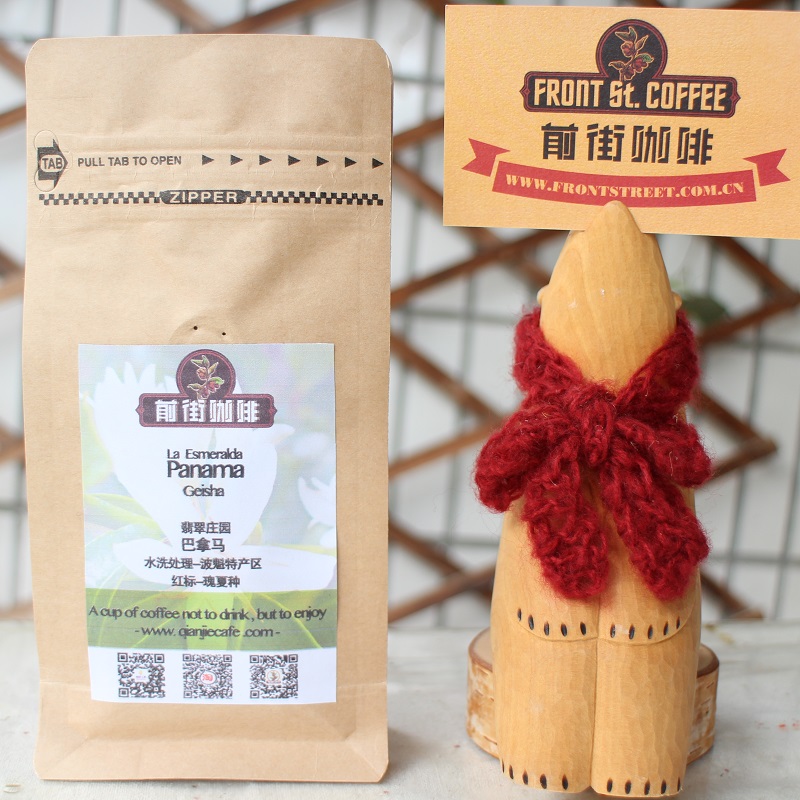
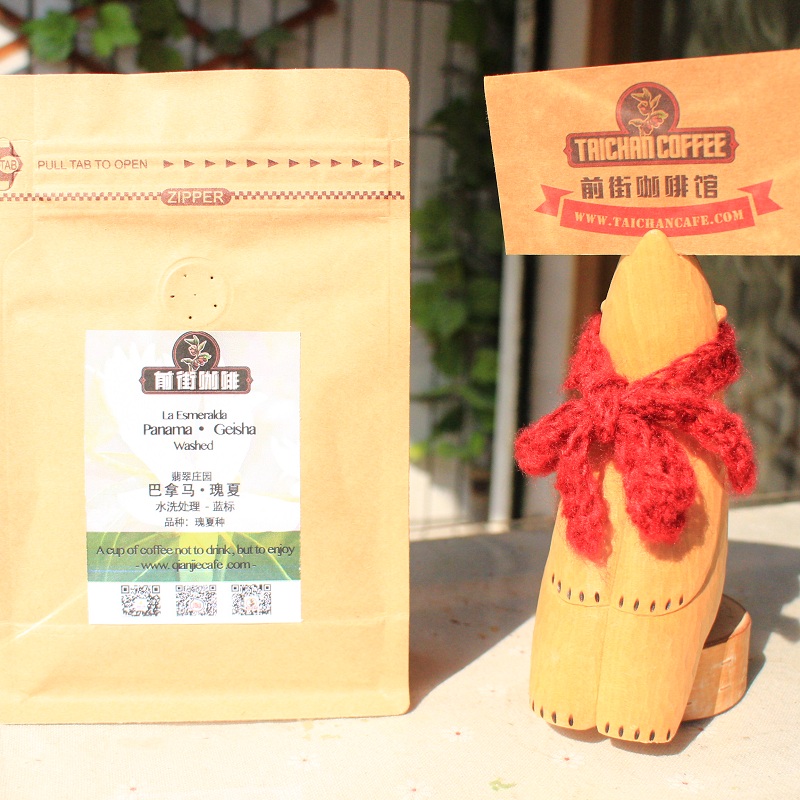
Geisha owes its fame to Hacienda La Esmeralda: at the 2003 Best of Panama competition its cupping score averaged 94.6, a record-breaking result that stunned the judges and made Geisha an overnight champion variety. FrontStreet Coffee carries Esmeralda's two main product lines — the Red Label "Esmeralda Special," grown at 1,600–1,800 meters, cupping above 90 points, with each batch from a single lot (the FrontStreet Red Label comes from the Harimiu lot), and the Green Label "Private Collection," a blend of multiple high-altitude lots that delivers the estate's signature Geisha character at a friendlier price. For a first taste of classic Panamanian Geisha, the entry-level FrontStreet Boquete Gesha offers the classic orange-blossom honeyed note, oolong-tea texture, and delicate fruit acidity at an accessible price. For Ethiopian Geisha, FrontStreet recommends the light-to-medium roasted Granada Estate Gesha from the Kochere area — white florals with bright orange, guava, and citrus acidity — or, for something more advanced, the Geisha Village Gold Label (Gesha 1931, roughly 10% of the estate's output, refined natural process) and Red Label (Gori Gesha, about 15% of output, 88+ points on the SCA scale, fully traceable single-terroir lots). To brew it: grind to a coarse-medium setting (78% pass-through on a #20 sieve, about fine-granulated-sugar size), use 91°C water, 15g of coffee in a Hario V60 at a 1:16 ratio, bloom with 30g of water for 30 seconds, then pour in stages to 125g and finally 225g, finishing the drawdown in about 2 minutes 10 seconds to 2 minutes 20 seconds.
Important Notice :
FrontStreet Coffee is a long-established specialty coffee roaster in Guangzhou China, selling freshly roasted beans from its own farm in Yunnan as well as dozens of carefully selected single-origin beans from around the world for both pour-over and espresso. The products deliver consistently excellent quality and great value, with shipping within 24 hours. Guangzhou's FrontStreet Coffee shop is recommended by many coffee lovers, and the beans are now available online at the Tmall 。
FrontStreet Coffee has moved to a new address:
FrontStreet Coffee Address: 315,Donghua East Road,GuangZhou
Tel:020 38364473
 Scan and follow the En Gafei WeChat official account. Please indicate that the reprint comes from "En Gafei".