Which Country Invented Pour-Over Coffee? The Origin and Characteristics of Pour-Over Coffee
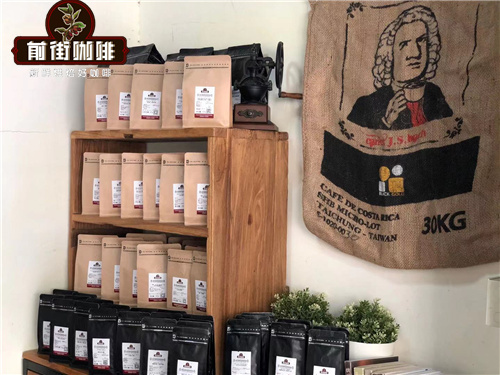
With the rise of the specialty coffee trend, coffee culture keeps spreading, and sales of both coffee equipment and coffee beans have climbed steadily. As a shop specializing in specialty coffee, FrontStreet Coffee aims not only to brew a delicious cup for every guest but also to spread coffee culture. Follow FrontStreet Coffee's official account and you will find daily updates on the latest coffee news. Every article you see is carefully written by a FrontStreet Coffee barista, with the goal of bringing coffee culture to more people. Beyond taste, a delicious cup of coffee holds many human stories.
Most people, though, may not be interested in coffee culture at all—they simply want to drink a delicious cup, and that is perfectly fine. Drinking coffee, drinking coffee: how can anyone understand coffee without trying it? Understanding takes continuous drinking to find the flavors you love. As life speeds up, the rise of drip bag coffee has met exactly this need, but choosing a suitable drip bag is no easy task.

FrontStreet Coffee, for instance, stocks at least two hundred types of coffee beans, with different processing methods, roast levels, and countries of origin. Where would one even begin? Very few customers have tasted every bean on FrontStreet Coffee's menu. Helping every customer who walks in choose suitable coffee beans is our homework too.
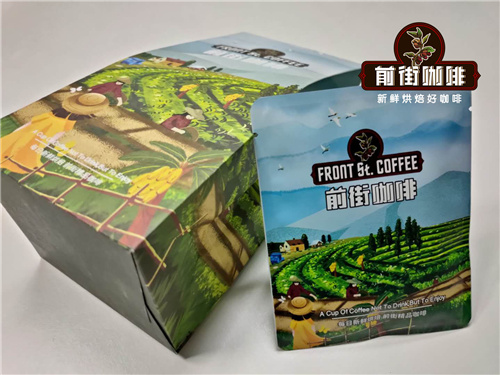
Recently many customers have been asking about drip bag coffee—which FrontStreet Coffee drip bag is the most delicious? How do you brew a delicious FrontStreet Coffee drip bag? Can a FrontStreet Coffee drip bag be brewed more than once? This article tackles these questions about drip bag coffee.
1. The Origin of Drip Bag Coffee
Drip bag coffee originated with Japan's UCC Ueshima Coffee Company, which invented this very simple and efficient form of coffee. Nowadays people do not have extra time to enjoy a carefully crafted pour-over made by a barista at a coffee shop, so when drip bag coffee was introduced to the market, it was immediately favored by many coffee enthusiasts. Among customers who come to FrontStreet Coffee to drink coffee, many ask whether the shop sells drip bags, which shows just how vast the market is.
2. Can Drip Bag Coffee Be Brewed Multiple Times?
Drip bag coffee is similar to agricultural products—agricultural products emphasize freshness, while coffee emphasizes optimal flavor, the coffee's optimal tasting period. FrontStreet Coffee generally recommends drinking coffee during that optimal period, otherwise the flavor of the drip bag will gradually change over time. You might ask: can drip bag coffee actually be brewed multiple times?

FrontStreet Coffee has also noticed that many people compare instant coffee with drip bag coffee. Compared to drip bag coffee, instant coffee is much simpler—no need to consider water temperature, just brew directly with suitable hot water. But everyone should be clear that instant coffee is made by evaporating the moisture from coffee extract to produce a dry coffee extract, which cannot be considered real coffee. The coffee powder in drip bags is ground from freshly roasted coffee beans, extracting real black coffee through drip filtration. The brewing methods for instant coffee and drip bag coffee differ—you cannot pour the coffee powder out of a drip bag the way you would with instant coffee, or your cup will be full of grounds, undrinkable and with a badly compromised texture. This brewing method is simply incorrect, so FrontStreet Coffee recommends reading the brewing instructions carefully before you brew.
Generally speaking, drip bag coffee cannot be brewed a second time, because coffee can only extract about 3% of its flavor compounds, and the other flavor compounds are difficult to extract. Typically, coffee can only be extracted once. FrontStreet Coffee has experimented with whether drip bag coffee can be extracted a second or even third time, and found that after the first extraction, subsequent brews basically have no flavor.

A small package of FrontStreet Coffee drip bag typically contains 10 grams of coffee powder, which generally brews only once. When you repeatedly brew it, you might notice the coffee still tastes quite strong and think it is still drinkable. In fact, it is not. When you brew drip bag coffee for an extended time, the longer it steeps, the more caffeine is released, because the coffee has been over-extracted. Over-extraction releases bitterness and astringency, meaning the optimal flavor is essentially gone. Even if this coffee is still within its tasting period, multiple brews will dilute its optimal flavor, so FrontStreet Coffee generally does not recommend repeatedly brewing the same drip bag.
Even if a drip bag is still within its tasting period, FrontStreet Coffee does not recommend brewing it multiple times, because drip bag coffee is designed as an instant brew that lets you prepare a fragrant black coffee anytime, anywhere, experiencing the sweetness, acidity, bitterness, and rich aroma of coffee. The flavor of a repeatedly brewed drip bag is basically lost.

3. How to Choose a Suitable Drip Bag Coffee for Yourself
When drinking coffee, of course you want the flavors you like. Some people prefer the lemon and citrus notes of FrontStreet Coffee's Ethiopian Yirgacheffe, others enjoy the rich body of FrontStreet Coffee's Indonesian Mandheling, and still others the intense floral aroma and juice-like texture of FrontStreet Coffee's Panama Geisha—all excellent choices. But FrontStreet Coffee has one prerequisite: the drip bag you buy must be fresh and ideally within its optimal tasting period. Otherwise, no matter how delicious the coffee, you will not taste a truly delicious cup. Experienced baristas and enthusiasts can often judge how long coffee has been stored just by its smell, but for ordinary enthusiasts it is better to identify freshness through the methods below.

1. Check the Production Date
First, when buying drip bag coffee, look at the roast date on the packaging. The roast date tells you when the coffee beans were roasted. When we talk about coffee freshness, we generally mean the roast date rather than the expiration date.
2. Check the Tasting Period on the Packaging
Coffee bean packaging includes a degassing valve designed to release carbon dioxide from inside the package and prevent the bag from swelling and bursting. FrontStreet Coffee's drip bags do not include a degassing valve, because while a valve lets you squeeze and smell the coffee aroma, it also lets the coffee release its fragrance and shortens its lifespan. Even if drip bags were equipped with degassing valves, it would only raise their cost without extending the optimal tasting period.

FrontStreet Coffee also recommends against buying several months' worth of drip bag coffee at once just because of bulk discounts. Drip bag coffee emphasizes freshness, and if you buy too much and cannot finish it, it will pass the optimal tasting period, and the brewed coffee will certainly not taste as good.
3. Choose Your Preferred Coffee Flavor
Drip bag coffee is essentially simplified pour-over coffee, so like pour-over, the final flavor is determined by the coffee beans inside. Drip bag coffee can be single-origin or a blend; however, the FrontStreet Coffee drip bags sold by FrontStreet Coffee are generally single-origin, with fewer blends. The packaging of drip bag coffee usually indicates the coffee's flavor, with terms like jasmine fragrance, citrus, lemon, and cream describing the profile.

FrontStreet Coffee, for example, offers a Brazil Red Fruit Coffee with the typical nutty, chocolatey, creamy, and peanut flavors of Brazilian coffee. There is also FrontStreet Coffee's Panama Butterfly Coffee, a Geisha blend bean with 70% premium Geisha heritage and small amounts of Caturra and Catuai; brewed, it has a particularly strong floral aroma with prominent citrus, floral, and honey notes and high sweetness. Then there is FrontStreet Coffee's Kenya Asalia Coffee with its cherry-tomato-like bright acidity, and many others, all very suitable for making into drip bag coffee.
Some FrontStreet Coffee customers also choose their drip bag coffee by processing method. There are many coffee bean processing methods—Brazil, for instance, often uses the natural process, which better preserves the bean's flavor and enhances its aroma and sweetness. FrontStreet Coffee's Brazil Queen Estate Yellow Bourbon has relatively high sweetness precisely because it uses the natural process. Then there is the washed process, like FrontStreet Coffee's Ethiopian Yirgacheffe coffee, which uses the washed process for a very clean taste with distinct lemon-citrus notes and a subtle jasmine fragrance. Then there is Costa Rica's honey process, like FrontStreet Coffee's Costa Rica Canet Estate Musician Series, which uses the raisin honey process—selected coffee cherries are dried like raisins before hulling, and the processed beans are then dried. Costa Rican coffee beans therefore have a relatively full body and sweet taste.

All of the above are very suitable for making into drip bag coffee. Some coffees with special processing methods are also very popular when made into drip bags, such as FrontStreet Coffee's Honduras Sherry Coffee, which undergoes refined washing and then fermentation in whiskey barrels. This processing gives the beans a rich fermented wine aroma. FrontStreet Coffee's Honduras Lychee Lan follows the same principle, but FrontStreet Coffee's Lychee Lan beans are placed in brandy barrels, so the flavor differs significantly from FrontStreet Coffee's Sherry Coffee. FrontStreet Coffee's Honduras Lychee Lan has a brandy-like wine aroma with a hint of tropical lychee fruit flavor, making it an excellent choice for drip bag coffee.
4. How to Brew a Delicious and Fragrant Drip Bag Coffee
By now you probably have a general idea of your taste preferences, and next you need to understand how to brew a delicious drip bag coffee. Before that, FrontStreet Coffee suggests you also understand the grind size of drip bag coffee. Coarser coffee powder has lower extraction efficiency, and vice versa. The coarseness also affects sweetness—too coarse leads to under-extraction and a watery cup, while too fine causes over-extraction and a coffee that is hard to swallow. FrontStreet Coffee has explored the grind size for drip bag coffee many times and finally adopted a medium-fine grind for drip bags, which better facilitates brewing an aromatic coffee.

FrontStreet Coffee considers drip bag coffee equivalent to simplified pour-over, with certain requirements for brewing time, temperature, and water amount. Water temperature for drip bag coffee is quite important and is determined by the flavor characteristics and roast level of different origins. For dark roasts, FrontStreet Coffee drip bags are best brewed with water at 88°C, while for light roasts, water at 90-92°C works best. Friends need not worry about not being able to identify roast levels; FrontStreet Coffee's official account has published relevant knowledge about drip bag coffee and brewing methods, so feel free to make your purchases.
FrontStreet Coffee would also like to share the brewing method for FrontStreet Coffee's drip bags.
Brewing Process for FrontStreet Coffee Drip Bags
1. Warm the Cup
Prepare your cup and first pour in some hot water to warm it. The purpose is to prevent the brewed coffee from cooling down too quickly. Coffee flavors continuously change as temperature decreases, and if it cools too fast you will miss many different taste experiences.

2. Water Temperature
First, prepare sufficiently hot water, because only at high enough temperatures can more aromatic compounds be released from the coffee powder. When brewing pour-over coffee, FrontStreet Coffee recommends water at 86-93°C. If the temperature is only around 80°C, the brewed coffee tends to be bland and flavorless, while boiling water easily extracts burnt, bitter flavors. FrontStreet Coffee therefore lets boiled water sit uncovered at room temperature for 1-2 minutes to let it drop to around 90°C.

3. Hang the Coffee
Gently shake the drip bag to settle the coffee powder and prevent it from spilling when opened. Then pour out the hot water from the cup, tear open the seal on the drip bag, extend the paper hangers on both sides, and shake to level the coffee powder. Finally, hang it on the rim of the cup.

4. Pre-wet
The first pour should be just enough to wet the coffee powder—too much or too little will affect the flavor. Then wait 20 seconds to let the coffee powder fully absorb the water. The strength of the coffee can be adjusted by the pre-wetting time; extending it to 40 seconds will result in stronger coffee.

5. Pour Water
For the second pour, fill to about 80% of the filter paper's capacity, ideally with a thin, steady stream. Wait until the water level drops to the pre-wet height, then continue pouring to 80% full until you have extracted 150-180cc. Once extraction is complete, there is no need to wait for all the water in the filter paper to drip out—simply discard it.
6. Enjoy Your Coffee!
Remember that you can taste different flavors as the temperature changes.
FrontStreet Coffee Recommendation
Since drip bag coffee is essentially simplified pour-over, the bean inside matters most. For a classic, easy-to-love cup, FrontStreet Coffee's Yirgacheffe Gutingtin Cooperative is a fully washed, medium-light roasted Ethiopian bean with jasmine florals, bright citrus acidity, and green tea and honey notes—clean and approachable. If you prefer a fruitier, more vivid profile, the FrontStreet Coffee Ethiopia Hualai delivers strawberry, passion fruit, jackfruit, and even lychee aromas with low bitterness and a juicy, smooth body. These flower-and-fruit coffees are the ones FrontStreet Coffee reaches for when a fast-flowing V60 is on the bench, and they translate beautifully into drip bags. Just brew them fresh and within the optimal tasting period.
Important Notice :
FrontStreet Coffee is a long-established specialty coffee roaster in Guangzhou China, selling freshly roasted beans from its own farm in Yunnan as well as dozens of carefully selected single-origin beans from around the world for both pour-over and espresso. The products deliver consistently excellent quality and great value, with shipping within 24 hours. Guangzhou's FrontStreet Coffee shop is recommended by many coffee lovers, and the beans are now available online at the Tmall 。
FrontStreet Coffee has moved to a new address:
FrontStreet Coffee Address: 315,Donghua East Road,GuangZhou
Tel:020 38364473
 Scan and follow the En Gafei WeChat official account. Please indicate that the reprint comes from "En Gafei".