Introduction to Common Coffee Types: The Differences Between Iced Americano, Latte, Flat White, and Dirty Coffee

Every time you visit a coffee shop, you probably start agonizing over whether to have an Americano or a pour-over today—or a latte, or a Dirty coffee. Faced with a dazzling menu where everything looks roughly the same, what are the actual differences? In this article, FrontStreet Coffee walks you through the common types of coffee found in cafés.
Cafés commonly offer three main families: the espresso family, the drip coffee family, and the cold brew family.
Espresso Family
Espresso, also known as Italian espresso, is made by forcing pressurized water from an espresso machine through very finely ground coffee to extract a concentrated coffee. All the products in this family are made by adding other ingredients to espresso; even the same ingredients in different proportions produce different drinks.

FrontStreet Coffee stores use "FrontStreet Sunflower Warm Sunshine Espresso Blend Coffee Beans" for their daily espresso. This blend consists of 30% natural Yirgacheffe Red Cherry coffee beans + 70% Honduran whiskey-barrel-processed Sherry coffee beans, and the extracted espresso has rich fermented wine aromas with berry sweetness and acidity, vanilla cream, and nutty caramel flavors.
Double espresso extraction parameters are typically 19-20g of coffee grounds to extract 35-40g of coffee liquid, with an extraction time of 28-35 seconds. Single espresso extraction parameters are generally 11-12g of coffee grounds to extract 20g of coffee liquid, with an extraction time of 18-23 seconds. Every espresso machine and grinder has different performance characteristics, so the above data is for reference only and should be adjusted according to actual conditions.

Common espresso variations include: regular Espresso (the extraction parameters above are for Espresso), Ristretto, and Single Origin Espresso/SOE (espresso extracted from single-origin coffee beans). Ristretto is more concentrated than regular espresso (with a reduced extraction ratio), while Single Origin Espresso uses beans from a single region or estate, whereas regular espresso uses beans blended from different regions.
Common family members include: Americano, Latte, Cappuccino, Flat White, Dirty, and Mocha.
Americano (Water + Espresso)
FrontStreet Coffee's standard preparation uses two regular espressos mixed with hot or iced water in a 1:6-1:8 ratio.
Latte (Milk + Espresso)
FrontStreet Coffee's standard preparation uses two regular espressos mixed with steamed milk, iced milk, or iced milk plus ice in a 1:5-1:8 ratio.

Cappuccino (Typically only hot; dense thick foam + milk + espresso)
FrontStreet Coffee's cappuccino preparation uses two regular espressos mixed with hot milk with thick foam in a 1:5-1:8 ratio.

Flat White (Typically only hot; thin foam + milk + Ristretto)
FrontStreet Coffee's standard preparation uses two Ristrettos mixed with hot milk with thin foam in a 1:5-1:6 ratio. Different from a latte, it has higher coffee concentration and less milk, making it taste richer and more intense.

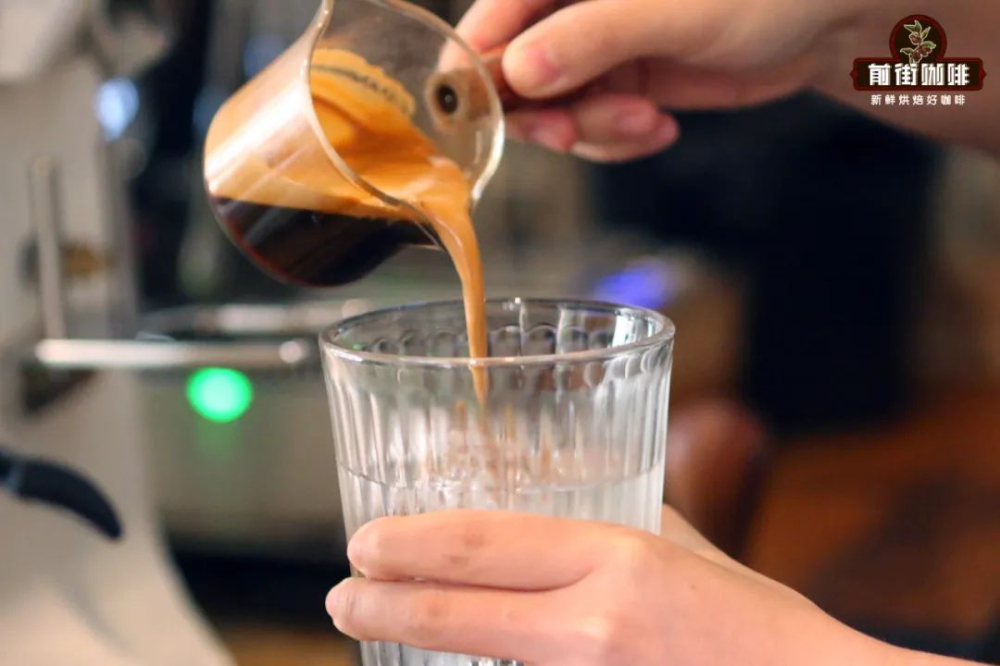
Dirty (Only cold; iced cup + iced milk supporting two espressos)
FrontStreet Coffee's preparation uses a chilled iced cup with 160ml of iced milk, then positions the cup close to the coffee outlet to let espresso flow directly into the milk. Due to density differences, the espresso floats on the milk surface, creating a layered gradient effect. Unlike a latte, Dirty coffee doesn't need to be stirred when drinking, allowing you to experience different layers, textures, and flavors as the coffee and milk gradually blend during consumption.

Mocha (Chocolate syrup + milk + espresso)
FrontStreet Coffee's standard preparation uses two regular espressos + chocolate syrup mixed well, then adds steamed milk, iced milk, or iced milk plus ice in a 1:5-1:8 ratio.
Drip Coffee Family
Drip coffee is coffee extracted by water naturally passing through coffee grounds via filter paper or filter screens. Through the ratio of coffee grounds to injected water, it extracts a moderately concentrated coffee that can express different flavor layers, making the coffee taste cleaner.

Common members of the drip coffee family include pour-over coffee and ice drip coffee. Pour-over coffee belongs to high-temperature extraction, while ice drip coffee belongs to low-temperature extraction. The differences between them are:
The advantage of high-temperature extraction is that it quickly extracts coffee flavor compounds, causing tannins in coffee to rapidly decompose into pyruvic acid and producing sweet, sour, and bitter notes—the process FrontStreet Coffee often refers to as releasing coffee flavors. Its disadvantage is that it easily leads to complete release of coffee flavors and then to woody fiber flavors from the coffee beans, which are what we commonly call undesirable woody tastes.

The advantage of low-temperature extraction is that coffee flavors have reduced volatility under low temperatures, so as much of the coffee aroma as possible is stored in the coffee liquid. When it is drunk, the temperature of the coffee liquid rises and the aroma contained in it suddenly bursts out, letting the drinker feel an intense aroma at the back of the tongue. This sudden burst of aroma gives people a tremendous sense of happiness. The disadvantage is that production time is longer, and the finished ice drip coffee cannot be consumed immediately—it needs to rest in the refrigerator for more than 8 hours to allow the flavor molecules extracted at low temperatures to fully release.

When making pour-over coffee, FrontStreet Coffee, to ensure consistent quality for every cup, uniformly uses 15g of coffee grounds with a 1:15 coffee-to-water ratio (i.e., 225g of water), and also uses a three-stage pouring technique. Light to medium roast coffee beans use a medium-fine grind (75-80% retention rate on China No. 20 standard sieve), with a recommended brewing water temperature of 90-91°C. Medium-dark to dark roast coffee beans use a medium-coarse grind (65-70% retention rate on China No. 20 standard sieve), with a recommended brewing water temperature of 88-89°C.

FrontStreet Coffee believes that whether a cup of coffee tastes good depends on the injected water passing 100% through the coffee grounds within a reasonable time and extracting substances. Therefore, using the right water temperature, correct grind degree, and appropriate water amount, regardless of pouring method, can produce a satisfying cup of coffee.
Ice drip coffee - FrontStreet Coffee uses an ice drip coffee pot for making it. FrontStreet Coffee's ice drip uses a water-to-coffee ratio of 1:10, meaning 60g of coffee grounds extracts 600ml of coffee liquid. The resulting coffee is quite concentrated and needs to be diluted before drinking.

Cold Brew Coffee
Cold brew coffee is also known as cold extraction coffee. Although both are low-temperature extraction methods, it is a completely different extraction method from ice drip coffee. Ice drip coffee extracts flavor compounds by water droplets passing through coffee grounds, while cold brew coffee extracts coffee compounds by fully steeping coffee grounds. The taste difference is that ice drip coffee is relatively cleaner and brighter, while cold brew coffee is relatively fuller and richer.

The single-origin coffee beans FrontStreet Coffee uses for making cold brew can all be purchased at FrontStreet Coffee's flagship store. Those who like sweet and sour notes can choose "Ethiopia Sidamo Guji Coffee Beans," those who like fermentation notes can choose "Costa Rica Musician Series Mozart Coffee Beans," those who prefer low acidity can choose "Brazil Queen Estate Coffee Beans," and those who enjoy wine-like aromas can choose "Honduras Sherry Coffee Beans."

Cold brew coffee preparation is also very simple. Containers can be mineral water bottles or glass bottles, as long as they have a sealed lid. The coffee grinding should be slightly finer than pour-over, about an 85% retention rate on a No. 20 sieve.
FrontStreet Coffee uses 50g of coffee grounds as a base, puts the grounds into a glass bottle, then adds 400ml of room-temperature water and 200g of hard ice cubes to the bottle (cold water can substitute if no ice cubes are available), with a coffee-to-water ratio of 1:12. Then use a stirring rod to mix the coffee grounds and water evenly, seal, and place in a refrigerator. After 12-24 hours in the refrigerator, use filter paper to filter out the coffee grounds, obtaining clean coffee liquid. Then store the coffee liquid in a clean sealed bottle and refrigerate for about 4 more hours before drinking—it will taste even better.

Finally—no matter what type of coffee, good taste is inseparable from fresh roasting and fresh grinding. To let everyone drink the freshest coffee, FrontStreet Coffee ships the beans 5 days after the roast date. Whole beans are sent by default, and the best-tasting period is 30 days. Although a grinding service is available, ground coffee's aroma and flavors dissipate more quickly. Therefore, if you want to experience the best flavors of coffee, the best approach is still to buy coffee beans and grind them yourself.
FrontStreet Coffee Recommendation
Every drink on this menu depends on a good espresso base, and that is where FrontStreet Coffee's blends come in. The FrontStreet Coffee Classic Blend is the workhorse—rich crema, bold chocolate, nut, and caramel notes, and enough sweetness to hold up in a latte or a layered Dirty. The FrontStreet Coffee Black Cocoa Blend is the value pick, with a balanced body and pronounced dark cocoa for Americanos and milk drinks alike. If you want to push a cappuccino toward fruit, the FrontStreet Coffee Strawberry Candy Espresso Blend brings berry, rose, raisin, and fruit-candy aromas, while the FrontStreet Coffee Genlana Geisha SOE, natural processed and roasted medium, delivers berry, orange, and persimmon that turn creamy with milk. Together they cover every espresso-family drink described above, from a straight shot to a mocha.
Important Notice :
FrontStreet Coffee is a long-established specialty coffee roaster in Guangzhou China, selling freshly roasted beans from its own farm in Yunnan as well as dozens of carefully selected single-origin beans from around the world for both pour-over and espresso. The products deliver consistently excellent quality and great value, with shipping within 24 hours. Guangzhou's FrontStreet Coffee shop is recommended by many coffee lovers, and the beans are now available online at the Tmall 。
FrontStreet Coffee has moved to a new address:
FrontStreet Coffee Address: 315,Donghua East Road,GuangZhou
Tel:020 38364473
 Scan and follow the En Gafei WeChat official account. Please indicate that the reprint comes from "En Gafei".