La Esmeralda Blue Label Geisha Coffee Pour-Over Extraction Methods and Flavor Description
Ask FrontStreet Coffee what Panama has in abundance and the answer is coffee—coffee it's famous for. And what is Panama's most famous coffee? That goes without saying: Geisha, priced so steeply it'll make you kneel! Since its sensational rise in 2004, countries worldwide have rushed to plant the variety, and Geisha from different countries offers distinct flavors and textures. Today we focus on the most renowned of them all: Panama's La Esmeralda Geisha!
Panama's Geisha Coffee
Panama's Geisha enjoys worldwide renown, and the whole country hums with Geisha fever. The most famous beans come from La Esmeralda, which runs a strict grading system—the Blue Label and Red Label Geisha you've likely heard of. FrontStreet Coffee explains the differences below.
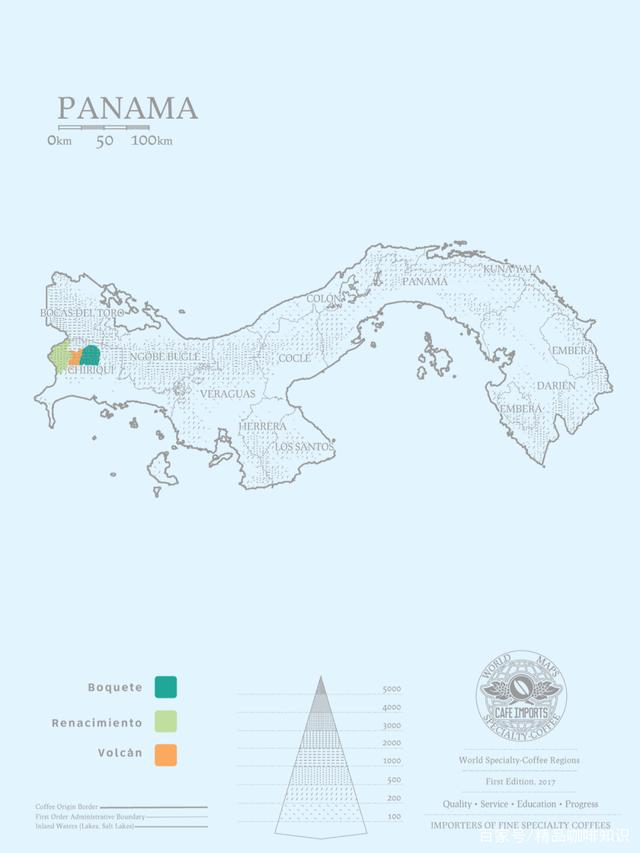
Panama sits in Central America, connecting North and South America, bordered by Costa Rica and Colombia. Panama's coffee story was born with a silver spoon in its mouth.
As everyone knows, the Panama Canal was built by the United States and remained under American control for some time after completion. That very canal project drew many American elites southward in the late 20th century—partly for work, partly chasing opportunity. Many of Panama's famous estates were founded by these elites: La Esmeralda's owner was a former banker, and Hartmann Estate's owner a former engineer. They brought principles of standardization and refinement to estate management—from carefully assigning coffee trees to plots by altitude to create bean grades, to manual harvesting and meticulous processing. All of it fed Panama's worldwide coffee fame.
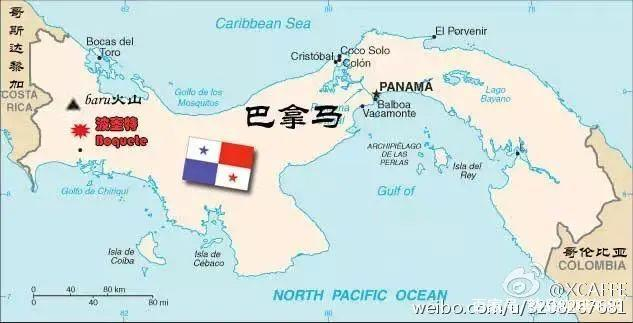
Panama Coffee Regions
Panama has four main coffee regions: Boquete, Volcán, Santa Clara, and Candelaria. Boquete, at an average altitude of 1,450 meters, produces Panama's most abundant and highest-quality coffee. Volcán, averaging 2,000 meters, gives milder, more balanced coffees. Santa Clara, averaging 1,500 meters, sits conveniently near the Panama Canal, making transport effortless. Candelaria, averaging 1,200 meters, has drawn growing attention in recent years, with the industry seeing real potential for high-quality specialty coffee there.
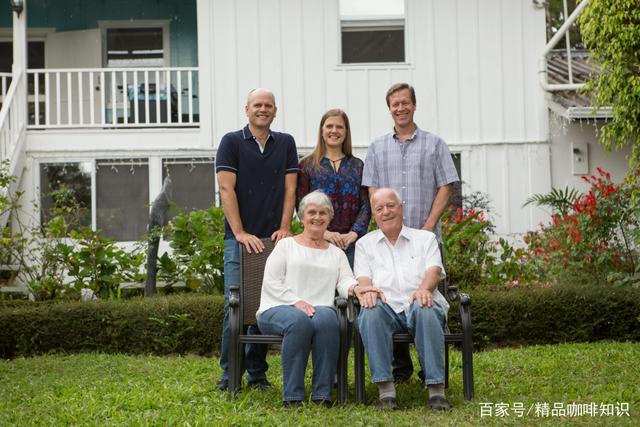
La Esmeralda sits in the Boquete region. It was purchased in 1964 by the retired American banker Rudolph Peterson, who initially ran it as a dairy farm. Later his son Price, a doctor, resigned his post to help manage the estate. They introduced the Caturra and Catuai varieties in 1987, built a washing station in 1994, and acquired the Jaramillo farm in 1996, folding it into La Esmeralda.
The Geisha beans come from Jaramillo. At first nobody knew they were Geisha—it was simply that beans from one particular plot tasted extraordinary, unlike typical Panamanian coffee. After repeated cupping confirmed it, the Peterson family decided to cultivate that plot's beans as a separate variety. After winning first place in the 2004 Panama Best of Panama (BOP) competition, their performance drew worldwide attention, and expert identification later revealed the variety to be Ethiopia's Geisha. The Petersons then poured their energy into infrastructure that would support batch separation and refined processing.
La Esmeralda's Plot Division
The excellence of La Esmeralda's Geisha is inseparable from its grading system. The estate divides land by altitude into three main plots—Jaramillo, Cañas Verdes, and El Velo—each further subdivided into smaller plots, all clearly marked with specific elevations to guarantee full traceability of the beans.
Top-quality Geisha comes mainly from Jaramillo and Cañas Verdes. Jaramillo receives 4,000mm of annual rainfall, with daytime temperatures averaging 19-25°C and nights 11-15°C, at 1,600-1,700 meters. Cañas Verdes receives 3,500mm annually, with days averaging 16-23°C and nights 10-15°C, at 1,600-1,800 meters.
El Velo is La Esmeralda's newest plot, averaging 1,700-1,900 meters. Alongside Geisha and Catuai, it also grows small quantities of exotic varieties such as Laurina, Pacamara, Mocha, and SL28.
La Esmeralda's Grade Classification
La Esmeralda splits its coffee into five brands based on cupping performance, variety, and plot. The Geisha variety carries three brands—Esmeralda Special, Private Collection, and Geisha 1500—ranked from highest to lowest in that order. The Catuai variety carries two: Diamond Mountain and Palmyra.

Red Label Geisha
The Geisha sold as Esmeralda Special is the familiar Red Label: beans grown at 1,600-1,800 meters, cupping above 90 points, sourced from the Jaramillo and Cañas Verdes plots.
La Esmeralda's independent auction features only the Geisha batches selected from designated plots. Non-auction Red Labels also exist on the market—beans from the same plots that simply weren't submitted to auction. The quality is identical; only the price differs.
Red Label Geisha comes natural or washed, with special, luminous floral aromas and citrus notes.
Green Label Geisha
Private Collection is the Green Label: not independent competition batches, but micro-lot blends of Geisha from different plots—no auction participation, yet still excellent quality. It is drawn from beans grown at 1,600-1,800 meters across plots including Jaramillo and Cañas Verdes.
Because it's blended without detailed plot specifications, one batch of Green Label may taste very close to Red Label while the next differs.
Though Green Label doesn't match Red Label's grade, it still delivers Geisha's classics—florals, fruit aromas, citrus acidity, and a thick, juicy texture—and is available washed or natural.

Blue Label Geisha
Geisha 1500 is the Blue Label: blends of beans grown at 1,400-1,500 meters, drawn from three plots—Jaramillo, Cañas Verdes, and El Velo. The flavor shows subtle florals, fruit acidity, and sweetness, with a lighter body. Blue Label comes washed only.
In short, the clearest differences among the three labels are cultivation altitude and whether blending is used. High altitude (1,600-1,800 meters) with clear plot information defines Red Label; blended beans from that same altitude define Green Label; and the lower altitude (1,400-1,500 meters) defines Blue Label.
Brewing FrontStreet Coffee's Blue Label Geisha with Different Drippers

Hario V60
The V60's structure has three defining traits: the 60° cone, the clockwise spiral ribs, and the single large drainage hole. The ribs hold space between filter paper and dripper, which—combined with the single hole—lets water flow downward fast.
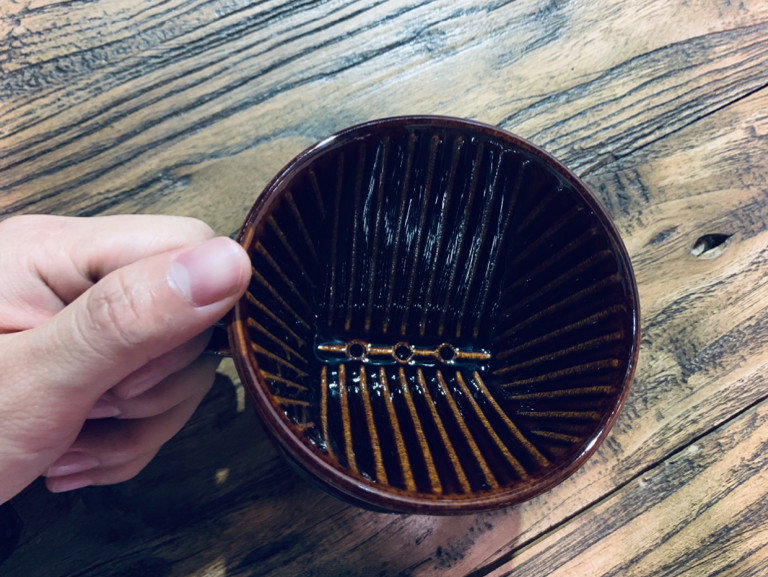
Kalita Three-Hole Dripper
The Kalita three-hole's fan shape—wide at top, narrow at bottom—concentrates the water flow, while the wide circular opening lets the grounds spread evenly and reduces stacking. Its ribs run in straight, evenly spaced lines, creating ample space between paper and wall for degassing and faster flow. The three small holes in the bottom have relatively small diameters, achieving a partly immersion-style extraction.
Cake Dripper
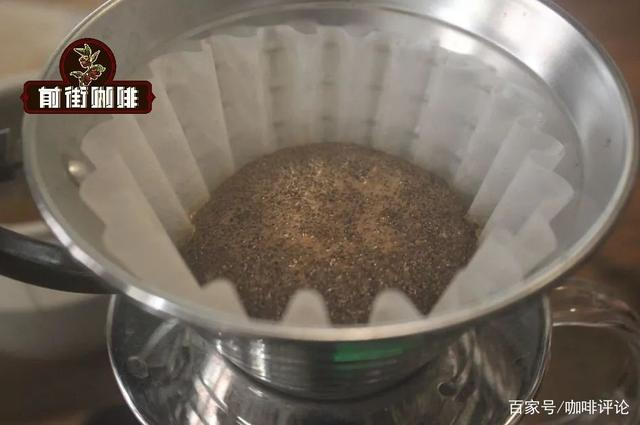
The cake dripper—also called the wave dripper—has a flat bottom. The flat bed evens out the water flow and improves extraction, while the three small bottom holes slow the flow, keeping the grounds fully immersed for a more balanced cup.
Moreover, the folded wave filter paper doesn't cling to the dripper walls, creating the maximum extraction area: hot water drips down evenly and smoothly, and temperature loss slows.
Brewing Parameters and Technique
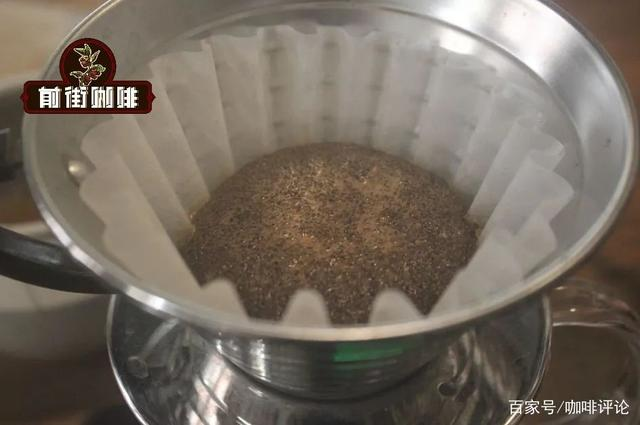
FrontStreet Coffee's unified parameters: 90°C water, 1:15 ratio, 15g of grounds, and a BG#6S grind (80% pass-through on the China #20 sieve).
For technique, FrontStreet Coffee uses segmented extraction: bloom with twice the coffee weight in water—30g for 30 seconds—then pour in small circles to 125g and pause; continue to 225g once the level nearly exposes the bed, finishing the extraction at 2 minutes.
Flavor of Blue Label Geisha by Dripper
Hario V60: ginger flower aroma, citrus and lemon acidity, honey sweetness through the middle, and green tea notes with brown sugar sweetness on the finish.
Kalita Three-Hole: jasmine and ginger flower aromas, refreshing citrus, lemon, and bergamot, with honey sweetness and green tea.
Cake Dripper: jasmine aroma and citrus acidity, with chocolate and nut flavors in the middle, honey sweetness, and a relatively full-bodied, well-balanced cup.
If you want rich, layered flavors, brew Blue Label Geisha on the Hario V60. For balance, choose the Cake Dripper. For a refreshing mouthfeel, choose the Kalita Three-Hole.
FrontStreet Coffee Recommendation
If the Esmeralda ladder has you dreaming, FrontStreet Coffee recommends these from its Geisha lineup:
FrontStreet Esmeralda Red Label (Esmeralda Special) — the estate's flagship, grown at 1,600-1,800 meters with every batch cupping above 90 points and every lot traced to a single small plot—our current lot comes from the Jaramillo block—so buyers can choose batches by fine flavor preference. Expect the classic orange-blossom honeyed aroma, lush florals, and juicy fruit acidity.
FrontStreet Esmeralda Green Label (Private Collection) — blended from multiple high-altitude plots rather than a single named lot, which makes it noticeably more affordable while still expressing the estate's signature high-grown Geisha character: florals, citrus acidity, and a thick juicy body. For beginners who simply want a first taste of "the Geisha flavor," the entry-level FrontStreet Boquete Geisha delivers that same orange-blossom honeyed charm, oolong-tea mouthfeel, and delicate fruit sweetness at a friendly price.
Important Notice :
FrontStreet Coffee is a long-established specialty coffee roaster in Guangzhou China, selling freshly roasted beans from its own farm in Yunnan as well as dozens of carefully selected single-origin beans from around the world for both pour-over and espresso. The products deliver consistently excellent quality and great value, with shipping within 24 hours. Guangzhou's FrontStreet Coffee shop is recommended by many coffee lovers, and the beans are now available online at the Tmall 。
FrontStreet Coffee has moved to a new address:
FrontStreet Coffee Address: 315,Donghua East Road,GuangZhou
Tel:020 38364473
 Scan and follow the En Gafei WeChat official account. Please indicate that the reprint comes from "En Gafei".