The Characteristics and Flavor Profile of Premium Jamaican Blue Mountain Coffee - A Guide to Varieties, Grades, and Tasting Notes
Introduction to Blue Mountain Coffee
Jamaican Blue Mountain is one of the world's most storied coffees — even people who have never tasted it know the name. Where other coffees lean sour or lean bitter, Blue Mountain is famously balanced: acidity, bitterness, sweetness, and body blend so seamlessly that the cup reads as one elegant, captivating whole — an integration no other coffee quite matches.
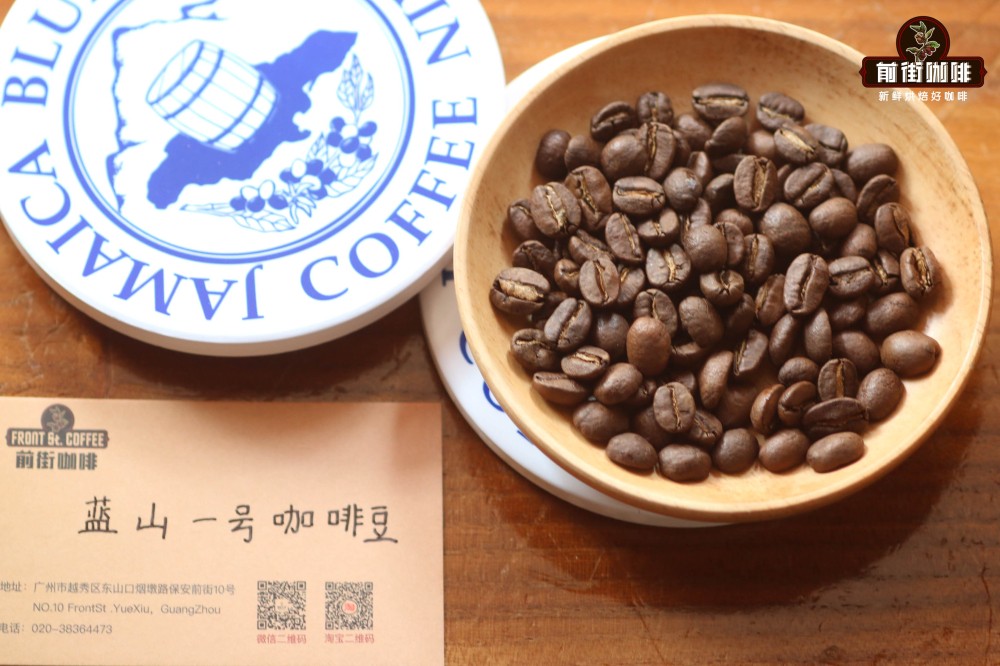
Blue Mountain devotees call it "the beauty of coffee" — the bean that combines every advantage of fine coffee. Precisely because its flavor is so even-keeled, it is best drunk black. And this exceptional coffee is a long-standing favorite at FrontStreet Coffee.
Why is Blue Mountain Coffee So Exceptional?
What sets it apart? FrontStreet Coffee believes the answer lies overwhelmingly in its growing environment. As we've said before: you could transplant Blue Mountain coffee trees to Hawaii and still never grow coffee that tastes like Blue Mountain. That is how special this terroir is.
Blue Mountain Coffee Growing Environment
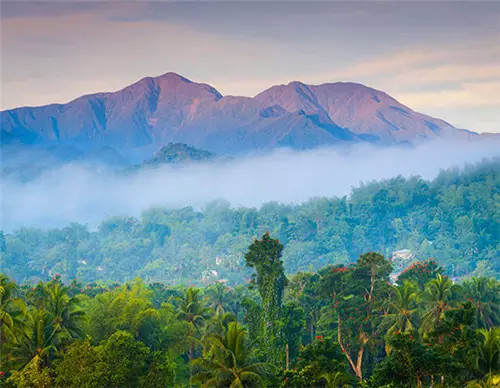
The Blue Mountains sit within the coffee belt between 25 degrees of north and south latitude, in a nearly ideal position. Jamaica's tropical rainforest climate delivers abundant year-round rainfall, humid air, and frequent mountain fog. Elevations run high, with coffee planted on well-drained slopes; ample daytime sun over fertile volcanic soil lets the trees take up abundant nutrients and convert them fully into aromatic compounds.
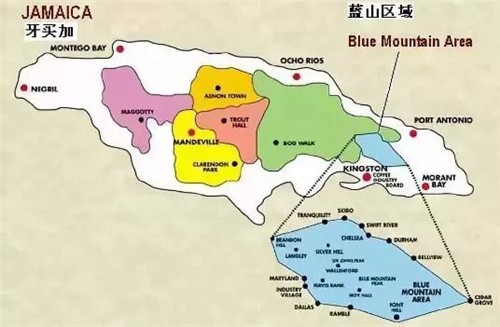
The Blue Mountain Range occupies eastern Jamaica; on clear days the peaks catch the brilliant blue glare of the Caribbean Sea below, which is how they got their name. The range's highest summit reaches 2,256 meters — the highest point in the Caribbean and a famous tourist draw. The coffee zone lies within the belt, with fertile volcanic soil, clean air, and a humid climate of year-round fog and rain (average precipitation of 1,980mm and temperatures around 27°C). FrontStreet Coffee believes precisely this climate created the world's most famous — and highest-priced — coffee.
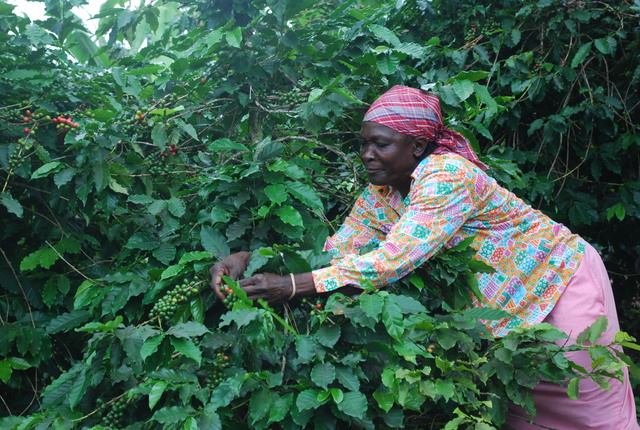
Blue Mountain coffee typically ripens between June and November. Experienced local pickers — largely women — work the steep slopes, and their experience matters: cherries must be taken at peak ripeness, since under- or over-ripe fruit quickly drags down cup quality.
Before 2009, Japan held preferential purchasing rights and took over 80% of the supply. That year the Jamaican government ended the arrangement. With China's enormous market and regular imports now running for years — Blue Mountain estate owners have even visited China to introduce their coffees — Blue Mountain in the Chinese market is no longer the phantom it once was, where everything seemed counterfeit. The growing region is larger than before, and with Japanese consumption softening, genuine Jamaican Blue Mountain is available to buyers who know how to identify it.
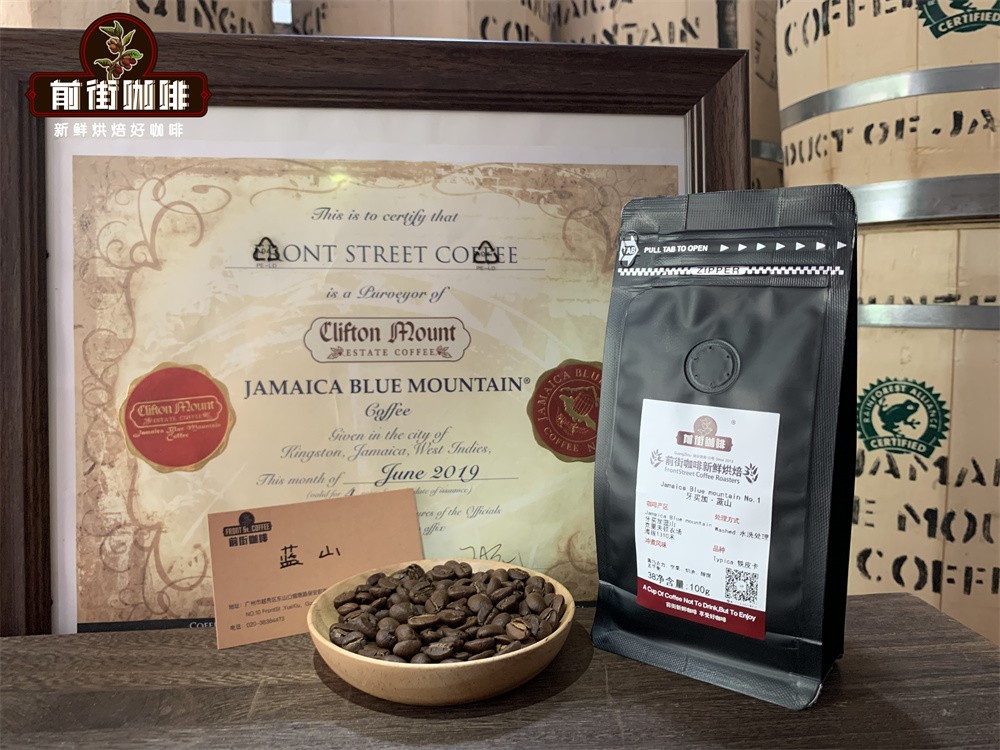
Jamaican Blue Mountain is the only coffee in the world shipped in wooden barrels rather than burlap sacks. The rainforest frog logo on the barrels indicates that Clifton Estate complies with Sustainable Agriculture System Standards and is certified by the Rainforest Alliance.
FrontStreet Coffee's Jamaican Blue Mountain is sourced from Clifton Estate, an export company designated by the Jamaican Coffee Industry Board; the barrels arrive printed with Clifton Estate's name and the green frog logo.
Jamaican Coffee Bean Grading Standards
Grading varies by country, and Blue Mountain is graded by altitude and bean size. Jamaican coffee divides into three main categories by growing elevation: Jamaican Blue Mountain Coffee, Jamaican High Mountain Coffee, and Jamaican Coffee. Grade determines price.
1. Jamaican Blue Mountain Coffee
Both Blue Mountain and High Mountain coffees are further divided into four grades by quality, from highest to lowest: No.1, No.2, No.3, and PB (Peaberry). Under CIB standards, only coffee grown between 1,000-1,700 meters may be called Jamaican Blue Mountain Coffee. With low production, large beans, superb quality, and a harmonious balance of acidity, bitterness, aroma, body, and sweetness, it is recognized worldwide as a superlative coffee — which is why the national-treasure Blue Mountain No.1 commands the highest price of them all.
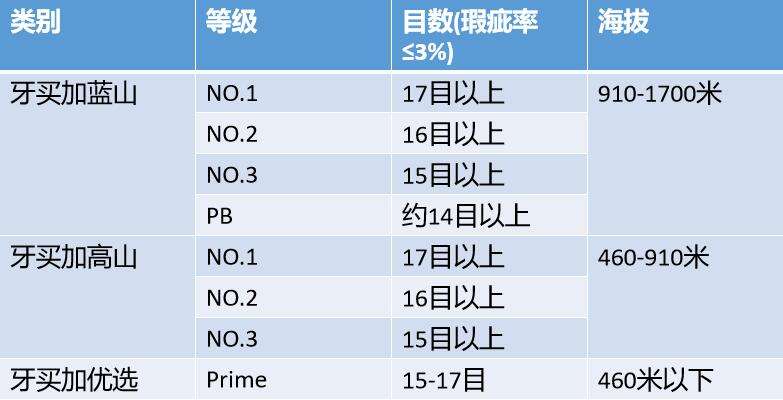
- (1) No.1 — 17/18 screen, defect rate not exceeding 2%
- (2) No.2 — 16/17 screen, defect rate not exceeding 2%
- (3) No.3 — 15/16 screen, defect rate not exceeding 2%
- (4) Peaberry — 10MS, defect rate not exceeding 2%
2. Jamaican High Mountain Coffee
Coffee grown at 500-1,000 meters in the Blue Mountain region is High Mountain Coffee, second only to Blue Mountain in quality.
3. Jamaican Coffee
Coffee grown outside the Blue Mountains, at altitudes below 500 meters, is simply Jamaican Coffee.
Blue Mountain Typica Variety
Blue Mountain's quality owes everything to its variety. Jamaican Blue Mountain is Typica — and anyone with a basic grip on coffee varieties knows Typica as a pure-flavored Arabica heirloom with a long cultivation history. Blue Mountain Typica carries dark-chocolate notes — not milk chocolate, but a clean dark chocolate of over 92% purity — and that flavor comes straight from the variety itself. Typica is notoriously susceptible to leaf rust; across Central and South America it was steadily torn out as rust ravaged plantations, but Jamaica's unique geography keeps rust pressure extremely low, so Typica remains the dominant variety here.
Typica trees are tall and graceful, with copper-colored young leaves at the tips — hence the nickname "red-topped" coffee. Its flavor is pure and elegant, but the plant is physically frail, disease-prone, and very low-yielding, which is why Typica coffee grows scarcer by the year. It arrived in the Blue Mountains in the 18th century and has grown there for over two hundred years, adapting to the island's terroir and developing notably better disease resistance — particularly against coffee berry disease — than Typica elsewhere.
Blue Mountain Coffee Bean Processing Methods
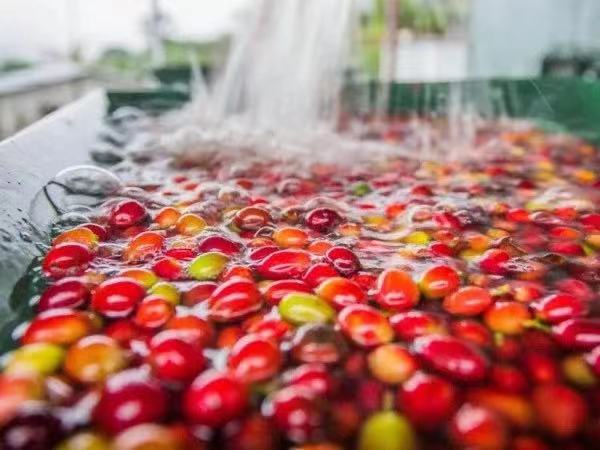
Blue Mountain was washed-only for generations, but as specialty coffee advanced, Clifton Estate broke with tradition in 2019 and launched the first natural-processed Blue Mountain batches. Naturals remain hard to come by, and FrontStreet Coffee believes washed processing expresses the coffee's essential character best — so nearly all of our daily Blue Mountain is washed. We do, however, offer both natural and washed lots.
FrontStreet Coffee Brewing Recommendations
Blue Mountain beans are beautiful, green or roasted — the kind you hate to waste a single one. FrontStreet Coffee believes no bean, beautiful or not, deserves to be wasted: brew it well.
Besides the variety itself, freshness is the make-or-break variable. FrontStreet Coffee ships only beans roasted within the last 5 days, because freshness moves flavor that dramatically. Our roasting philosophy is "freshly roasted good coffee," and with a resting period of about 4-7 days, coffee arrives right at its flavor peak.
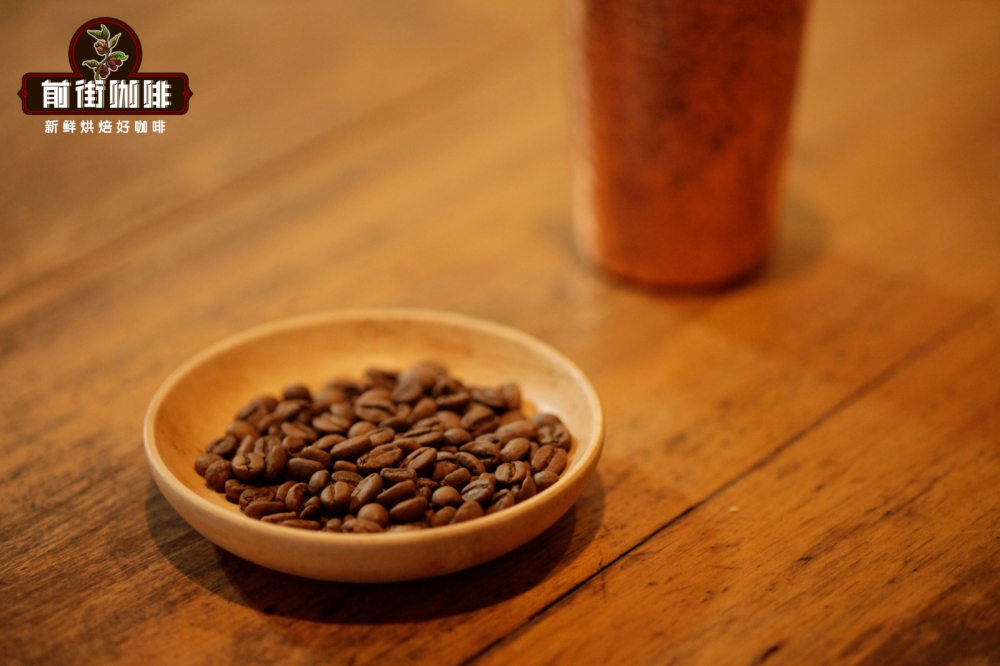
Some customers ask us to grind the beans before shipping — that's fine, with one caveat: pre-ground coffee needs no resting period (the CO2 pressure that builds in the bag during transit actually rounds out the flavor), so you can brew the moment it arrives. But ground coffee oxidizes fast in air, and its flavor dissipates quickly. Whole bean, ground fresh before brewing, is always the better experience.
FrontStreet Coffee Blue Mountain Brewing Parameters:
For our two Jamaican Blue Mountain beans, FrontStreet Coffee uses a 1:15 ratio and a grind with 75% pass-through on a #20 standard sieve. To highlight Blue Mountain's balance, body, and gentle fruit acidity, 88°C water is enough — and since both beans carry a darker roast, whose solubles dissolve faster, we lower the temperature to avoid over-extraction and pair it with the slow-flowing KONO dripper to maximize extraction under those cooler conditions.
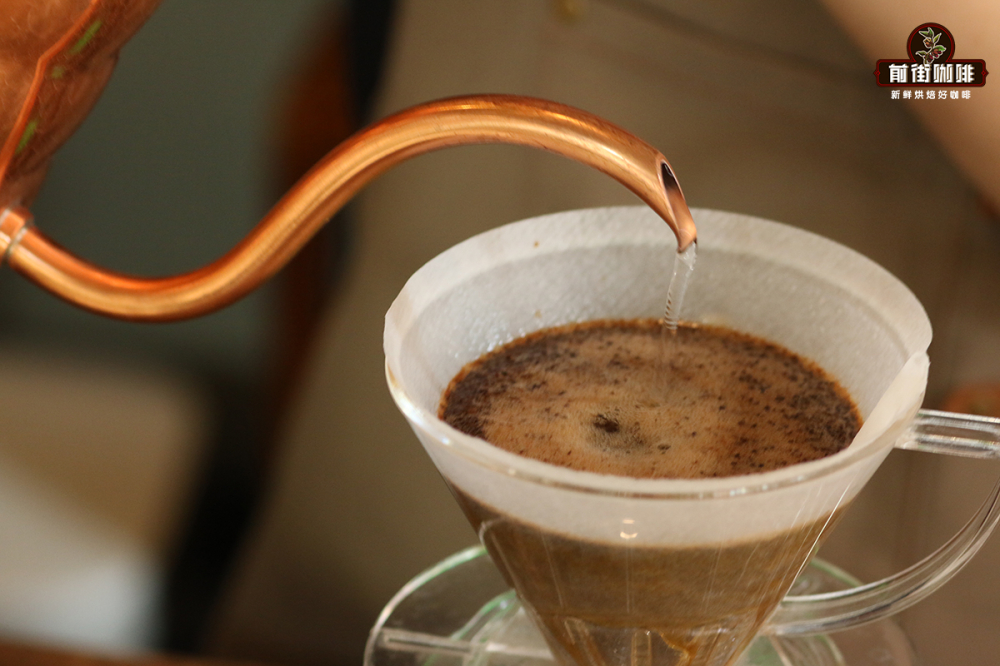
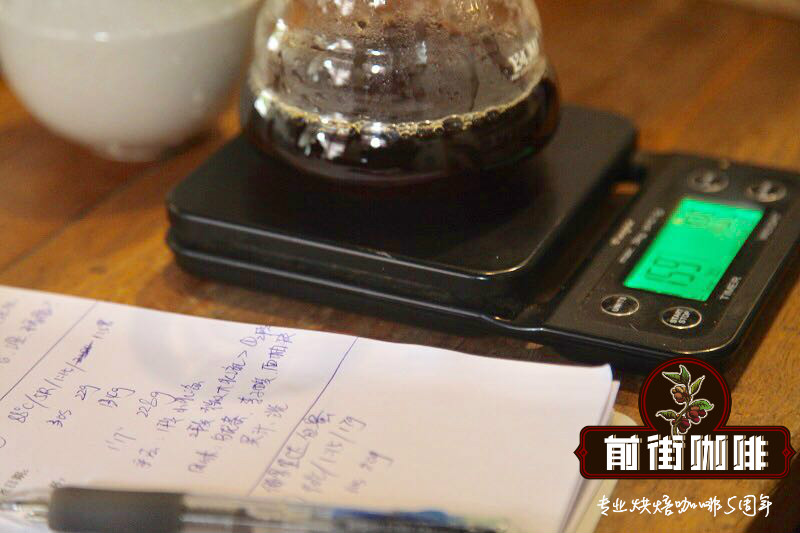
The full parameters: KONO dripper, 88°C water, 1:15 coffee-to-water ratio, 15g dose, grind at 75% pass-through on a #20 standard sieve.
We pour in three stages: 30g of water to bloom for 30 seconds, then small circular pours to 125g, pausing until the liquid level sits just above the coffee bed before finishing the pour to 225g. Total extraction, bloom included, is 2'00".
Blue Mountain Coffee Flavor Description
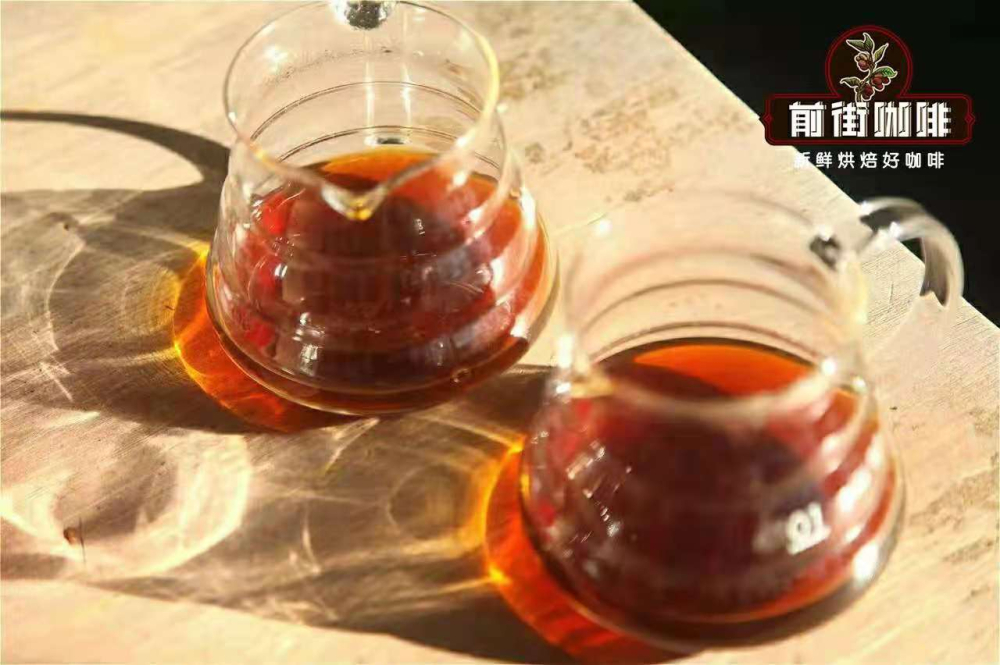
FrontStreet Coffee Natural-processed Blue Mountain: a touch of berry acidity recalling smoked plums and mulberries, excellent overall balance, rich dark chocolate and nut flavors, and a slight fermentation note.
FrontStreet Coffee Washed-processed Blue Mountain: rich dark chocolate and nuts, a creamy smooth texture, and sweet, sour, and bitter notes in perfect equilibrium.
Different processes, different cups. Beyond these two, FrontStreet Coffee's shelf also holds Costa Rican raisin-honey Mozart, Mirasu, and Baha coffees, and whiskey-barrel-aged Honduran Sherry — plenty of ways to keep exploring new flavors.
FrontStreet Coffee Recommendation
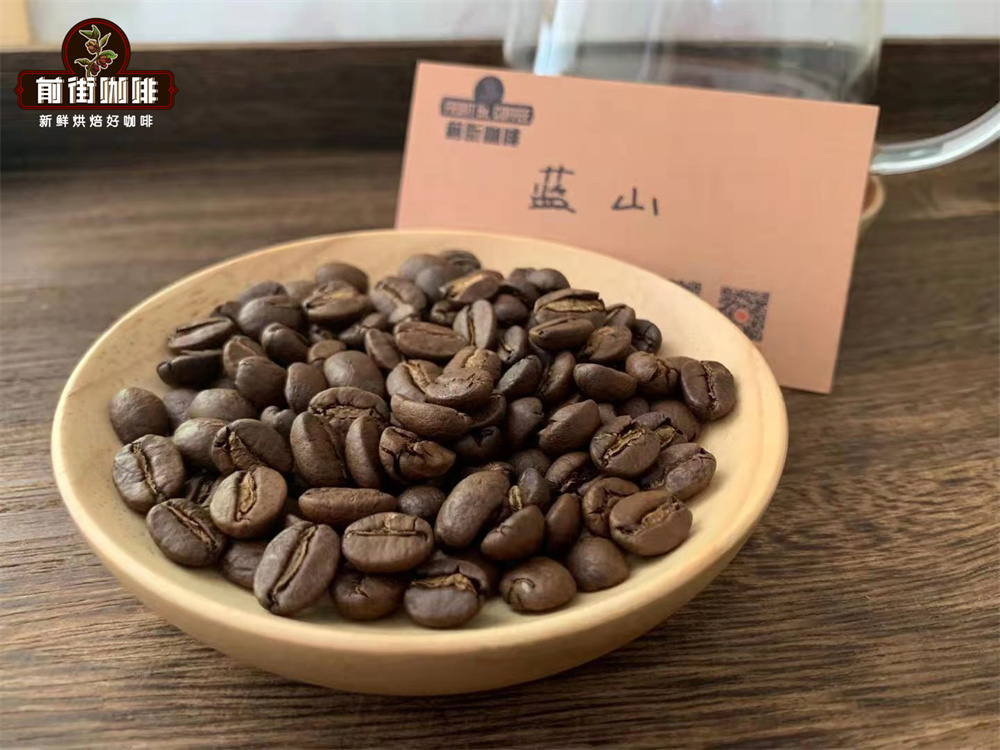
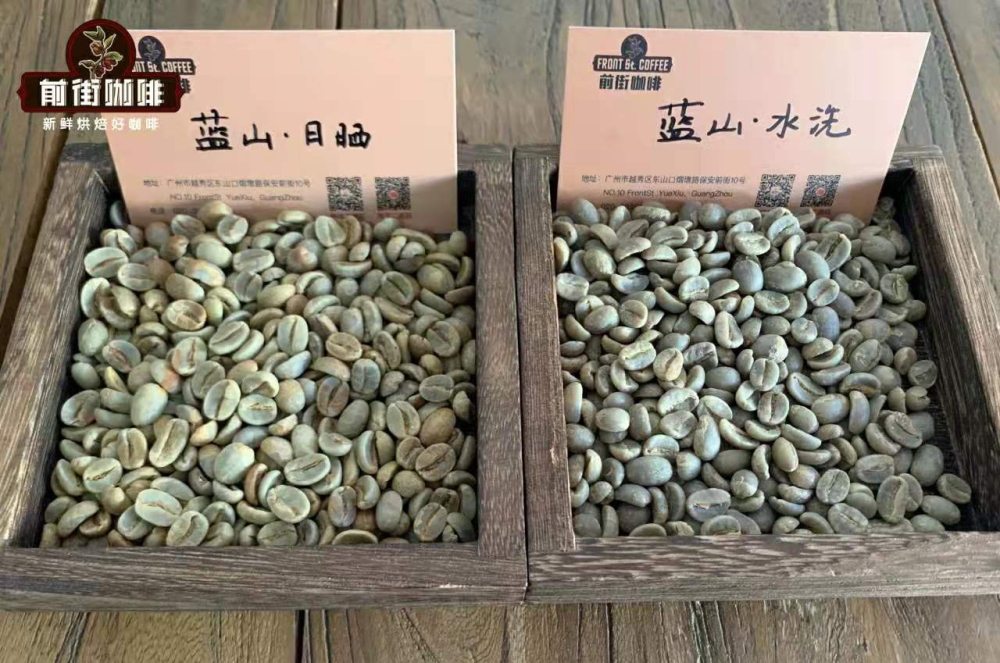
Blue Mountain's mystique made it a counterfeiter's favorite, so authentication is worth learning. Genuine Jamaican Blue Mountain ships in wooden barrels — 15, 45, and 70kg — stamped with full batch details, and the barrel itself is proof of origin; trustworthy sellers will also hold the Jamaican government's certification and certificates of origin, and their green beans will look uniform, plump, faintly upturned at both ends, and green. FrontStreet Coffee's Blue Mountain No. 1, the highest grade, comes from the historic Clifton Estate, growing coffee since around 1750 at an average 4,300 feet (1,310.64 meters), where cloud-shaded afternoons and mineral-rich soil stretch the cherry ripening and deepen the cup.
Roasted medium-dark, FrontStreet Coffee's Blue Mountain No. 1 arrives within 5 days of roasting and is ready to brew. Pour-over remains the best way to read its fine layers: 15g of coffee rested 4-7 days, a white-sugar-coarseness grind, 87-88°C water, and a 1:15 ratio in three pours (30g bloom, then to 120g, then to 225g) — the cup unfolds as nuts, dark chocolate, and creamy caramel over a gentle sweetness, with acidity, sweetness, bitterness, and aroma in seamless accord. Blue Mountain's superb balance also suits a moka pot — grind slightly finer than for pour-over, start with hot water, heat over medium-low, and pull it off the flame just as the flow finishes — and it shines with milk in lattes and flat whites, where the chocolate, caramel, and nut character turns even richer.
Important Notice :
FrontStreet Coffee is a long-established specialty coffee roaster in Guangzhou China, selling freshly roasted beans from its own farm in Yunnan as well as dozens of carefully selected single-origin beans from around the world for both pour-over and espresso. The products deliver consistently excellent quality and great value, with shipping within 24 hours. Guangzhou's FrontStreet Coffee shop is recommended by many coffee lovers, and the beans are now available online at the Tmall 。
FrontStreet Coffee has moved to a new address:
FrontStreet Coffee Address: 315,Donghua East Road,GuangZhou
Tel:020 38364473
 Scan and follow the En Gafei WeChat official account. Please indicate that the reprint comes from "En Gafei".