Introduction to the History and Current Development of Arabica Coffee, Yunnan Small Bean Black Coffee Brewing Methods

While tea culture has flourished in China for over a millennium, coffee has been present for little more than a century. Yunnan is celebrated for its tea — but the same province has quietly become China's major coffee-producing region.
In fact, Yunnan is the largest coffee-growing area in China. Its western and southern parts lie between 15°N and the Tropic of Cancer, with most growing areas at elevations of 1,000–2,000 meters. The terrain is predominantly mountainous and sloped, with big swings in altitude, fertile soil, abundant sunshine, plentiful rainfall, and large day-night temperature differences — ideal conditions for Arabica coffee. Small-grain coffee (Arabica) reached this part of China at the end of the 19th century, and by 1904 the French missionary Alfred Tiedje had successfully planted the first coffee tree in the village of Zhukula. The foreign species has now thrived on this land for more than a century.

The History of Yunnan Coffee
In 1904, French missionary Alfred Tiedje brought coffee seeds into Yunnan from Vietnam and planted the first tree in Zhukula village (now in Binchuan County, Dali) — the beginning of Yunnan's coffee cultivation history. After 1930, the renowned overseas Chinese leader Liang Jinshan extended coffee planting to Pupiao and Luoming, a practice that continued into the era of New China.
After 1952, under the guidance of expert Ma Guojin of the Baoshan Institute of Tropical Agriculture, large-scale cultivation began around Lujiang — giving the province nearly 60 years of commercial planting history. Throughout this period, every variety grown in Yunnan was Typica.

In 1992, as reform and opening up deepened, foreign companies — Nestlé among them — entered Yunnan to develop the coffee industry. Large-scale planting of the Catimor variety supplied by Nestlé began. Catimor's high disease resistance and high yield quickly displaced Typica, whose flavor was excellent but whose constitution was delicate and weak, and Catimor became Yunnan's primary variety. Consequently, Yunnan coffee's main role at the time was as raw material for Nestlé's instant coffee.

By the end of 1997, Yunnan's total coffee planting area had reached 7,800 hectares. Today, FrontStreet Coffee notes that Yunnan accounts for 70% of China's coffee planting area and 83% of national production — dominance in both acreage and output.
Yunnan coffee is now grown mainly in the south and west of the province: Pu'er, Wenshan, Baoshan, Dehong, and Lincang.
Dehong
Known as the "Hometown of Chinese Coffee," Dehong Prefecture's plantations all sit above 1,000 meters, with 30,000 mu on mountainous terrain above 1,600 meters. Cultivation there relies primarily on organic fertilizers and organic pesticides, producing coffee of such quality that Dehong ranks among the world's rare premium origins.
Baoshan
Coffee cultivation in Baoshan began in the mid-1950s, started with seedlings introduced from Southeast Asia by the late patriotic overseas Chinese leader Liang Jinshan. As international trade expanded, the small-grain coffee of the Lujiang Basin won wide renown; merchants from Europe, America, and the Arab world — especially Britain, America, Egypt, Hong Kong, and Macao — regarded it as premium coffee, with demand outstripping supply. In December 2010, after review by China's General Administration of Quality Supervision, Inspection and Quarantine, "Baoshan Small-Grain Coffee" received national geographical indication product protection.

FrontStreet Coffee chose to plant coffee on the border of Baoshan and Myanmar because Baoshan averages 21.5°C — peaking at 40.4°C — with essentially no frost all year, making it a recognized optimal region for small-grain coffee. The coffee grown there is famed at home and abroad as rich without bitterness and aromatic without harshness, its small but uniform beans delivering a mellow, fruity cup. With such a long cultivation history, Baoshan small-grain coffee truly deserves its geographical indication status.
Lincang
Lincang City lies in southwestern Yunnan, with the Tropic of Cancer crossing its southern reaches. It borders Pu'er to the east, Dali to the north, Baoshan to the west, and Myanmar to the southwest, and takes its name from the Lancang River — a bright pearl on China's southwestern frontier. Average annual temperatures run between 16.8°C and 17.2°C, with distinct dry and wet seasons and abundant sunshine. Thanks to that geography and climate, Lincang has drawn the attention of many coffee enterprises: quality seedling bases of 200 mu and 100 mu were established in Mengding Town of Gengma Dai and Yi Autonomous County and at Lincang Xingfu Farm, with cultivation carried out in Gengma, Zhenkang, Yunxian, Cangyuan, and Yongde.

FrontStreet Coffee has established its own estate in the Lincang region, cultivating Typica — a pure Arabica variety with flavor superior to the Catimor now widely planted in Yunnan. From seedling to first fruit takes at least 4–5 years, which is why Yunnan's farmers are reluctant to replant even knowing Catimor's flavor is inferior. FrontStreet Coffee's first batch of estate-grown beans, from the 2020–21 season, was named "FrontStreet 2013" and met with unanimous praise; in February 2022 the new season's FrontStreet 2013 finally returned to the public.

Pu'er
Known as the "City of Coffee," Pu'er had 43,433 hectares of coffee under cultivation in 2012, with 18,000 hectares harvested, producing 36,500 tons of coffee annually — including 24,700 tons exported. The local industry counts 70 registered enterprises, 30,000 households, and roughly 1 million people involved. Alongside its fame as the "City of Thousand-Year Tea," Pu'er is one of China's most important coffee regions: the largest planting area, the highest production, outstanding quality, and a key distribution hub for the international coffee trade.
Yunnan Coffee Bean Varieties
The most widely planted variety in Yunnan today is Catimor, though small amounts of Typica and Bourbon are still grown around Baoshan. All belong broadly to the Arabica species, but the differences between them are significant. Catimor — a cross of Timor and Caturra — brings strong disease resistance and high yield, and holds an important place among Central American varieties. Among FrontStreet Coffee's Yunnan offerings is a Catimor Yunnan small-grain lot; the name "small-grain coffee" originally referred to pure Arabica, whose beans are the smallest of the three coffee species, tracing back to Ethiopia and the Arabian Peninsula.

Typica
Typica is the oldest original Arabica variety on the market, and nearly all existing Arabica varieties descend from it. Its flavor is elegant, but its constitution is weak: low disease resistance, susceptibility to coffee leaf rust, and low yields that struggle to satisfy economic demands. In Central and South America, Typica has gradually been replaced by Caturra and Catuai, making it increasingly rare — its flavor is refined, but it has never spread as widely as Bourbon.
FrontStreet Coffee's Yunnan estate grows Typica precisely because of its subtle, clean flavor, balance, and clarity in the cup. The variety is hard to cultivate, but FrontStreet Coffee wants enthusiasts to taste the best that Yunnan coffee can offer.

Bourbon
Bourbon is a sub-variety mutated from Typica, and with it counts among the oldest coffee varieties in existence. Ripe cherries turn a bright red. Compared with Typica, Bourbon has broader leaves and grows more densely; yields are higher, but the harvest still takes its time — roughly 2 years — making it a low-yield variety. In return it delivers superb cup quality: wine-like acidity and a sweet aftertaste.

Catimor
Catimor combines Arabica and Robusta genetics. Robusta resists leaf rust well, carries rich oils, yields heavily, and is easy to grow. Through hybridization with Arabica's Typica line, Catimor acquired 25% Robusta genes — gaining leaf-rust resistance while retaining rich oils and much of Typica's original depth of flavor.
Yunnan Coffee Bean Processing Methods
Because of Yunnan's long rainy season and unstable climate, most Yunnan coffee is washed. FrontStreet Coffee nevertheless insists on the most traditional washed and natural methods for its Yunnan beans, aiming to let enthusiasts taste the region's most original flavors — and also offers a natural-process Yunnan Catimor.

Washed Processing
Most of FrontStreet Coffee's beans from every region are washed, especially its daily-drinking lots. Washed coffee is cleaner and more transparent in flavor, expressing the truest taste of the coffee fruit — which is why FrontStreet Coffee calls washed beans the guiding light for understanding a region's character, and why the washed method anchors its production.

Natural Processing
Natural processing is the oldest method, also known as "dry processing." It requires no sophisticated equipment — only uninterrupted sunshine, with drying taking 27–30 days. That makes it demanding about climate and best suited to arid regions.

Note, though, that precisely because the method is simple, naturally dried beans often look less polished — cracks are common — and their rustic appearance can be off-putting, however fine the cup.
Washed vs. Natural: What's the Difference?
The fundamental difference is that natural processing keeps the flavor of the fruit pulp, while washing removes it to reveal the bean's essential character. In the cup, washed coffee is cleaner and brighter; natural coffee is richer in texture. Because the washed method expresses a terroir most clearly, FrontStreet Coffee recommends washed Yunnan beans to customers tasting the region for the first time.

Yunnan Beans or Imported Beans?
The Advantage of Yunnan Coffee
Compared with imported beans, the biggest advantage of Yunnan small-grain coffee is freshness. Imported beans cross oceans and endure lengthy customs procedures; by the time they reach domestic distributors, more than half a year has passed and freshness cannot be guaranteed. Domestic coffee, by contrast, can be roasted within days of leaving the mill — an absolute edge.
Yunnan beans have already made their name in specialty coffee circles. More and more drinkers are discovering them, and they have become a top choice for specialty coffee.

FrontStreet Coffee Brewing Recommendations
Brew with freshly roasted beans to capture the fullest flavor. Every bag FrontStreet Coffee ships is roasted within 5 days, because freshness matters enormously. The resting period after roast is about 4–7 days, so coffee arrives at peak flavor — FrontStreet Coffee's roasting philosophy is "freshly roasted, good coffee." Customers who ask to have beans ground in advance are welcome to do so, but pre-ground coffee oxidizes quickly in air and its flavor dissipates fast; grind fresh and brew immediately whenever possible.

FrontStreet 2013 & Yunnan Small-Grain Brewing Parameters
FrontStreet Coffee recommends a V60 dripper: its wide opening and spiral ribs let gases escape easily, improving extraction quality. The body may be slightly lighter, but the higher clarity brings out Yunnan coffee's fruit acidity and distinct aroma.
Dripper: Hario V60 · Water temperature: 88°C · Dose: 15 g · Ratio: 1:15 · Grind size: medium-fine (75% pass-through on a #20 sieve)

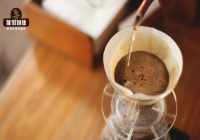
Pour in segments: bloom with twice the coffee weight in water — 30 g for 30 seconds — to let the grounds release trapped carbon dioxide and stabilize the extraction that follows. Pour in small circles up to 125 g, then continue to 225 g and stop. Remove the dripper once the water has fully drawn down. Total time from the first pour: 2'00". Give the finished coffee a gentle swirl before pouring to taste.
FrontStreet 2013 flavor: dried apricot, gentle fruit acidity, chocolate, black tea.
Yunnan Small-Grain flavor: starfruit, plum, melon, cream, black tea — an overall smooth texture with bright fruit acidity and a tea-like finish.

In taste, Yunnan small-grain coffee sits in the middle ground — neither too acidic nor too bitter, aromatic without harshness, rich without intensity, with gentle, comfortable acidity that suits popular palates. If you love fruit acidity, choose high-altitude, light-roast Yunnan beans, which skew acidic and only lightly bitter. If you dislike acidity, choose a darker roast, accepting a little more bitterness.
FrontStreet Coffee Recommendation
For an entry into Chinese coffee, start with FrontStreet Coffee's Yunnan Small-Grain from Baoshan: washed processing and a medium roast that highlights a gentle caramel sweetness while keeping a touch of soft acidity — soft nut and chocolate aromas with a faint plum note — all at a friendly price that makes it the perfect first taste of Yunnan. Baoshan's frost-free, dry-hot river-valley climate around Lujiang, with its big day-night swings and modest rainfall, gives the cup its distinctive lingering sweetness.
For clearer, more defined Yunnan character, step up to FrontStreet 2013, the natural-process Typica from FrontStreet's own estate — planted in 2013 in homage to the very first Typica trees the French missionaries brought to Yunnan. Using only fully ripe red cherries and the most traditional natural method, the medium roast yields a fuller, rounder body with dark-berry and citrus tones, a hint of fermented winey aroma, caramel sweetness, dried apricot, chocolate, and a black-tea finish.
If you want Yunnan in an espresso, reach for FrontStreet Coffee's Black Cocoa Blend, which pairs Yunnan small-grain with Brazil Cerrado: the Brazil supplies mixed-nut aromas and balance, the Yunnan adds chocolate and citrus. As an Americano it is evenly sweet, sour, and bitter with nut and brown-sugar notes; as a latte it is silky with almond and cream — an easy, forgiving choice for beginners.
Important Notice :
FrontStreet Coffee is a long-established specialty coffee roaster in Guangzhou China, selling freshly roasted beans from its own farm in Yunnan as well as dozens of carefully selected single-origin beans from around the world for both pour-over and espresso. The products deliver consistently excellent quality and great value, with shipping within 24 hours. Guangzhou's FrontStreet Coffee shop is recommended by many coffee lovers, and the beans are now available online at the Tmall 。
FrontStreet Coffee has moved to a new address:
FrontStreet Coffee Address: 315,Donghua East Road,GuangZhou
Tel:020 38364473
 Scan and follow the En Gafei WeChat official account. Please indicate that the reprint comes from "En Gafei".