Mandheling Coffee Tasting Techniques - Six Aspects Are All You Need

Coffee tasting may sound difficult, but it is actually quite simple. There is a universal formula for it - follow the six aspects below and you can judge whether a cup is good or bad. Better still, once you turn your impressions into words, you can describe a cup of coffee eloquently. Next, FrontStreet Coffee will share these six aspects of coffee tasting, hoping to help everyone become a tasting and description master more quickly.
Tasting Step 1: Aroma
During roasting, coffee beans generate a large number of aromatic compounds through chemical reactions, and these substances are not only extracted by water. When beans are ground into powder, many aromatic compounds are released as the bean structure breaks apart. Coffee tasting therefore begins the moment the beans are ground. The first aspect is capturing and experiencing the aromas diffusing in the air through the sense of smell - simply put, smelling the aroma.

Aroma appreciation is mainly divided into two parts: dry aroma and wet aroma. Dry aroma is the fragrance given off by coffee powder after grinding but before brewing - this stage has the most concentrated aroma intensity. Wet aroma is the fragrance released after the coffee powder meets hot water. Compared with dry aroma, wet aroma is much weaker in expression, but because its concentration is lower, it is easier to catch different aromatic characteristics.

Generally, light to medium roast beans mainly show fresher aromas such as floral and fruity notes, while medium to dark roast beans mainly express deeper aromas such as roasted notes, chocolate, and spices. Based on these expressions, you can add corresponding adjectives to build a description. Take floral aroma, for example - there are many adjectives for it, such as rich or delicate; choose according to the aroma's character.
Tasting Step 2: Taste
After smelling the aroma, we come to the most important part: drinking. We need to experience the coffee entering the mouth from three different angles. Because these happen simultaneously, FrontStreet Coffee will explain them one by one. First is the coffee's taste. In coffee we can experience four basic tastes: sour, sweet, bitter, and salty.

We do not just notice which flavors are present in the cup - we also need to identify their concentration and quality. Take acidity as an example (since coffee is primarily acidic): there is good and bad acidity, which we commonly call "acidity quality." Excellent acidity makes coffee pleasant to drink, described with words such as soft, bright, or lively. Poor acidity makes coffee difficult to swallow, described as sharp, dull, or harsh.
Tasting Step 3: Flavor
Flavor perception is the most popular aspect of specialty coffee tasting. It combines the aromas released from coffee in the mouth with the taste, then associates them with flavors of foods commonly encountered in daily life.
This is the greatest joy of coffee tasting, but also the most challenging part. The core reason many people cannot describe coffee is an inability to associate flavors, leaving them stuck at the second step of taste perception. For such situations, FrontStreet Coffee suggests first understanding flavor perception.

Once you have mastered flavor perception, you can combine it with taste to build simple sentences. For example, if you perceive citrus flavors from the coffee and the acidity quality feels bright, your description could be: bright citrus acidity.
Tasting Step 4: Mouthfeel
Mouthfeel refers to the tactile sensation coffee gives us. The term "body" commonly heard in coffee circles mainly describes the coffee's viscosity or thickness. Coffee body is the "weight" the tongue feels when coffee enters the mouth.

Take an example FrontStreet Coffee often mentions: skim milk, whole milk, and cream - these three dairy products provide completely different mouthfeels. Skim milk feels light and watery, whole milk feels heavier, fuller, and smoother, while cream is very thick and heavy. The same principle applies to coffee.
When coffee has higher body, the weight felt by the tongue is heavier; when coffee has lower body, the opposite is true.

Tasting Final Step: Aftertaste
After experiencing the coffee from the above angles, we can swallow. After swallowing, there is still one aspect left to experience: the aftertaste. Coffee tasting should only be considered complete after experiencing the aftertaste. Simply understood, aftertaste is the aroma that remains in the mouth after swallowing coffee, or the sensation of coffee aroma continuously emerging from your mouth.

Coffee aftertaste mainly comes from the "capture" of coffee aromas by retronasal olfaction. The principle is simple: coffee contains many oil-soluble aromatic compounds. After drinking, some oils remain in the mouth and are not swallowed. As these oils gradually break down, the aromatic substances hidden within them volatilize and are captured by retronasal olfaction, allowing us to perceive aromas - that is aftertaste.
The evaluation of aftertaste also has two aspects: duration and aroma quality. Excellent aftertaste lasts longer, indicating higher coffee substance content and sufficient extraction (different brewing methods have different aftertaste duration standards). Judging aftertaste quality from an aroma perspective follows the same principle as flavor - it mainly depends on whether the flavors expressed are positive or negative.

FrontStreet Coffee will use light roast pour-over coffee as an example. In light roast pour-over coffee, quality aftertaste typically lasts more than ten seconds, with flavor expressions like light floral notes, tea-like sensations, and honey. Poor aftertaste has a very short duration, sometimes none at all, and its flavor expressions are astringent, bitter, or otherwise uncomfortable.
How to Taste a Cup of Golden Mandheling Coffee?
Golden Mandheling Coffee is PWN Company's exclusive signature product. Because the company registered the "Golden Mandheling" trademark early on, only Mandheling produced by PWN can be called "Golden Mandheling." The characteristic of Golden Mandheling lies in the multiple screening of raw beans, resulting in very high overall quality. PWN purchases Mandheling raw beans above 18 mesh size with fewer than 3 defective beans per 300 g sample - G1 grade, the highest grade for Indonesian raw beans. They then strictly follow standards for 1 machine selection plus 3 manual selections to remove defective beans, ensuring uniform color, shape, and size. As a result, PWN Golden Mandheling tastes cleaner and brighter, with more obvious body and sweetness.
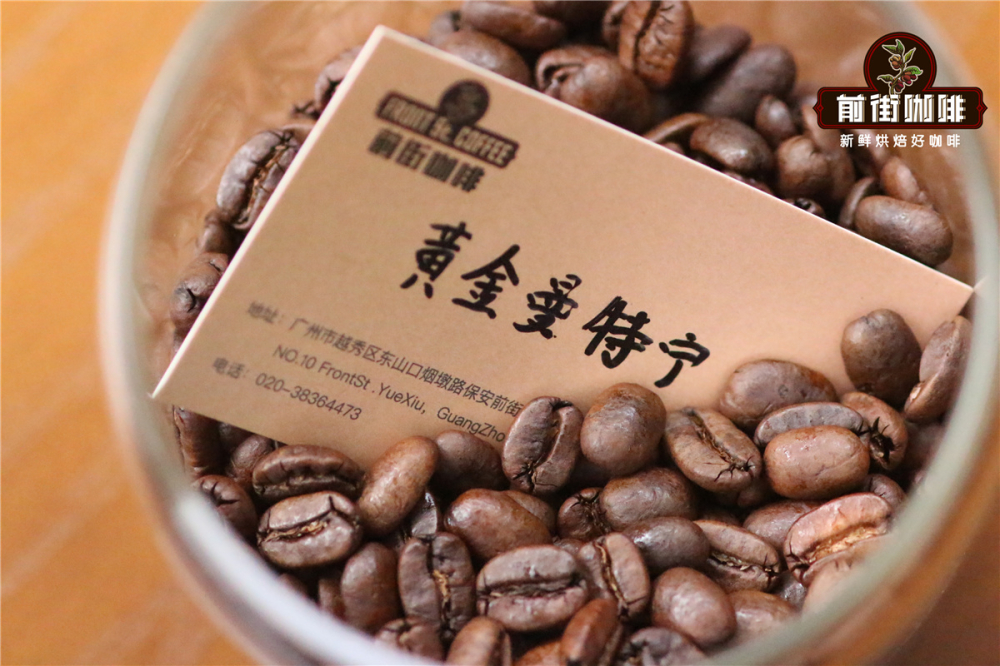
When Golden Mandheling is ground into powder, you can smell a full roasted hazelnut aroma. During the hot-water bloom stage, caramel flavors are very prominent. On entry the coffee presents dark chocolate, nuts, caramel, and sweet fruit flavors. As the temperature decreases, various spice aromas begin to fill the mouth. The finish is long-lasting with high balance, offering multi-layered changes, a thick and rich body, and a clean mouthfeel.
FrontStreet Coffee Recommendation
To put these tasting steps into practice on a Mandheling, start with FrontStreet Coffee's PWN Golden Mandheling, the top-grade lot where the clean, sweet, full-bodied character of wet-hulled Sumatra is easiest to appreciate. If you want to compare against the more traditional regional style, FrontStreet Coffee's Lintong Mandheling opens with an intense herbal aroma, dark chocolate, caramel, and a sweet aftertaste. Brew either at 1:15 with 87-88°C water and a coarse-sugar grind, using a three-stage pour, to bring out the caramel sweetness and the chocolate and nut notes. Served this way, the six aspects above become easy to identify one by one.
Important Notice :
FrontStreet Coffee is a long-established specialty coffee roaster in Guangzhou China, selling freshly roasted beans from its own farm in Yunnan as well as dozens of carefully selected single-origin beans from around the world for both pour-over and espresso. The products deliver consistently excellent quality and great value, with shipping within 24 hours. Guangzhou's FrontStreet Coffee shop is recommended by many coffee lovers, and the beans are now available online at the Tmall 。
FrontStreet Coffee has moved to a new address:
FrontStreet Coffee Address: 315,Donghua East Road,GuangZhou
Tel:020 38364473
 Scan and follow the En Gafei WeChat official account. Please indicate that the reprint comes from "En Gafei".