How Does Drip Bag Coffee Compare to Instant Coffee?
The Magic of Drip Coffee Bags
Drip coffee bags - who isn't familiar with these clever little pouches? Whether you are traveling, at the office, or just relaxing at home, these simple, portable packets have become a favorite of coffee drinkers who want fresh-brewed coffee without the gear.
First, let's look at instant coffee. Instant coffee is made by grinding roasted beans, extracting the soluble components into water under controlled temperature and pressure, then concentrating and drying the liquid into powder. Drying is the step that shapes the final product and does the most damage to quality. Spray drying is the industry standard, but coffee's aromatic compounds are extremely heat-sensitive and volatilize at higher drying temperatures (some are already lost during extraction and concentration). That is the main reason instant coffee lacks the rich aroma of freshly ground coffee.
One foreign article I once read put it bluntly: the chemical composition of instant coffee is no longer really coffee. It is an industrial product - a decent coffee substitute in specific situations such as long train or plane journeys, but not coffee in the original sense. Traditional coffee enjoyment, from grinding the beans to brewing, filtering, and choosing equipment and technique, is a genuinely refined ritual. In the industrial synthesis of instant coffee, much of coffee's original nutritional and aromatic content is destroyed. The drink still tastes vaguely of coffee, but the flavor depth, the health benefits, and the culture around it are gone.
Are Drip Coffee Bags Any Good? Two Angles
1. Convenience and Portability
Many newcomers assume any kettle will do - probably because instant coffee trained everyone to just pour boiling water from high above onto the powder. But how much does a proper pour-over kettle actually affect the cup? It can be significant. Some electric kettles have open outlets and long, slender spouts that give decent flow control; most household boiling kettles meet neither condition, and without fine, stable flow, precision pouring is nearly impossible.
The kettle's first job is controlling the rate and speed of the water. Pour-over needs roughly 20 seconds of blooming to open up the coffee - letting the grounds absorb water and swell into a dome - before the main extraction. If your water stream hits the filter paper directly, that water slides straight down the wall without ever touching the grounds, which is effectively dilution and thins the body. More importantly, extraction takes time, and controlling flow means controlling time. Without steady, controllable flow, there is no real extraction - and without extraction, you are not really making coffee.
The second job is holding water temperature. Brewing 15g of pour-over coffee takes about a minute and a half to two minutes, and pour-over is demanding about temperature. If you plan on 88-degree water but the kettle loses heat fast and drops to 80 degrees within a minute, the cup changes dramatically. Stylish silver kettles costing thirty or forty yuan, for example, have slender, controllable spouts but shed heat quickly; most Japanese brands handle heat retention far better in their materials, and the price gap reflects it.
Now, today's drip coffee bags are square, which makes their extraction slightly different from pour-over - arguably closer to French press. That shifts more responsibility onto the kettle. The drip bag itself, though, is brilliantly simple: a Japanese patented design in which ground coffee is sealed in a filter pouch with cardboard ears on both sides that hook over the rim of a cup. Tear it open, hang it, pour hot water, discard the bag. It is genuinely fresh-ground coffee, brewed by drip extraction, expressing the acidity, sweetness, bitterness, body, and aroma of the beans. All you need is hot water and a cup - perfect for home, office, and travel.
2. Taste and Quality
If a drip bag were brewed terribly, then yes, instant might taste sweeter by comparison - so let's set convenience aside and talk about what's in the cup.
Compared to instant, drip bag coffee is fresh-roasted beans ground and brewed directly, which preserves the aroma and flavor of the coffee as fully as possible. Each bag holds about 10 grams, sized exactly for a 150-200ml cup. The pouch design gives the grounds room to expand and tumble, letting them bloom and release their deeper aromas in hot water. In effect, one little bag replaces the beans, grinder, scale, dripper, and filter paper - at brew time you only need a kettle and a mug.
Drip bags with floral and fruity aromas are the most popular, with soft acidity on the palate. If you want to pair them, choose desserts with equally vivid fruit character - durian crepes, coconut ice cream, mango mille crepe cake, and so on.
And if even a drip bag feels like too much work, head to a professional pour-over shop - FrontStreet Coffee among them - and let the barista do the pouring.
Drip coffee bags help more people find the balance between a busy life and specialty coffee, and that matters. Single-origin coffee reflects a certain attitude toward life: anyone who loves coffee - truly obsessed with single origin - tends to be someone who lives deliberately, with dreams and direction.
FrontStreet Coffee Recommendation
Drip bags come down to choosing a flavor direction, since underneath the packaging they are simply pour-over. FrontStreet's line splits neatly into three styles. For a fresh floral cup, the FrontStreet Yirgacheffe Guodingding drip bag is the pick: a washed Ethiopian with a clean, refreshing profile, bright citrus-led acidity, jasmine fragrance, and a honeyed finish - low bitterness and very friendly to newcomers.
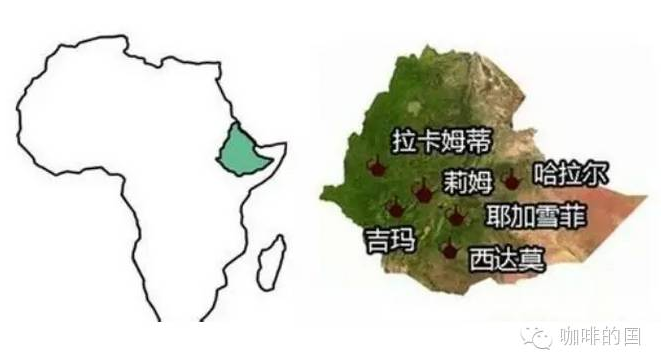
For tropical fruit, the FrontStreet Natural Huakui drip bag is one of the bestsellers: pronounced tropical fruit aroma with a black tea finish, high sweetness, low acidity, and barely any bitterness. It comes from Ethiopia's Guji zone at over 2300 meters, where strong day-night temperature swings build flavor into the cherries, and meticulous natural drying - with the fruit left intact on the bean - lifts the sweetness even further.
For rich and mellow, choose the FrontStreet Indonesia Mandheling drip bag. Mandheling (Sumatra) is one of the world's best-known Arabica coffees; instead of African fruit acidity it brings herbal, spicy, woody character, and in a dark roast it pours out cinnamon-spice, nut, chocolate, and caramel flavors - full-bodied and aromatic, never harsh. It is the natural choice for anyone who dislikes sour coffee.
Important Notice :
FrontStreet Coffee is a long-established specialty coffee roaster in Guangzhou China, selling freshly roasted beans from its own farm in Yunnan as well as dozens of carefully selected single-origin beans from around the world for both pour-over and espresso. The products deliver consistently excellent quality and great value, with shipping within 24 hours. Guangzhou's FrontStreet Coffee shop is recommended by many coffee lovers, and the beans are now available online at the Tmall 。
FrontStreet Coffee has moved to a new address:
FrontStreet Coffee Address: 315,Donghua East Road,GuangZhou
Tel:020 38364473
 Scan and follow the En Gafei WeChat official account. Please indicate that the reprint comes from "En Gafei".