Understanding Coffee Culture to Appreciate Great Coffee
The Great Transformation: Drinking Black Coffee Without Sugar or Milk
Three Waves of Coffee Revolution
The first wave of coffee arrived with instant coffee. In the sweetened taste adjusted with coffee creamer and its partners, the Chinese coffee journey began.
The second wave of coffee saw the rise of chain coffee markets, followed by small cafes in every style. Most second-wave cafes sold a concept and an environment while neglecting the quality of the coffee itself. Fancy coffee drinks masked the true flavor of the bean.
The third wave of coffee brought a group of true coffee lovers and specialty coffee advocates who began to offer single-origin coffees (single region, single estate, single variety), using self-roasted beans and shifting roast levels toward light and medium. They insisted on providing specialty coffee and spreading authentic coffee culture with its own meaning, offering coffee straight from the origin along with its specific culture and techniques, with the goal of returning coffee to its true quality.
Specialty Coffee
The term was first proposed by Ms. Erna Knutsen, known as the "godmother of specialty coffee," in the Tea & Coffee Journal in 1974, emphasizing that "only in the most favorable microclimates and soil conditions can unique flavored specialty coffee be cultivated," aiming to distinguish it from bulk commercial coffee on the New York futures market. In 1972, Ms. Knutsen, Donald N. Schoenholt, and five others co-founded the Specialty Coffee Association of America (SCAA), and the term "specialty coffee" became a global one.
SCAA's Definition of Specialty Coffee:
Carefully select the most suitable varieties, planted at the altitude, climate, and soil conditions most conducive to flavor development;
Careful washed and sun-dried processing, selecting flawless, highest-grade green beans, and delivering them to customers with zero defects;
Through the excellent craftsmanship of roasters, bring out the richest regional flavor;
Then use recognized extraction methods to brew delicious coffee.
Regional flavor refers to the different coffee flavors created by different soils, varieties, climates, and water conditions; it is the soul of coffee from specialty growing regions. In short, specialty coffee should be a high-quality coffee with the trinity of "good green beans, good roasting, good extraction."
Commercial Beans vs. Specialty Beans
Of the coffee beans produced in the world today, 70% are Arabica, divided into Typica, Bourbon, and others, and 30% are Robusta. Arabica quality is generally higher than Robusta, but Arabica has weaker disease resistance, so in the consumer market the proportion of Arabica is much smaller than that of Robusta. Moreover, not all Arabica beans can be used to make specialty coffee; they must undergo strict cupping scoring.
The Specialty Coffee Association of America states that beans scoring 80 points or above in comprehensive cupping (blind testing) can be defined as specialty coffee beans. Blind test scores below 80 points can be classified as commercial beans, whose longer packaging and transport processes mean freshness cannot be guaranteed.
This standard, however, applies only to washed Arabica coffee and is not comprehensive, so "specialty beans" are now generally understood as single-origin beans of higher quality, with proper processing methods, traceable variety origins, and unique flavors.
Famous Single-Origin Coffees
FrontStreet Coffee Blue Mountain: produced in the high mountains of Jamaica, a treasure among coffees, with a fragrant, sweet, and gentle taste, no bitterness but a slight sweetness, extremely limited production, and an expensive price.
Mocha: produced in Ethiopia, small beans with a strong fragrance and strong acidity, with a slight wine aroma, spicy and stimulating, with a special flavor - a renowned high-quality coffee.
FrontStreet Coffee Yirgacheffe: produced in Ethiopia, with a strong jasmine fragrance, lemon or lime acidity, and peach and almond sweetness or tea aroma.
Cuba Crystal Mountain: adjacent to Jamaica's Blue Mountain range, with a gentle fragrance, moderate concentration, and almost no acidity.
FrontStreet Coffee Indonesia Mandheling: produced in Sumatra, with a strong fragrance, a more bitter taste, and syrup and chocolate flavors, with acidity that is not prominent.
FrontStreet Coffee Panama Geisha: the brightest, richest, and most intensely fragrant coffee variety, Geisha, with aromas ranging from berries and citrus to mango, papaya, and peach.
Roasting Must Be Scientific
80% of coffee's flavor depends on roasting. Roasting demands a scientist's rigor, skillfully drawing out the fragrance, acidity, and bitterness the raw beans hold, ensuring that the sugars and carbohydrates in the coffee carbonize during roasting, thereby producing coffee oils and expressing the coffee's fullest character. Well-roasted beans expand greatly, have no wrinkles on the surface, and show an even gloss.
Roasting Degree:
Coffee can be divided into light, medium, and dark roasts. Light roast has stronger acidity; dark roast gradually loses acidity while bitterness increases. Specialty coffee today more often uses light to medium roasting to showcase the beans' own flavor.
After Roasting:
Freshly roasted beans need to degas, releasing carbon dioxide, and can be served after 36 hours. Flavor reaches its peak around 4 days, with 4 weeks as the limit. Light-roast beans can be extended by one week; dark roast is best consumed within 10 days and can be thrown away after three weeks.
Pour-Over Coffee · Exclusive Hand-Drawn Step Guide
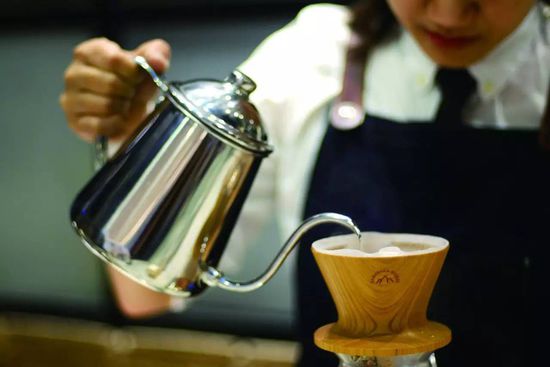
Pour-Over Coffee is a Ritual
Slowly dripping
Extracting the rich and light flavors of coffee
The greatest charm of pour-over
Is also because it is full of uncertainties
...
Essential Tools
| Dripper: Drippers come in single-hole, double-control, three-hole, and multi-hole types; the more holes a dripper has, the higher the pouring skill required;
| Filter paper: As coffee bean quality rises, so does the demand for cleanliness; to highlight flavors, filters or filter paper are the best choice;
| Pour-over kettle: A narrow-spout kettle, convenient for controlling water flow and direction;
| Pour-over kettle: Choose according to preference.
Pour-Over Tips
| Water-to-bean ratio: Generally, for 200ml of coffee, about 15-20g of coffee beans are needed;
| Dripper warming: Before brewing, pour hot water into the dripper to wet the filter paper and remove the paper taste, and to warm the dripper and coffee cup;
| Bloom: Using the center of the coffee grounds as the pivot, add water with the kettle in even, gentle circles to submerge the grounds for about 20-25 seconds, with a relatively fine stream;
| The first pour accounts for 60% of the total water, the second for 30%, and the third for 10%.
Extraction Complete
Enjoy
FrontStreet Coffee Recommendation
Once you start drinking your coffee black, washed single-origin beans are a rewarding next step. FrontStreet Washed Yirgacheffe Gedeb Cooperative coffee comes from the Gedeo Zone in Ethiopia at 1,900-2,300 meters; washed and graded G1, it gives a clean cup of citrus, berries, lemon, sugarcane, and green tea, and its light-medium roast keeps that clarity intact. FrontStreet Kenya Tomato (Sika region) is a Kenyan washed coffee grown at 1,550-1,750 meters with the classic SL28 and SL34 varieties and a 72-hour double washed fermentation; a light roast preserves its lively acidity, showing tomato, smoked plum, snow pear, and black plum with a clean finish of brown sugar and green tea. For a smoother, more balanced reference point, FrontStreet Jamaica Blue Mountain No.1 comes from the island's famous Blue Mountain range, where washed processing gives a pure hazelnut, cream, chocolate, and caramel character in a beautifully balanced cup - often described as the specialty coffee that most people find easiest to love. Each of these works beautifully as pour-over, and the Yirgacheffe also suits cold brew and espresso.
Important Notice :
FrontStreet Coffee is a long-established specialty coffee roaster in Guangzhou China, selling freshly roasted beans from its own farm in Yunnan as well as dozens of carefully selected single-origin beans from around the world for both pour-over and espresso. The products deliver consistently excellent quality and great value, with shipping within 24 hours. Guangzhou's FrontStreet Coffee shop is recommended by many coffee lovers, and the beans are now available online at the Tmall 。
FrontStreet Coffee has moved to a new address:
FrontStreet Coffee Address: 315,Donghua East Road,GuangZhou
Tel:020 38364473
 Scan and follow the En Gafei WeChat official account. Please indicate that the reprint comes from "En Gafei".