Types of Blue Mountain Coffee

For more specialty coffee knowledge, please follow our official WeChat account: FrontStreet Coffee (FrontStreet Coffee)
What is Blue Mountain Coffee?
People are still asking: what is Blue Mountain Coffee? FrontStreet Coffee believes Blue Mountain is no longer a secret; it has become well known to everyone. Perhaps people know about Blue Mountain Coffee but don't know which kind is truly authentic. What type of Blue Mountain Coffee do you usually drink? Some friends might ask whether there are different types of Blue Mountain Coffee. FrontStreet Coffee wants to clarify that it is not that Blue Mountain has several types, but rather that every coffee has its own grading system. What you may be drinking is simply coffee with a Blue Mountain flavor, not genuine Jamaica Blue Mountain No. 1 Coffee. Below, FrontStreet Coffee explains Blue Mountain Coffee so you can see which type you are actually drinking.
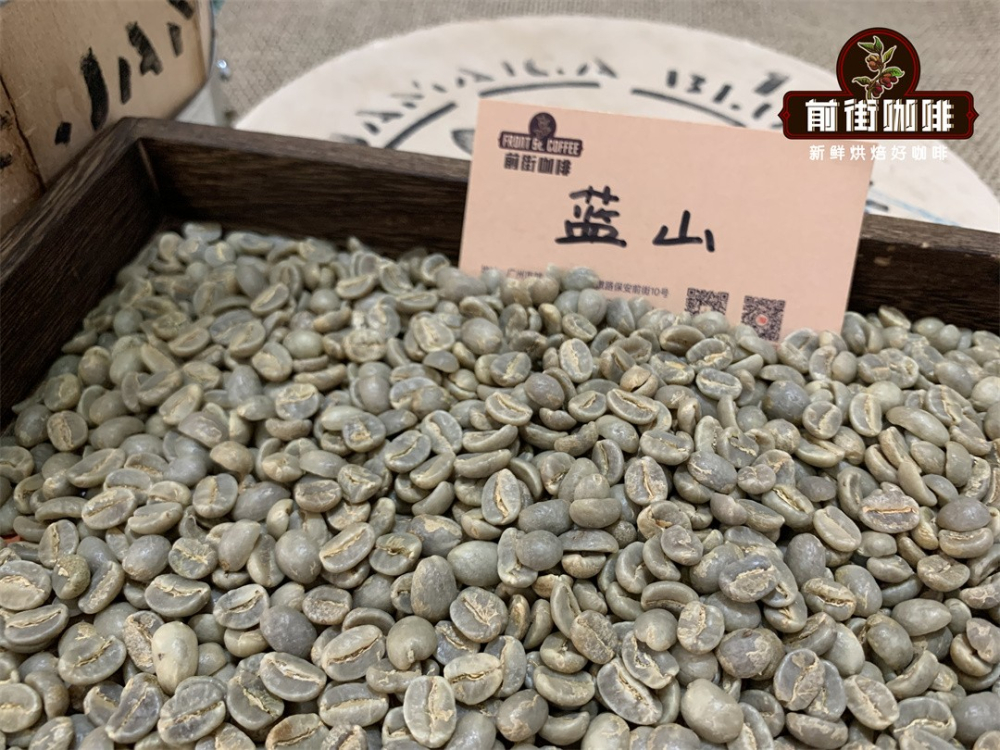
The flavor of Blue Mountain Coffee is among the most mellow in the world. It is rich and mellow in taste, and because the sweetness, acidity, and bitterness are perfectly balanced, it has no bitterness at all, only a moderate and perfect acidity. As wine lovers would say, this flavor makes you linger and want more. That is why Blue Mountain Coffee has become one of the most expensive coffees in the world. It is the most superior coffee in the world.
The Growing Environment of Blue Mountain Coffee
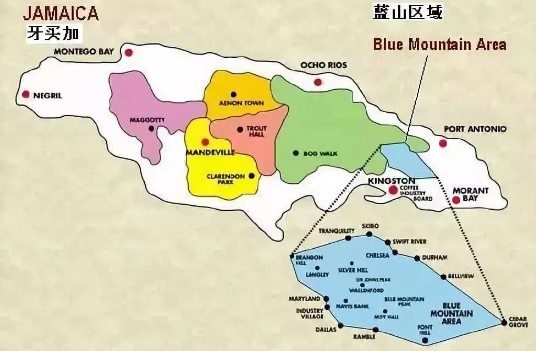
Blue Mountain lies within the coffee belt between 25 degrees north and south latitude, in a uniquely advantageous geographical position. Jamaica has a tropical rainforest climate with abundant rainfall year-round, humid air, and frequent mountain clouds and fog. The Blue Mountain Range is located in eastern Jamaica. When the weather is clear, direct sunlight hits the azure Caribbean Sea and the peaks reflect the brilliant blue light of the water, hence the name. The highest peak stands 2,256 meters above sea level, the highest in the Caribbean and a famous tourist destination. Inside the coffee belt it has fertile volcanic soil, fresh unpolluted air, a humid climate, and year-round fog and rain. FrontStreet Coffee believes it is precisely this climate that created the world-renowned Jamaica Blue Mountain Coffee, and the world's highest-priced coffee.
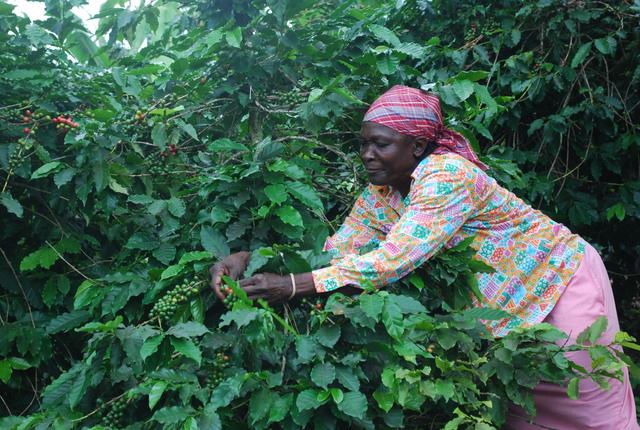
Coffee grown on Blue Mountain typically matures between June and November each year. Local women workers familiar with the terrain are assigned to pick cherries on the steep slopes. Those pickers must meet certain experience requirements—they need to harvest fruit at suitable ripeness, because under-ripe or overripe cherries easily damage the quality of the resulting coffee. Precisely because Blue Mountain Coffee is so rare, it is usually served as a single-origin coffee.
Grading of Blue Mountain Coffee Beans
Every coffee bean has its own grading system, and Blue Mountain beans are graded by altitude and bean size. Beyond being grown in specific regions at specific altitudes, the Jamaican authorities have established a more detailed grading system for Jamaica Blue Mountain Coffee. In 1953, Jamaica established the Coffee Industry Board (CIB), which passed coffee export grade standards specifying quite standard requirements for the size, color, defects, and flavor of exported green beans. On the basis of a green bean defect rate below 3%, Jamaica Blue Mountain green beans are divided by particle size into Jamaica Blue Mountain No. 1 Coffee, Jamaica Blue Mountain No. 2 Coffee, Jamaica Blue Mountain No. 3 Coffee, and Jamaica Blue Mountain Peaberry Coffee.
1. Jamaica Blue Mountain Coffee
Both Blue Mountain Coffee and High Mountain Coffee are divided into four grades each. Ranked by quality from highest to lowest: NO.1, NO.2, NO.3, and PB (Peaberry). Under CIB standards, only coffee grown at 1,000-1,700 meters may be called Jamaica Blue Mountain Coffee. With low yield, large particles, excellent quality, and balanced flavor, it combines appropriate acidity, bitterness, aroma, richness, and sweetness. It is recognized worldwide as a supreme product, so the national treasure, Blue Mountain No.1, is the most expensive of all Blue Mountain coffees.

(1) No.1 - 17/18 screen, defect rate not exceeding 2%.
(2) No.2 - 16/17 screen, defect rate not exceeding 2%.
(3) No.3 - 15/16 screen, defect rate not exceeding 2%.
(4) Peaberry (PB) - 10MS, defect rate not exceeding 2%.
2. Jamaica High Mountain Coffee
Coffee produced at 500-1,000 meters in the Jamaica Blue Mountain region is called High Mountain Coffee, and it is the coffee whose quality is second only to Blue Mountain Coffee.
3. Jamaica Coffee
Coffee grown outside the Blue Mountain Range is called Jamaica Coffee, cultivated at altitudes below 500 meters.
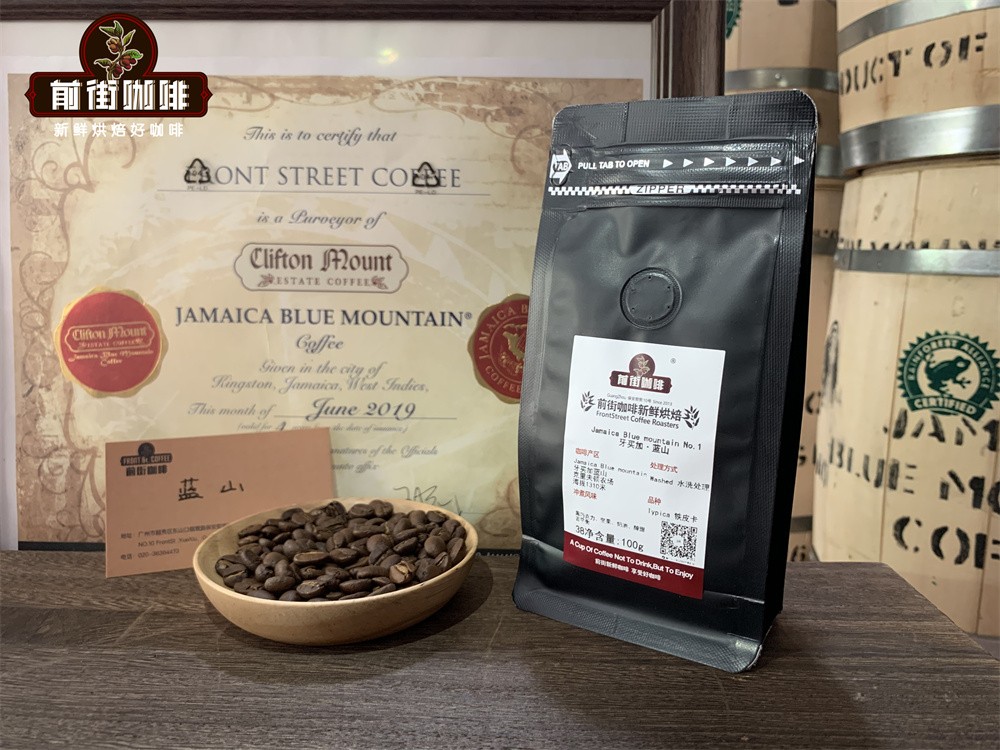
Therefore, Jamaica Blue Mountain No.1 Coffee is recognized worldwide as a supreme product and is the most expensive among all Blue Mountain coffees. So which type of Blue Mountain Coffee are you drinking?
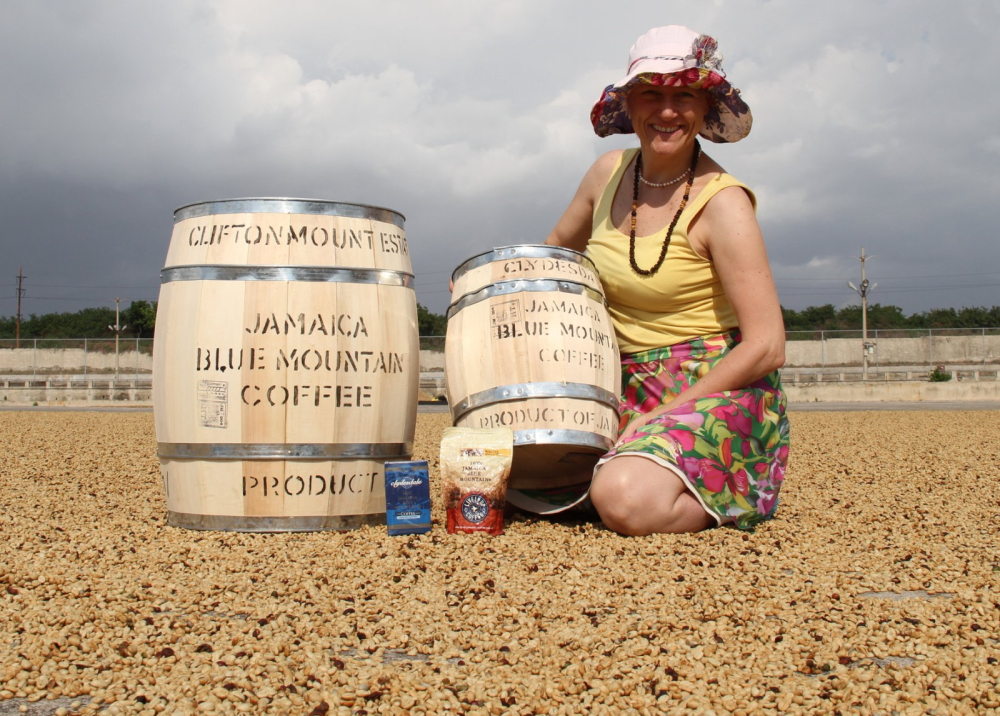
Jamaica Blue Mountain Coffee is the only coffee-producing region among all coffee beans that packs green beans in wooden barrels, while other regions use burlap bags. The rainforest tree frog logo on the barrels means that Clifton Estate complies with "Sustainable Agricultural System Standards" and is certified by the Rainforest Alliance.
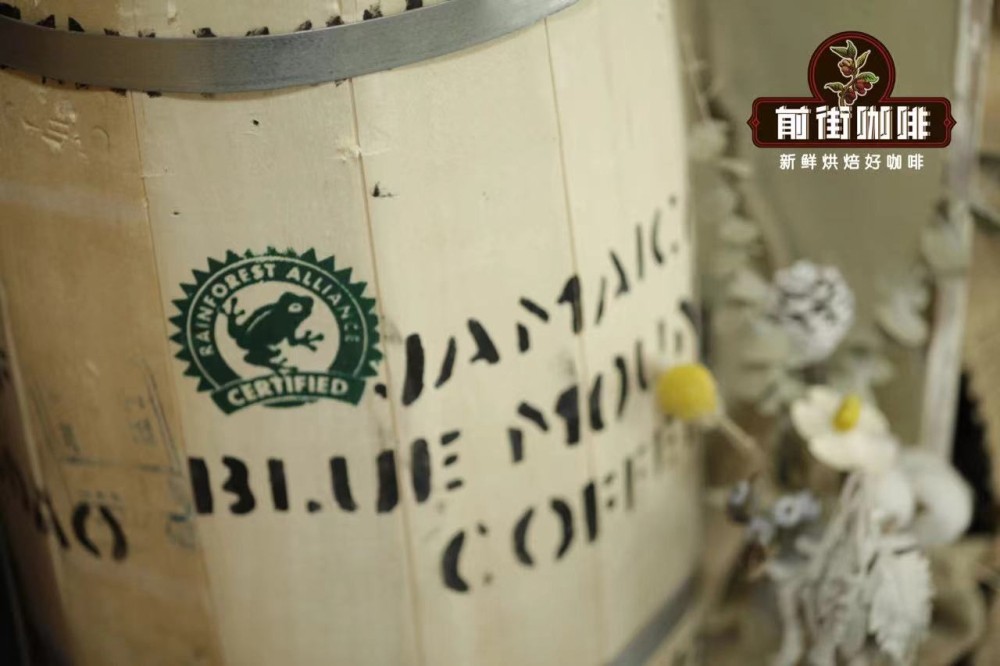
The Jamaica Blue Mountain Coffee from FrontStreet Coffee is sourced from Clifton Estate, an export company designated by the Jamaica Coffee Industry Board. The wooden barrels holding the green beans carry the English printed font of Clifton Estate and a green tree frog logo. The basic standards for Blue Mountain No.1 green beans sourced by FrontStreet Coffee include beans above 17 screen, a defect rate below 2%, and a moisture content around 13%. They appear as full, uniform-sized, blue-green green beans. In flavor, they simultaneously offer comfortable acidity, sweetness, bitterness, aroma, and richness.
Blue Mountain Typica Variety
Typica is the oldest coffee variety of Arabica, with a long cultivation history. Jamaica Blue Mountain Coffee is of the Typica variety. Blue Mountain Coffee of the Typica variety has a dark chocolate flavor—not milk chocolate, but dark chocolate with a purity above 92%, brought by the pure Typica variety. Typica is very susceptible to leaf rust disease. Originally, Typica widely planted in Central and South America was continuously replaced because of leaf rust, but thanks to Jamaica's unique geographical advantages, Typica remains the main cultivated variety here, with a very low incidence of leaf rust disease.
Typica has a tall tree shape with copper-colored young leaves at the top, so it is often called red-topped coffee. Typica has a pure and elegant flavor, but a weak constitution, poor disease resistance, and very low yield per plant. This is also why fewer and fewer Typica coffees are seen today. Typica was introduced to Blue Mountain for cultivation in the 18th century and has been there for over two hundred years. The Typica of Blue Mountain has also adapted to the local island-type terroir, evolving better disease resistance—particularly against coffee berry disease—much stronger than typical Typica.
Blue Mountain Coffee Bean Processing Method
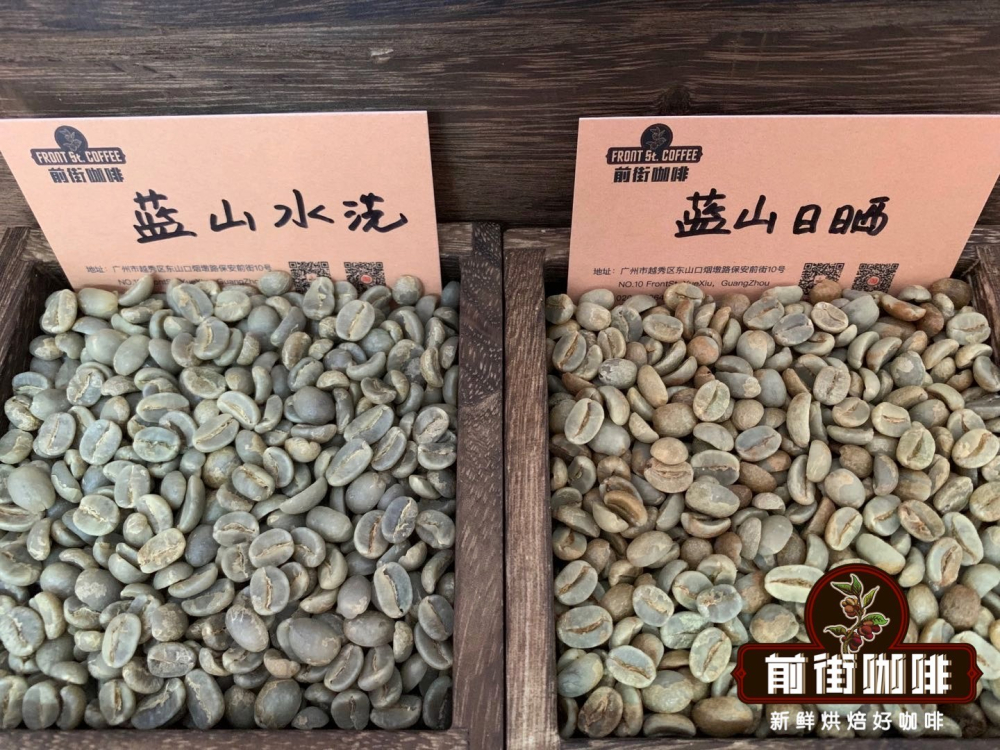
It is often said that washed coffee beans better reveal the essence of the bean's flavor, and FrontStreet Coffee agrees. That is why almost all of FrontStreet Coffee's daily beans are washed processed. Blue Mountain Coffee was previously all washed processed, but with the advancement of specialty coffee, Clifton Farm attempted to launch a sun-dried processed batch of Blue Mountain for the first time in 2019. Of course, FrontStreet Coffee offers both sun-dried and washed processed Blue Mountain Coffee.
FrontStreet Coffee (FrontStreet Coffee) Brewing Suggestions
Whether raw or roasted, Blue Mountain Coffee beans are particularly beautiful. Facing such beautiful beans, one really doesn't want to waste a single one. Of course, FrontStreet Coffee believes that no matter what kind of coffee beans you have, you should try not to waste them and must brew a delicious cup properly.
To brew a good cup, besides the variety, the freshness of the beans is crucial. FrontStreet Coffee believes freshness is a very important part of brewing. The beans shipped by FrontStreet Coffee (FrontStreet Coffee) are all roasted within 5 days, because FrontStreet Coffee deeply understands how much freshness affects flavor. FrontStreet Coffee's roasting philosophy is "Freshly Roasted Good Coffee," ensuring that every customer who places an order receives the freshest coffee when it arrives. The resting period is about 4-7 days, so when customers receive their coffee it is at optimal flavor.
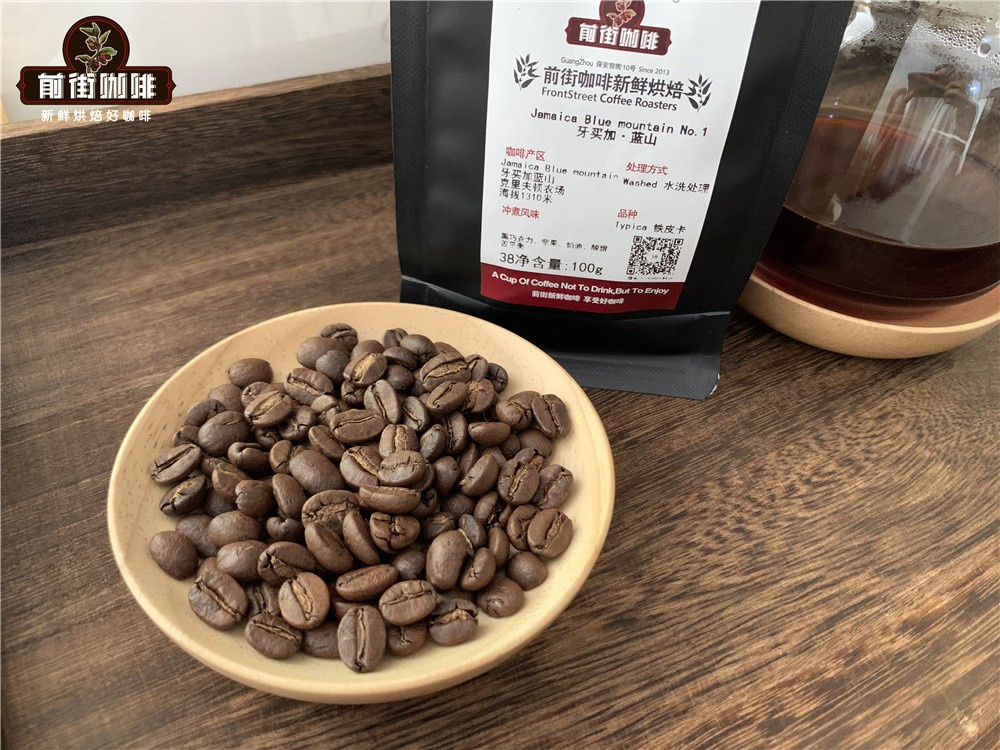
Of course, some customers need FrontStreet Coffee to grind the beans for them, which is also fine. But FrontStreet Coffee must remind you: when beans are ground in advance, there is no need for a resting period, because during transportation the pressure from the carbon dioxide produced in the packaging also mellows the coffee. So you can brew a cup immediately upon receiving ground coffee. Ground coffee must be brewed promptly, however, because it oxidizes quickly in air, meaning the flavor dissipates relatively fast and the coffee won't taste as good. FrontStreet Coffee therefore suggests buying whole beans and grinding them fresh before brewing, to better taste the coffee's flavor.
FrontStreet Coffee's Blue Mountain Coffee Brewing Parameters:
FrontStreet Coffee (FrontStreet Coffee) uses a powder-to-water ratio of 1:15 and a grind size of 75% pass-through on a #20 standard sieve when brewing these two Jamaica Blue Mountain coffees. Because FrontStreet Coffee aims to highlight Blue Mountain's characteristics—balance, richness, and soft fruit acidity—a water temperature of 88°C is sufficient. For the dripper, the KONO filter cup is considered first. FrontStreet Coffee takes into account that both of these Blue Mountain beans use a darker roast level, and the darker the roast, the faster the coffee substances dissolve. To avoid over-extraction, FrontStreet Coffee uses a lower water temperature and the slower-flow KONO filter cup to ensure the coffee substances are extracted as fully as possible under low-temperature conditions.

The brewing parameters used by FrontStreet Coffee are: KONO filter cup, 88°C water temperature, 1:15 powder-to-water ratio, 15g powder weight, and a grind size of 75% pass-through on a #20 standard sieve.
FrontStreet Coffee uses segmented extraction, a three-stage pouring method. Use 30g of water for blooming, with a bloom time of 30s; the first stage uses a small stream in circular motions to pour to 125g before stopping. When the liquid level drops to just before exposing the coffee bed, continue with the second stage, stopping at 225g to complete extraction. Total extraction time, including blooming, is 2'00".
Blue Mountain Coffee Flavor Description
[FrontStreet Coffee Sun-dried Blue Mountain Coffee Flavor]: Slight berry acidity reminiscent of dark plums and mulberries, with excellent overall balance, rich dark chocolate and nut flavors, and a slight fermentation sensation.
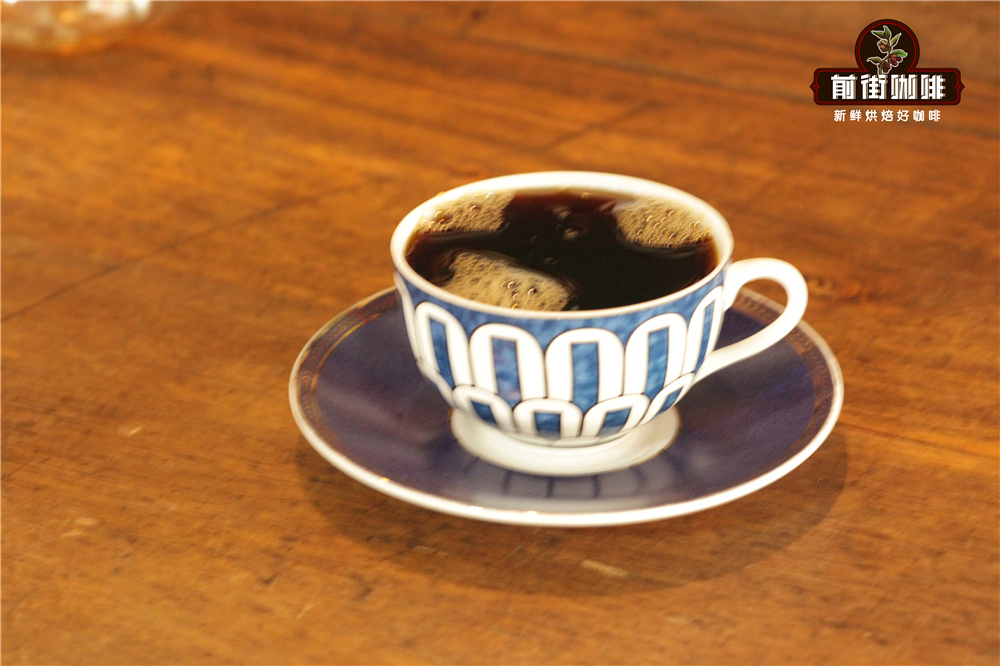
[FrontStreet Coffee Washed Blue Mountain Coffee Flavor]: Rich dark chocolate and nut flavors, a creamy smooth mouthfeel, and balanced sweet, sour, and bitter notes.

Although Blue Mountain Coffee is excellent, FrontStreet Coffee doesn't recommend drinking only one type of coffee, as that would be too monotonous. One should taste more coffees from different regions or countries and experience different styles. FrontStreet Coffee offers more than fifty different single-origin coffees from various regions. Different regions offer different flavors, and even different regions within Ethiopia produce distinctly different flavors. So come to FrontStreet Coffee, and we believe you'll experience a completely different coffee world.
FrontStreet Coffee Recommendation
The grading system is what separates genuine Jamaica Blue Mountain from the rest: only beans grown in a specific part of the Blue Mountain range and officially certified can carry the name, and the range runs across eastern Jamaica with its highest peak at 2,256 meters, perpetually wrapped in cloud—hence "Blue Mountain." That altitude brings a wide day-night temperature swing and a longer ripening cycle, while fertile volcanic soil, even rainfall, and a mild, stable climate let the cherries build sugar and flavor slowly, producing the fine texture and balance Blue Mountain is known for. Scarcity does the rest: the whole region produces less than 2,500 tons a year, a tiny share of world output, and because the Japanese market historically bought more than 70% of it, even less reaches the rest of the world. Certified Jamaican Blue Mountain green beans have been officially exported to China since 2003.
FrontStreet Coffee's Blue Mountain No.1 comes from Clifton Estate, and the estate has been growing and processing coffee since around 1750; its plots average 4,300 feet (1,310.64 meters), where sufficient altitude, mild afternoon cloud shading the hills, ample sunlight, and mineral-rich soil give the trees ideal growing conditions and lengthen cherry maturation. The lot uses Clifton's own certified barrels—traditional Blue Mountain ships in wooden barrels of 15, 45, and 70 kilograms, and the barrel itself is a signature of the genuine article, in this case showing the estate's printed name and a green tree frog logo. Blue Mountain No.1 is one of the highest grades in Jamaican Blue Mountain coffee, with strict standards for bean size, defect rate, and overall quality, and it is traceable from the origin documents through the original shipping barrels.
In the cup, the estate's Typica variety delivers Blue Mountain's classic balance beneath a medium-dark roast, unfolding nuts, dark chocolate, cream caramel, and a soft sweetness with acidity, sweetness, bitterness, and aroma in harmony; roasted fresh within 5 days, the beans arrive still at full flavor. It is a good all-purpose bean, and it rewards more than one brewing method. Pour-over best reveals the fine layering and rich sweetness—FrontStreet suggests a Kono dripper, 15g per serving, beans rested 4-7 days with the roast date counted as day one, a grind like granulated sugar (coarser than for a light roast), 87-88°C water, and a 1:15 ratio, poured in three stages: a 30g bloom for 30 seconds, a second pour to 120g with a slow, steady circle and a vertical stream, then a faster third pour to 225g to keep the filter from clogging and over-extracting. A moka pot gives a denser, fuller cup that strengthens the chocolate, caramel, and nut notes while keeping the balance, and it works beautifully in a latte or flat white. The finished cup is very clean, complex, and gentle, chocolate-sweet with a strong body, and the sweet-acid-bitter balance is so complete that it reads as barely bitter, with only a moderate, perfect acidity and a long fruit note at the end.
Important Notice :
FrontStreet Coffee is a long-established specialty coffee roaster in Guangzhou China, selling freshly roasted beans from its own farm in Yunnan as well as dozens of carefully selected single-origin beans from around the world for both pour-over and espresso. The products deliver consistently excellent quality and great value, with shipping within 24 hours. Guangzhou's FrontStreet Coffee shop is recommended by many coffee lovers, and the beans are now available online at the Tmall 。
FrontStreet Coffee has moved to a new address:
FrontStreet Coffee Address: 315,Donghua East Road,GuangZhou
Tel:020 38364473
 Scan and follow the En Gafei WeChat official account. Please indicate that the reprint comes from "En Gafei".