Coffee Brewing Techniques: Siphon Brewing Extraction Methods for Blue Mountain Coffee

For more premium coffee knowledge, follow FrontStreet Coffee.
FrontStreet Coffee's Jamaica Blue Mountain No. 1 is prized for its balance — sweetness, gentle acidity, and mild bitterness in harmony, wrapped in a rich, mellow body. Brewing it is refreshingly simple. FrontStreet Coffee recommends either drip or immersion methods. Drip brewing is best represented by pour-over, which brings out the clean finish and layered sweetness of Blue Mountain No. 1. Immersion methods offer several options as well — the Clever dripper, French press, and siphon are all popular choices.
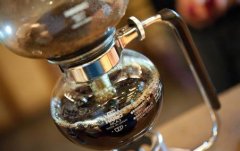
Today we'll use the most theatrical of the bunch, the siphon pot, to walk through brewing a delicious cup of Jamaican Blue Mountain No. 1 at home, and see what the legendary "king of coffees" is all about!

Whichever method you choose, FrontStreet Coffee recommends brewing with freshly roasted beans to get the most out of the coffee's flavors. Beans shipped from FrontStreet Coffee are roasted within 5 days of dispatch, because freshness has an enormous impact on flavor. The core of FrontStreet Coffee's roasting philosophy is "freshly roasted, good coffee," so that every customer receives coffee at its aromatic peak. Since the resting period runs about 4-7 days, the beans arrive just as their flavor is opening up.
Jamaican Blue Mountain No. 1 Grades
Blue Mountain coffee was once hailed as the Hermès of the coffee world. Authentic Blue Mountain offers dense, lingering chocolate and roasted hazelnut aromas, with an outstanding balance of acidity, sweetness, bitterness, fragrance, and body. FrontStreet Coffee believes this reputation is inseparable from the careful cultivation and strict grading enforced by Jamaican growers.

The Blue Mountains enjoy unique terroir, a combination of factors that makes the region nearly perfect for growing coffee. Still, coffee is an agricultural product — variety, altitude, harvesting, and post-harvest processing all shape the final cup.
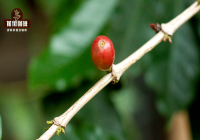
According to the official classification of the Jamaican Coffee Industry Board (CIB), only Typica variety coffee grown in designated forest areas at altitudes between 910-1700 meters may be called authentic "Jamaican Blue Mountain coffee." Typica expresses its character best at high altitude, but the variety has poor disease resistance and is highly susceptible to illness, and each plant yields relatively little fruit, demanding more hands-on care. The rugged terrain of the high Blue Mountains makes management and harvesting difficult, requiring highly skilled pickers — which further limits output. In recent years, less than 15% of Jamaica's coffee production could carry the Blue Mountain label — roughly 900 tons.

Many coffee drinkers have heard the rumor that "authentic Blue Mountain coffee is monopolized by Japan." The claim is not baseless. UCC, a Japanese coffee company formerly known as Ueshima Coffee Co., Ltd., established a farm in Jamaica in 1981 to develop the Blue Mountain coffee project, and Jamaica committed to allocating 90% of the Blue Mountain quota to Japan. Combined with Japan's energetic promotion of Blue Mountain, this created the high prices and scarcity the coffee became famous for. Today, with coffee culture flourishing worldwide, enjoying a cup of Blue Mountain is no longer out of reach. At FrontStreet Coffee, a pour-over of Blue Mountain No. 1 black coffee costs just 60 yuan.
Bean size is measured with a series of mesh screens — beans that do not pass through a given screen meet that size standard. Color is assessed both visually and with a colorimeter, with blue-green counting as the highest grade. Combining these criteria, Blue Mountain coffee is graded from high to low as NO.1, NO.2, NO.3, and PB. NO.1 is the top grade — known in China as "Blue Mountain No. 1." It must be 17 mesh or larger, with a defect rate below 3% and moisture content around 13%, and in cupping it should show rich coffee aroma, a smooth, balanced taste, low, soft acidity, and a lasting finish.

For roasting, the CIB also recommends the roast levels that bring out Blue Mountain's classic profile. FrontStreet Coffee's roasters follow the same principle, using a medium roast so that Blue Mountain No. 1 shows both rich chocolate sweetness and a touch of soft fruit acidity.

Siphon Coffee Brewing Method
To demonstrate the technique at its clearest, FrontStreet Coffee ran a fast-paced extraction using a light-roast bean — Kenya Asalia. The same workflow applies to Blue Mountain No. 1; you would simply grind slightly coarser to suit its medium roast. For this fast style, the water temperature sits relatively high, around 92°C, which means sealing the upper pot when the lower pot starts bubbling vigorously. Because the extraction is short — just 60 seconds — and the beans are lightly roasted, the grind is set "two notches" finer than for pour-over: EK43 setting 9, with a 90% pass-through rate on a 20-mesh screen. The coffee-to-water ratio is 1:14, meaning 20g of coffee with 280ml of hot water.
First, assemble all the equipment, then pour the target amount of water into the lower pot.

Remember to wipe the outside of the lower pot dry with a cloth after pouring — stray droplets on hot glass can cause it to crack.

Once wiped, install the filter assembly in the upper pot. Pull the filter chain down through the tube, then hook it firmly onto the bottom of the siphon tube. This holds the filter snugly against the upper pot's outlet, keeping too many grounds from slipping into the lower pot, and also slows the drainage rate.

With the filter in place, seat the upper pot onto the lower pot, making sure the chain reaches the bottom of the lower chamber, and start heating.

When the lower pot starts producing a steady stream of small bubbles, don't rush. Wait until the small bubbles grow into large ones, then straighten and press down the upper pot to build pressure in the lower chamber. Once all the hot water has risen into the upper pot, you can start the extraction!

Start your timer as you pour in the grounds, then make your first stir.

This first stir exists to fully saturate the grounds — the siphon equivalent of a pour-over bloom. Use a gentle tapping motion to knock every ground into the water so the bed absorbs it evenly.

At 25 seconds, make the second stir. Its purpose is to speed up the dissolution of flavor compounds, so here you can stir with more vigor. FrontStreet Coffee uses a Z-pattern at this stage, drawing Z-shapes back and forth through the grounds for 10 seconds.

At 50 seconds, make the final stir. This one also boosts dissolution, but since you're deep into the extraction — when most of the sour and sweet compounds have already been drawn out — ease off the intensity. FrontStreet Coffee switches to slow circular stirring at this point. At 55 seconds, remove the heat source and let the coffee drain back down. If the drawdown is sluggish, wipe the lower pot with a damp cloth to cool it and speed the return, avoiding over-extraction.

Once the coffee has fully returned to the lower pot, the brew is complete. Siphon coffee comes off the heat quite hot, so let it cool a minute or two before tasting.
After a short rest, FrontStreet Coffee tasted the cup! Alongside Kenya's bright cherry-tomato and plum acidity, we picked up the sweetness of brown sugar and apricot, and the texture was thick and round. While the layers aren't as distinct as in pour-over, siphon coffee feels more substantial, with more pronounced aromas — a completely different experience from the same family of technique.
FrontStreet Coffee Recommendation
For immersion brewing like the siphon method shown here, FrontStreet Coffee's Jamaica Blue Mountain No. 1 is a natural fit: it is the highest grade of Jamaican Blue Mountain, sourced from the historic Clifton Estate, where coffee has been grown since around 1750 at roughly 4,300 feet (1,310.64 meters). Cool afternoon mists, ample sunshine, and mineral-rich soil extend the coffee cherry's ripening and give the beans their celebrated depth.
FrontStreet Coffee ships this Blue Mountain No. 1 freshly roasted within 5 days, and follows a traditional medium-dark roast to highlight its full body and the classic "bitter first, sweet after" character. Expect a very clean, gentle, and complex cup: chocolate sweetness, strong richness, and a perfect balance of sweet, sour, and bitter with a persistent fruity finish.
For pour-over, FrontStreet recommends a Kono dripper with 15g of coffee rested 4-7 days from the roast date, ground slightly coarser than for light roasts (about the texture of granulated sugar), water at 87-88°C, and a 1:15 ratio. Pour in three stages: 30g of water for a 30-second bloom, up to 120g with slow, small circles, then up to 225g with a slightly faster pour. If you prefer a stronger, fuller cup, the moka pot also suits this coffee beautifully.
Important Notice :
FrontStreet Coffee is a long-established specialty coffee roaster in Guangzhou China, selling freshly roasted beans from its own farm in Yunnan as well as dozens of carefully selected single-origin beans from around the world for both pour-over and espresso. The products deliver consistently excellent quality and great value, with shipping within 24 hours. Guangzhou's FrontStreet Coffee shop is recommended by many coffee lovers, and the beans are now available online at the Tmall 。
FrontStreet Coffee has moved to a new address:
FrontStreet Coffee Address: 315,Donghua East Road,GuangZhou
Tel:020 38364473
 Scan and follow the En Gafei WeChat official account. Please indicate that the reprint comes from "En Gafei".