How Long is Coffee's Best Flavor Period? When is the Best Time to Drink Brewed Coffee? How Long Can Coffee Be Kept in a Thermos? What Temperature is Best for Pour-Over Coffee?
What Is the Flavor Window?
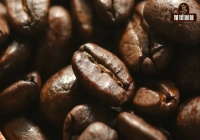
The flavor window is the optimal tasting period for coffee beans after roasting. During this window, with minimal interference from carbon dioxide and before the flavor compounds have dissipated significantly, we can brew coffee with the fullest aroma and get the most complete flavor experience.

Freshly Brewed Coffee Also Has an Optimal Drinking Time
But did you know that, beyond the beans themselves, freshly ground and brewed coffee also has an optimal tasting time? The principle is the same as with beans: coffee aroma is volatile, so we need to drink it before that aroma dissipates to get the fullest experience. Unlike beans, though, brewed coffee is also affected by temperature. As FrontStreet Coffee often points out, temperature affects our taste buds, and we perceive different flavors differently at different temperatures. Because flavors balance each other, when the intensity of one changes, the drinking experience changes a great deal too.

How Temperature Affects Coffee
Temperature changes can also affect certain compounds in coffee and alter its texture. That is why, when coffee is brewed, FrontStreet Coffee generally recommends drinking it as soon as possible. But often we can't finish a cup quickly, so some friends wonder: "What is the best time frame to finish brewed coffee?"

Experiment: Finding the Optimal Drinking Time
So today, FrontStreet Coffee is running an experiment to find the best window for finishing a brewed cup.
Brewing the Experiment
For this test, FrontStreet Coffee brewed two beans of different roast levels, then tasted them at different time intervals and temperatures to see how the coffee changed and to pin down the optimal window. The beans chosen were a dark roast and a light roast: FrontStreet Coffee's Sumatra PWN Gold Mandheling (left) and FrontStreet Coffee's Yirgacheffe Gedeb (right) from our bean selection. The brewing parameters were as follows:

Coffee amount used: 15g
Grind size: 75%-80% pass-through rate with #20 sieve
Coffee-to-water ratio: 1:15
Brewing water temperature: 92°C (light roast) / 88°C (dark roast)
Brewing method: Three-stage infusion (30ml+120ml+75ml)
Brewing time: 2 minutes

We won't dwell on the brewing process - let's go straight to the tasting notes.
Tasting Results at Different Time Intervals
Immediately after brewing: When the coffee was first brewed, the temperature sat in the 60-65°C range. Gedeb showed a very prominent aroma - just leaning in, we could pick up floral and lemon scents. The taste was very balanced with a smooth texture, and the flavors we detected were white florals, lemon, apricot, berries, and oolong tea. Gold Mandheling also had a prominent aroma, a balanced taste, and a very rich texture, with chocolate, nuts, and caramel, a creamy sweetness, and a slight spicy aftertaste.

After 10 minutes: The temperature dropped to 50-55°C. The experience of both cups was not much different from before, with prominent aroma and a smooth texture, though Gedeb's acidity began to rise slightly.
After 20 minutes: The temperature fell to 45-50°C and the coffee began to show noticeable changes. There wasn't as rich an aroma when leaning in, and we could see coagulated oils on the surface, with a relatively less smooth texture. The flavors were still present but no longer as distinct as before.

After 30 minutes: The temperature dropped to 40-45°C. The aroma and texture were similar to the previous stage with little change. What began to shift was the taste. Gedeb's acidity became more pronounced and it was already hard to catch the florals, with the profile leaning more toward sweet-and-sour fruits like lemon, apricot, and berries. Gold Mandheling was similar - its bitterness grew more pronounced, with flavors of dark chocolate, nuts, cream, and caramel.
After 40 minutes: The temperature dropped to 37-40°C. Both cups behaved the same way, having completely lost their prominent aroma, with a slightly inferior, less smooth texture. Although neither the bitterness nor the acidity rose further, there wasn't much flavor expression left.
After 50 minutes: The temperatures of both coffees didn't change, but their flavor, texture, aroma, and taste no longer impressed. While not unpleasant to drink, they couldn't be called good either. So we can conclude that 50 minutes after brewing is already the limit of the flavor window for coffee, under normal storage conditions.

Conclusion and Recommendations
In short, we can conclude that under normal circumstances, coffee is best consumed within 50 minutes of brewing, so that we can keep the tasting experience at a high standard throughout. At this point, friends who haven't followed FrontStreet Coffee before might wonder: since coffee doesn't taste as good once it cools, can reheating bring back its deliciousness?

The answer is, of course, no. FrontStreet Coffee has written about this many times and run numerous experiments, and the results are always the same: although reheating can make the taste somewhat more balanced, the aroma has already dissipated, so reheated coffee cannot return to the deliciousness it had when first brewed.
If you want to extend the flavor window of brewed coffee, FrontStreet Coffee recommends the methods shared in the article "Just One Trick to Make Coffee's Aroma Last Longer" - such as covering the cup with a lid or moving the coffee into a thermos to slow the loss of aroma and the drop in temperature. That helps hold the aroma longer and stretches the flavor window a little further.
FrontStreet Coffee Recommendation
To taste a coffee at its best, start with beans that are fresh and roasted for the way you brew. Because this experiment paired a light and a dark roast, it makes sense to have one of each on hand. On the dark side, FrontStreet PWN Indonesia Golden Mandheling is a deep-roasted Sumatran with very low acidity and a rich, lingering body, opening onto herbal and dark chocolate notes with a faint earthy touch - a good match for anyone who likes bold flavors and avoids acidity.
On the light side, FrontStreet Yirgacheffe Gedding is the classic starting point for pour-over, with clear citrus, berries, and florals and a green-tea sweetness. Its acidity is soft and bright, more like the natural sweet-sour of fruit than anything sharp, which makes it very approachable for beginners. Both coffees are best brewed with a fast, clean brewer such as a V60, and - as the experiment above shows - drunk within about 50 minutes for the fullest expression.
Important Notice :
FrontStreet Coffee is a long-established specialty coffee roaster in Guangzhou China, selling freshly roasted beans from its own farm in Yunnan as well as dozens of carefully selected single-origin beans from around the world for both pour-over and espresso. The products deliver consistently excellent quality and great value, with shipping within 24 hours. Guangzhou's FrontStreet Coffee shop is recommended by many coffee lovers, and the beans are now available online at the Tmall 。
FrontStreet Coffee has moved to a new address:
FrontStreet Coffee Address: 315,Donghua East Road,GuangZhou
Tel:020 38364473
 Scan and follow the En Gafei WeChat official account. Please indicate that the reprint comes from "En Gafei".
Which is more acidic: dark roast or light roast coffee? Do coffee experts prefer light or dark roast? What are the differences in coffee roast levels? How do light roast and dark roast coffee differ?