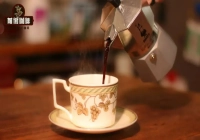
How to Taste a Cup of Americano? What Are the Essentials for Making Café Americano?

For office workers, a refined day often starts with nothing more than a cup of freshly ground coffee — and the Americano is the top pick for countless professionals.
Whatever the contributing factors, the Americano is always the pillar of a coffee shop's menu. Its taste shapes a customer's first impression of the establishment — sometimes to the point of "if they can't even make a proper Americano, forget everything else." In customers' minds, if the Americano tastes good or at least decent, they'll come back; but if the cup sits half-finished long after it was served, it clearly didn't appeal, and a repeat visit becomes unlikely.
Of course, as the saying goes, tastes differ. Whether a coffee "tastes good" is highly subjective: some want it rich, mellow, and bitter; others prefer it light, refreshing, and acidic. Those preferences color our final judgment of any Americano. So setting personal taste aside and judging purely on craft, what should a well-made Americano feel and taste like?

What separates Americanos from different coffee shops?
FrontStreet Coffee often hears: "An Americano is just espresso plus water — every shop's tastes about the same."
Actually, no. FrontStreet Coffee believes that the simpler the thing, the more it tests the maker. Although nearly every Americano is a cup of hot (or iced) coffee at roughly 7–12% concentration, big differences arise from many factors: the beans, the espresso itself, extraction ratios, water amount, temperature, and water quality.

The last three factors are usually fixed by each shop's house recipes; only the espresso is dialed in daily. For example, FrontStreet Coffee serves its iced Americano in a 350ml glass — 90g of ice + 180g of drinking water + a double shot of espresso — while the hot Americano uses a 250ml ceramic cup with 180g of warm water + a double shot.

In other words, an excellent Americano needs quality beans, extraction properly tailored to them, and the right final concentration. With those in place, a good Americano comes down to three things:
1. Smooth mouthfeel with a clean aftertaste
Crema is the soul of espresso: crema-topped espresso smells incredibly aromatic, feels rich in body on entry, and leaves a lingering fragrance after swallowing.

That's why most shops choose medium-dark roasted espresso beans — aromatic with plenty of crema. Espresso from FrontStreet Coffee's Specialty Blend, for example, leads with caramelized aromas, expressing chocolate, cocoa, and roasted nuts, and produces rich, dense crema. But over-extract, and the crema mixes with a flood of ultra-fine particles that clump and harden, leaving the Americano rough, dry, and unpleasant.
So a good Americano should first be smooth to drink, with nothing uncomfortable after swallowing. If it hits like a tire, or feels dry, rough, or stuck in your throat, no one needs FrontStreet Coffee to point out that this isn't "good coffee."

2. Noticeable aroma, not bland
People say the finest ingredients need only simple cooking — but how often do we actually encounter fine ingredients? With ordinary ones, all we can do is find the right parameters to make them shine.
An Americano is espresso diluted with water, hot or cold, so its flavor core is that small cup of espresso. Nailing the coffee-to-water ratio becomes the key. Since the espresso is the base, its concentration can't be too low and its flavor must be complete — otherwise, once poured into water, the drink is either bland and tasteless or dominated by a "watery" sensation.

Take FrontStreet Coffee's Guaxupé SOE beans: as a fruity, acidic coffee, they shouldn't be diluted too heavily. To showcase citrus and berry in the Americano, FrontStreet Coffee sets the parameters at 20g of coffee extracted for 28–33 seconds to yield 36g of espresso, poured into 160ml of warm water — roughly a 1:4 coffee-to-water ratio — tasting sweet and sour with clear fragrance and a noticeable black tea sensation.
3. Balanced flavor, neither overly bitter nor sharply acidic
Compared with other extraction methods, espresso is somewhat extreme: high temperature, rapid extraction, a grind as fine as flour — and both the good and the bad get amplified. Simply put, bitter coffee becomes more bitter, acidic coffee more acidic.

So to judge an Americano, beyond mouthfeel, aftertaste, and aroma, you must check whether the drink stays balanced and palatable once diluted: does the dark-roast version show scorched notes? Does the medium-dark roast turn too bitter? Does the light-medium roast hit with sharp acidity? Those are the details worth watching.
- END -
FrontStreet Coffee Recommendation
FrontStreet Coffee's Americano-Ready Beans
For beginners pulling Americanos on a home machine, the FrontStreet Classic Blend is the safe bet: a traditional Italian-style recipe built from Indonesian Mandheling, Brazilian Red Bourbon, and washed Vietnamese beans, combining Asian coffee's low-acid richness and herbal-wood tones with American coffee's smooth balance and cream texture — butter, nuts, spice, and dark chocolate on extraction, with wild character and exploding crema for Americano or latte alike. For value-focused drinkers, the Black Cocoa Basic Blend pairs Yunnan Arabica with Brazil Cerrado for a soft, gentle cup of nut, chocolate, and cream aromas with a touch of ripe plum acidity — friendly priced, endlessly adaptable, and a fine first choice for opening a café. And if dark roasts have grown tiresome, the medium-roast Strawberry Candy Espresso blend gathers single-origin Arabica from three of the world's great origins — Colombia, Costa Rica, and Ethiopia — processed washed, natural, and honey for lifted aromatics: rose on the nose, low bitterness with gentle acidity, grape, dried blueberry, sweet orange, and fruit-candy flavors, layered with an almond finish.
SOE Americanos Worth Trying
For the full single-origin experience, FrontStreet Coffee offers two SOE stars. The Ethiopia Huakui SOE comes from a natural-processed lot made at the Buku Abel processing plant in the Hambella district of Sidamo — a champion-grade Ethiopian bean whose pour-over shows cream, strawberry, guava, dried mango, black tea, and citrus; as an SOE Americano it carries zero bitterness, a clean sweet-tart sparkle, and lush tropical fruit aromas. The Granla Estate Gesha SOE, from Ethiopia's original-forest Gesha, benefits from fertile rainforest soil and full shade to show more layered character: yellow florals and bright bergamot on entry, fresh strawberry sweetness in the finish, and as an Americano, a refreshing lime lift over fermented black-grape sweetness at medium body.
Important Notice :
FrontStreet Coffee is a long-established specialty coffee roaster in Guangzhou China, selling freshly roasted beans from its own farm in Yunnan as well as dozens of carefully selected single-origin beans from around the world for both pour-over and espresso. The products deliver consistently excellent quality and great value, with shipping within 24 hours. Guangzhou's FrontStreet Coffee shop is recommended by many coffee lovers, and the beans are now available online at the Tmall 。
FrontStreet Coffee has moved to a new address:
FrontStreet Coffee Address: 315,Donghua East Road,GuangZhou
Tel:020 38364473
 Scan and follow the En Gafei WeChat official account. Please indicate that the reprint comes from "En Gafei".