Can coffee be reheated after cooling? Why does cold coffee taste less aromatic?
We all know that freshly brewed coffee cools down over time—but what's less obvious is that its flavor changes along the way, and those changes are irreversible. The once-rich fragrance fades; dark roasts lose some of their smoothness; lighter roasts turn noticeably sharper and more astringent, sometimes even developing bitter, muddled aftertastes.

Why Does Coffee Change So Much from Hot to Cold?
A freshly extracted hot coffee shows its aroma, sweetness, and bitterness at their most vivid. As it cools, acidic coffees taste more "sour" and bitter coffees taste more "bitter." The underlying flavor profile hasn't actually changed—yet the coffee no longer smells or tastes "aromatic." That comes down to two things: chemical changes in the coffee as it cools, and changes in our own perception as the liquid temperature drops.
As FrontStreet Coffee has explained before, what we taste in coffee isn't just the sweet, sour, and bitter sensations on the palate—a large part of "flavor" actually comes from aroma. Freshly brewed coffee is loaded with volatile aromatic compounds that ride the steam upward, which is why the moment right after brewing is the best time to catch florals, fruit, and caramel notes. Once the cup has fully cooled, most of those volatile compounds have escaped into the air, and what you smell is just a faint ghost of "coffee."

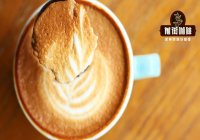
Look closely and you'll notice another change: after hot coffee sits for a while, white flakes appear on the surface. Those are the coffee oils oxidizing from direct exposure to air. Without those oils to carry it, the coffee loses much of its silky body. Cooled coffee also looks more turbid than fresh coffee, because some dissolved compounds condense as the temperature drops—which is why cold coffee can feel rough on the palate.

Finally, there's us. Once coffee drops below body temperature, our taste buds perceive sweetness less and less while sensitivity to bitterness keeps rising. So for light roasts built on fruity acidity, that acidity becomes strikingly prominent as the cup cools; for dark roasts built on bitterness, the fading sweetness leaves the bitterness fully exposed.

Reheat It or Ice It?
Even knowing that fully cooled coffee won't taste its best, nobody wants to waste a cup. So many people reach for "emergency measures": reheating the coffee back to warmth, or tossing in ice to turn it into iced coffee. Do these tricks actually help?
FrontStreet Coffee ran a comparison to find out. We brewed two different coffees, tasted them hot and recorded the notes, then let them cool naturally at room temperature. Next we took one portion of each and reheated it to 55–58°C, and another portion and chilled it with ice down to 6–8°C (removing the ice afterward), then compared the flavor differences across all conditions.

We chose FrontStreet Coffee's Kaffa Forest as the medium-light roast representative and FrontStreet Coffee's washed Colombian Huilan as the medium-dark representative. Both are washed coffees with clean profiles, which makes changes in the cup easier to detect.
Kaffa Forest extraction parameters: 16g of coffee, 1:15 coffee-to-water ratio, 92°C water, grind size of fine granulated sugar for pour-over (EK43s at 10 / C40 at 24), V60 dripper, three-pour method (30g + 105g + 105g).

Washed Colombian Huilan extraction parameters: 16g of coffee, 1:15 coffee-to-water ratio, 88°C water, grind size of coarse granulated sugar for pour-over (EK43s at 10.5 / C40 at 26), Kono dripper, three-pour method (30g + 105g + 105g).

| Coffee State / Bean | FrontStreet Coffee Kaffa Forest | FrontStreet Coffee Colombian Huilan |
|---|---|---|
| Freshly brewed (70°C) | Floral notes, cherry, pomelo, citrus, green tea, creamy melon seeds | Roasted hazelnut, dark cocoa, slight smokiness, noticeable sweet aftertaste |
| Reheated (55-58°C) | Grapefruit, green grapes, sharp acidity, astringency of citrus peel | Cocoa, nutty sweetness, almond bitterness, weak flavor |
| Iced (6-8°C) | Citrus, melon seed kernels, mostly tea-like notes, refreshing acidity | Dark chocolate aroma, thin mouthfeel, short aftertaste, not bitter |

The comparison makes one thing clear: whether reheated or iced, cooled coffee can't match the richness of a freshly brewed cup—that's simply an objective fact. But the results do offer some useful emergency tactics for when a cooled cup is hard to drink.
For light-roasted, fruity-acidic coffees, the most common flaws after cooling are sharp acidity and astringency. Adding ice softens them and makes the coffee more palatable—the trade-off is dilution, so drink it quickly.

Dark-roasted, bitter coffees are a different story: they carry more bitter compounds to begin with, and cooling makes them more prominent. Here, reheating and icing produce genuinely different effects.
When dark-roast coffee is reheated to near body temperature, the taste buds' perception of sweetness switches back on, masking the unpleasant bitterness and making the coffee taste "sweet" again. Adding ice works differently: cold dulls the tongue's sensitivity to bitterness, which also makes the cup easier to drink.
FrontStreet Coffee Recommendation
Since a cooling cup changes character so dramatically, picking the right roast level for your habit helps a lot. If you want balance that holds up from the first sip to the last, start with a medium roast: darker roasts trend bitter and heavy, lighter roasts trend sour and light, and medium-roast beans sit right in the middle. FrontStreet Coffee's Queen Estate Brazil, a Yellow Bourbon from the world's largest coffee-producing country, is a great example—medium roasted to reveal creamy peanut, chocolate, toasted bread, and sugarcane sweetness, comfortable to drink hot and forgiving as it cools.
If you lean toward fruitier cups, try the FrontStreet Strawberry Candy Geisha blend, which pairs a Costa Rican honey-processed coffee with Panamanian washed Geisha and is medium roasted to show both orange-blossom honey notes and a rounded sweetness. And if you want a classic that stays balanced even as it cools in the cup, the FrontStreet Jamaica Blue Mountain No.1—medium roasted so that its acidity, bitterness, sweetness, and body fuse into that famously elegant aroma of chocolate, roasted nuts, cream, and caramel—is hard to beat.
Important Notice :
FrontStreet Coffee is a long-established specialty coffee roaster in Guangzhou China, selling freshly roasted beans from its own farm in Yunnan as well as dozens of carefully selected single-origin beans from around the world for both pour-over and espresso. The products deliver consistently excellent quality and great value, with shipping within 24 hours. Guangzhou's FrontStreet Coffee shop is recommended by many coffee lovers, and the beans are now available online at the Tmall 。
FrontStreet Coffee has moved to a new address:
FrontStreet Coffee Address: 315,Donghua East Road,GuangZhou
Tel:020 38364473
 Scan and follow the En Gafei WeChat official account. Please indicate that the reprint comes from "En Gafei".