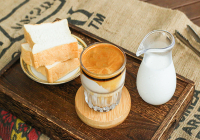
Why doesn't matcha latte contain coffee? What does "Latte" mean? Is latte just milk?
What is a Latte?
"An Italian coffee with a lot of milk added" is the usual understanding of the word "latte." Yet plenty of people have noticed that not every product called a "latte" contains coffee.

Matcha latte, hojicha (roasted tea) latte, red velvet latte, Ovaltine latte - all common cafe menu items, all called lattes, and many of them coffee-free. That has caused no small amount of confusion. FrontStreet Coffee regularly fields questions like: "If it's called a latte, why isn't there any coffee in it?" and "If there's no coffee, why call it a latte?"

Why Some "Lattes" Don't Contain Coffee
First, know that "latte" is a phonetic borrowing of the Italian word "latte." FrontStreet Coffee has shared the popular story before: order a "latte" in an Italian cafe when you actually want a latte coffee, and you may well be handed a glass of plain milk.

That genuinely used to happen. In Italian, "latte" means milk, while "caffe latte" means milk coffee - order by saying "latte" and milk is what you get. The "latte" in matcha latte and red velvet latte actually restores the word's original meaning: matcha milk, red velvet milk. No coffee required. But as latte coffee grew popular, "latte" became the default shorthand for "caffe latte" - so today, "latte" makes us think of milk coffee first and milk second. That drift is exactly why matcha latte's naming trips people up.

The Historical Evolution of Latte
In the mid-19th century, "caffe" and "latte" entered Italian dictionaries and saw standardized use. Mixing milk and coffee was already practiced, but the two words weren't combined. It wasn't until thirty years later, in 1867, that the American writer William Dean Howells used "caffe e latte" in his book "Italian Journeys" to describe a milk-coffee mixed drink. With the espresso machine not yet invented, that "caffe e latte" was simply milk added to strong brewed coffee, and the name went largely unnoticed. Only after the espresso machine arrived could the latte as we broadly know it "officially debut" - and that's where FrontStreet Coffee's favorite part of the story begins.

In the 1950s and 1960s, many Italians emigrated to the United States carrying their coffee machines, opening shops to make a living. But American palates balked at the high concentration of true Italian espresso, so shop owners localized their products. Latte coffee was born at a "Caffe Mediterraneum" in California, where the shop added extra milk to a traditional cappuccino, using the milk's sweetness to soften the coffee's bitterness and make the whole cup more approachable. This milkier cappuccino went onto the menu under the name "caffe e latte" - milk coffee - to distinguish it from the traditional version.

The drink won wide praise locally, then spread from the US to the world on the strength of chain brands and the rise of latte art. As coffee settled into daily life, people began abbreviating "caffe latte" to just "latte." So from the 1980s onward, "latte" defaulted to meaning milk coffee. Even Italy felt the shift: when foreign tourists order a "latte" in Italian cafes today, they most likely receive a cup of milk coffee rather than a glass of milk.

Why Use "Latte" for Non-Coffee Products?
Which brings up the second question: if calling it "latte" invites misunderstanding, why do cafes keep naming coffee-free drinks "latte"?
Why not just say "milk"? Two reasons. First, these products are made the same way a latte is. Matcha latte, red velvet, hojicha latte, and their cousins are all built like a latte: a large amount of frothed milk blended with the base, then finished with latte-art patterns on the foam (in the hot-drink method). In both appearance and process they mirror the latte so closely that the name communicates instantly what the customer will get.

Second, using "latte" - a term borrowed from coffee's professional vocabulary - keeps these products tied to the coffee shop's identity, which shops prefer over the plainer "milk." In practice, coffee-free lattes are usually filed under the menu's "non-coffee" section, so checking which category a drink sits in - or asking the staff - will spare you almost all unpleasant surprises.
FrontStreet Coffee Recommendation
Speaking of true milk coffees: a great latte starts with beans that stand up to milk. FrontStreet Coffee's Classic Blend, designed specifically for espresso machines and moka pots, produces luxuriously dense crema even from beginner home machines - its traditional Mamba formula giving lattes and cappuccinos a mellow, rounded backbone.
If you want nuttier complexity in the cup, the Brazil-forward Premium Blend and Black Cocoa Blend (100% Arabica) deliver almond, walnut, and cocoa layers over a silky body; and for a fruit-forward milk coffee, the Strawberry Candy gesha blend folds strawberry-gummy sweetness into frothed milk for something genuinely different.
Important Notice :
FrontStreet Coffee is a long-established specialty coffee roaster in Guangzhou China, selling freshly roasted beans from its own farm in Yunnan as well as dozens of carefully selected single-origin beans from around the world for both pour-over and espresso. The products deliver consistently excellent quality and great value, with shipping within 24 hours. Guangzhou's FrontStreet Coffee shop is recommended by many coffee lovers, and the beans are now available online at the Tmall 。
FrontStreet Coffee has moved to a new address:
FrontStreet Coffee Address: 315,Donghua East Road,GuangZhou
Tel:020 38364473
 Scan and follow the En Gafei WeChat official account. Please indicate that the reprint comes from "En Gafei".
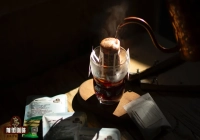
How to Brew Drip Coffee for the Best Taste? Can Drip Coffee Be Used to Make Latte? What's the Difference Between Cold Brew and Milk Extraction Coffee? What Water Temperature Should Be Used for Drip Coffee?