Why Don't Italians Drink Pour-Over Coffee? Can You Order Americano in Italy? Who Invented the Espresso Machine? What is Espresso?
FrontStreet Coffee has noticed that a popular question has been making the rounds online again: "Why don't Italians drink pour-over coffee?"

The answer, like the one FrontStreet Coffee shared last year about how ordering an iced Americano in Italy can land you in trouble, is no. Pour-over coffee does have its drinkers in Italy, but compared with other countries a much smaller share of Italian coffee consumers choose it. And it is not only pour-over: apart from it, single-origin and specialty coffee have not caught on locally either. That would seem unremarkable anywhere else, but because it is happening in Italy, it strikes people as hard to understand.

The reason lies in Italy's long coffee culture, where coffee has been woven into daily life for centuries. In a country where coffee is everywhere, today's fashionable pour-over has almost no room to stand. So the real question is this: why is pour-over coffee "not well received" in Italy? In fact, it is remarkably similar to the Americano problem. As FrontStreet Coffee explained before, the reason pour-over struggles in Italy is tied up with deeply rooted coffee traditions and a distinctive pace of life.

Italian Coffee Culture
Starting in 1580, coffee beans entered Italy through the port of Venice, one of the first European ports to import them. Thanks to that, Italians encountered coffee far earlier than their neighbors. By the mid-17th century, as Europe's first coffee house opened in Rome, coffee spread across Italy. Like most countries, Italians first brewed it the Turkish way, pouring ground coffee and water into an old copper pot and filtering the grounds out through cloth.

Taste aside, coffee made that way had one serious drawback: it was slow. Every cup meant a long wait, which many people found unacceptable. So when the Industrial Revolution arrived, extraction methods changed dramatically. In 1884, Angelo Moriondo invented a machine that used steam to extract coffee quickly and registered a patent in Turin, Italy. Preparation time dropped sharply, but because the extraction power came from steam with poor stability, the machine went through countless refinements afterward.

In 1905, the Milanese manufacturer Luigi Bezzara improved the patent to add steam-pressure functionality and launched commercial models. Pressure reached only 1.5 bar, but it cut extraction to one minute, which for the era was astonishingly fast. So around 1920, "espresso" officially entered the Italian dictionary, meaning "concentrated coffee made using pressure machines or filters."

The story does not end there. In 1938, the Milanese engineer Achille Gaggia improved the machine further, raising pressure from 1.5 bar to 9 bar. That 9-bar pressure not only extracted coffee faster but also gave it a thick, dense crema, making extraction more stable.

As machines improved, not only did brewing change, it also cemented Italians' coffee-drinking habits, and those habits explain why pour-over and other single-origin coffees have never quite caught on.
Why Pour-Over Isn't Well Received in Italy
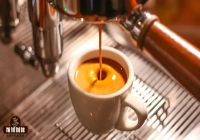
FrontStreet Coffee believes that for Italian coffee drinkers the requirements boil down to three things: fast, strong, and cheap. That means espresso. Espresso is the second most consumed beverage in Italy after water, which is why Italians simply call it "caffè." When ordering, they tell the barista, "A coffee, please," and by default they get an espresso served fast. These are generally made from dark-roasted beans, a blend of Robusta and Arabica, giving intense bitterness and rich crema. Some people add yellow sugar before tasting to balance the bitterness, then stir briefly and drink it in one go, very satisfying.

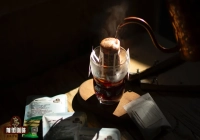
Pour-over is the exact opposite. The roast is not as dark, the concentration is not as high, and everything is built to showcase flavor. But for Italians, who have been taught since childhood that coffee should be strong enough and bitter enough, pour-over reads as the opposite of delicious, especially without any specialty "education." And as FrontStreet Coffee noted earlier, for most Italian consumers coffee is a daily beverage, reflected not only in the volume sold but in how extremely cheap espresso is.

A cup of espresso typically costs around 1 euro, about 7 yuan, which is very, very cheap. Pour-over, using higher-quality beans, costs several times more. To most Italian consumers that makes no sense: coffee is a daily drink like water, so why pay more for a cup? It is not only pour-over, then; even other types of high-quality coffee have relatively small markets in Italy.

Finally, there is preparation time. Efficiency and a fast pace define the atmosphere of Italian cafes. Stopping in during a break to order an espresso, drinking it quickly, chatting briefly with the people around you, and leaving again is one of Italians' deeply rooted habits. Pour-over moves at the opposite pace: it not only takes a long time to make but also requires time to savor slowly.

Put those three points together, and FrontStreet Coffee's answer is that pour-over's slow start in Italy is tied to deeply rooted coffee traditions and a unique pace of life. As specialty coffee culture spreads, however, more and more Italian businesses are beginning to serve it, and more consumers are accepting it. It is just that under such deeply rooted traditions, the change takes a little longer, but it is happening all the same.
FrontStreet Coffee Recommendation
If you want to see what all the fuss over pour-over is about, start with FrontStreet Flower Queen. This Ethiopian bean is famous for its tropical fruit aroma, with rich notes of strawberry, passion fruit, jackfruit, and even lychee. Sweetness is obvious, bitterness is minimal, and the cup is smooth and juicy enough that many drinkers call it "the coffee that doesn't taste like coffee." It is the cup that changes minds.
For a cleaner, more floral pour-over, try FrontStreet Gedeb Cooperative, a washed Yirgacheffe where jasmine and bright citrus acidity meet green tea and honey. And if you prefer balance over intensity, FrontStreet Jamaica Blue Mountain No. 1 lands perfectly between acidity, sweetness, bitterness, and aroma, with cream, caramel, chocolate, and nut notes and a gentle hint of fruit.
Important Notice :
FrontStreet Coffee is a long-established specialty coffee roaster in Guangzhou China, selling freshly roasted beans from its own farm in Yunnan as well as dozens of carefully selected single-origin beans from around the world for both pour-over and espresso. The products deliver consistently excellent quality and great value, with shipping within 24 hours. Guangzhou's FrontStreet Coffee shop is recommended by many coffee lovers, and the beans are now available online at the Tmall 。
FrontStreet Coffee has moved to a new address:
FrontStreet Coffee Address: 315,Donghua East Road,GuangZhou
Tel:020 38364473
 Scan and follow the En Gafei WeChat official account. Please indicate that the reprint comes from "En Gafei".
Why is the Espresso Brew Ratio Strictly 1:2? Must 18g of Coffee Extract Exactly 36ml?