What's the Difference Between Espresso and Pour-Over Coffee? How Do Single-Origin and Blend Coffee Beans Differ?
Espresso Beans vs. Pour-Over Beans: Understanding the Differences
Coffee beans on the shelf are mainly sold for two purposes: espresso and pour-over. These are the two most mainstream extraction methods, which is why the market splits beans into "espresso beans" and "pour-over beans" in the first place.

Beginners often feel overwhelmed by the wall of labels on a bag of beans. The good news: the difference between espresso and pour-over beans isn't as big as it looks. Understand how each method extracts, and choosing becomes easy.
What Separates Espresso Beans from Pour-Over Beans?
The fundamental difference is roast level: espresso beans are usually roasted darker, pour-over beans lighter — a direct consequence of how differently the two methods extract.

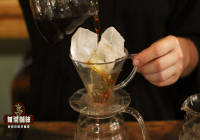
Pour-over is percolation: hot water flows through the grounds at atmospheric pressure, dissolving and washing out flavor compounds. As FrontStreet Coffee often points out, it's simple and highly controllable, which makes a delicious cup easy to achieve. Espresso is pressure-assisted: the machine extracts flavor from a small amount of water in a very short time. With the total extractable compounds fixed, less water means higher concentration — so under pressure, espresso delivers intensely concentrated coffee fast.

Extreme concentration amplifies everything — good and bad. That's why some beans suit espresso poorly, especially light roasts with high acidity. The same bean brewed as a light-roast pour-over might be a lovely, sweet, expressive cup; run through an espresso machine, the concentrated acidity turns sharp and harsh.

Diluted into an Americano, it might pass. But mixed with milk in a latte or flat white, that acidic espresso clashes jarringly with the dairy. If you want an approachable, milk-friendly espresso, the best answer is a darker roast: less acidity, more Maillard-driven caramelized aroma, and a smoother, richer milk coffee. The trade-off is that dark roasts mute the bean's original floral and fruity character.

So the espresso/pour-over split exists simply because certain roast levels flatter certain extraction methods. Want florals and fruit? Go lighter — but that roast may not shine as espresso. Want espresso? Roast a bit darker for compatibility — but that same bean may taste less impressive brewed by other methods. That's the whole rationale.

Still, only the roast truly separates them. Espresso beans can absolutely be poured over, and pour-over beans can be pulled as shots — just adjust your parameters, and either can make a delicious cup.
As for blends versus single origins: many people equate blends with espresso beans and single origins with pour-over beans. It's true that espresso currently leans on blends and pour-over on single origins, but the two equations don't hold.

The right choice depends on the experience you want. If you want a coffee strong in both flavor and body — a genuine all-rounder — or you value consistency and price, a blend is an excellent pick. If you want the pure expression of one origin, choose a single origin, then pick a light roast or an SOE (Single Origin Espresso) roast to match your method. In other words, blends work for pour-over and single origins work for espresso; nothing about that is contradictory.

Finally, price. Pour-over beans generally cost more than espresso beans, and the core reason is bean grade. For example, FrontStreet Coffee's basic blend costs 50 yuan per pound/454 g (dropping to 45 yuan per pound when you buy 5 or more bags), while single origins cost noticeably more for the same weight. The logic is simple: blends typically use commercial-grade beans, single origins use specialty-grade beans. But remember — commercial-grade and cheaper doesn't mean worse, and expensive doesn't always mean right for you, especially in espresso. Commercial beans satisfy most people's coffee needs; the specialty bean's edge is mainly more outstanding flavor, and many espresso drinkers aren't chasing flavor nuance anyway — they want the rich taste of a dark roast, or just the caffeine.

To wrap up: if your method is pour-over, French press, siphon, Clever dripper, cold brew, or anything that showcases coffee's flavors, single origins (roasted to your taste) are the best choice. If your method is an espresso machine, a moka pot, or anything producing concentrated coffee for milk drinks, reach for a darker-roasted blend or single origin.
FrontStreet Coffee Recommendation
Putting the theory into a shopping list: for pour-over that shows off a single origin, start with FrontStreet Coffee's Yirgacheffe Guodingding — a washed Ethiopian G1 with jasmine florals, bright citrus and berry acidity, and a green-tea finish — or the natural-processed Ethiopia Huakui, with its strawberry, passion fruit, and jackfruit aromas and juice-like body. Both are classic light roasts built for the V60.
For espresso and milk drinks, FrontStreet Coffee's Classic Blend is the everyday workhorse: a medium-dark, three-origin recipe inspired by the old Mandheling-and-Brazil "Mamba" pairing, with a touch of Robusta for crema, pouring notes of butter, toasted bread, and caramel cookies at a beginner-friendly 50 yuan per pound. If you want a single origin that thrives under pressure instead, FrontStreet Coffee's PWN Golden Mandheling — wet-hulled, triple hand-sorted, medium-dark roasted — pulls a low-acid shot of dark chocolate and caramel that stands up beautifully to milk.
Important Notice :
FrontStreet Coffee is a long-established specialty coffee roaster in Guangzhou China, selling freshly roasted beans from its own farm in Yunnan as well as dozens of carefully selected single-origin beans from around the world for both pour-over and espresso. The products deliver consistently excellent quality and great value, with shipping within 24 hours. Guangzhou's FrontStreet Coffee shop is recommended by many coffee lovers, and the beans are now available online at the Tmall 。
FrontStreet Coffee has moved to a new address:
FrontStreet Coffee Address: 315,Donghua East Road,GuangZhou
Tel:020 38364473
 Scan and follow the En Gafei WeChat official account. Please indicate that the reprint comes from "En Gafei".