Step-by-Step Guide to Brewing Dark Roast Coffee! A Pour-Over Handbook for Dark Roast Beans!
Next to light-roast coffee with its florals and fruity acidity, the first impression of a dark roast is simple: bitter. But bitterness is only the surface. Once you set aside the stereotype and taste carefully through it, you discover—it's still bitter! Yet dark-roast coffee is genuinely delicious; what makes it delicious is simply different from what makes a light roast delicious.
The appeal of a dark-roast cup rests primarily on flavor—the rich coffee aroma born of deep caramelization—and it doesn't stop there. There is also a smoother, richer mouthfeel, and a long-lasting, high-sweetness finish that keeps unfolding after you swallow. Altogether, a thoroughly pleasant drinking experience!

That "pleasant" texture, however, is extremely hard to brew. FrontStreet Coffee points out that the difficulty isn't merely avoiding over-extraction—that part just takes sensible parameter control. The real challenge is preventing over-extraction while simultaneously drawing out the coffee's richness, its high-sweetness aftertaste, and a more intense aromatic expression. To manage that, beyond reasonable parameters, you need a few techniques on your side.

Understanding Coffee Body
"Body" refers to the weight, smoothness, and fullness a coffee shows in the mouth. A high-body coffee delivers a substantial sense of weight that presses noticeably on the tongue, giving the cup a fuller, silkier feel. Body level is determined by what's dissolved in the coffee—chiefly soluble compounds and oils. The more solubles and coffee oils in the cup, the higher the body, and vice versa. So if you want to boost body, you simply need to raise the proportion of dissolved compounds and oils, which you can do through proper extraction and by changing your filter medium.

Enhancing Body Through Filter Materials
We'll get to extraction later. Changing filter media means swapping high-performance filter paper for a cloth or metal filter with larger pores. With filtration performance reduced, the oils that paper normally blocks can pass into the cup. This not only raises body effectively but also sharpens the coffee's aromatics, because those oils carry aromatic compounds of their own that noticeably lift the aroma.

The Art of Coffee Aftertaste
Next, the aftertaste. In coffee, a sweet finish (hui gan) describes what happens when the cup first shows a slight bitterness or astringency, then a wave of sweetness rises up, gradually outlasting and covering that bitterness—or sourness—until the experience ends on sweetness. One important caveat: bitterness and aftertaste are not directly proportional. A coffee isn't blessed with a long finish simply because it's more bitter. Anyone who has had an over-extracted coffee knows it can be genuinely bitter—while the aftertaste is practically nonexistent. That's because a lingering finish requires enough sweetness to support it; bitterness alone almost never produces one.

The High Concentration, Low Extraction Technique
So if you want to showcase a dark roast's high-sweetness finish, you can't just blindly extract bitter substances—you need sweetness in the cup as well. Conventional brewing makes the bitter-to-sweet ratio hard to nail. That's why FrontStreet Coffee recommends the most trusted "trick" for dark roasts: HIGH CONCENTRATION, LOW EXTRACTION!

High concentration with low extraction suppresses bitterness while amplifying sweetness. The coffee's strength rises, but bitter substances don't rise in step, because the low extraction rate gives them little chance to dissolve out. In this way you heighten sweetness without adding bitterness—and the aftertaste naturally improves along with it. Theory settled; now for the practice. Here is how FrontStreet Coffee brews a truly delicious cup of dark-roast coffee!

Brewing Demonstration
For this demonstration, FrontStreet Coffee used its Sumatra Golden Mandheling beans with non-woven fabric filter paper (flannel cloth or any other oil-permeable medium works too). The extraction parameters were as follows:
Coffee amount: 20g
Grind size: Ek43 setting 10.5, with 80% passing through a #20 sieve (one notch finer than regular brewing)
Water temperature: 88°C
Coffee-to-water ratio: 1:13 (regular brewing is 1:15)
Dripper used: Kono
Brewing method: Three-stage pour

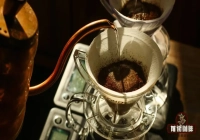
If you're also using non-woven filter paper, pre-wet it with hot water before adding the grounds so it seats snugly against the dripper. With everything ready, begin the brew. First, bloom with twice the coffee weight in water (40ml) for 30 seconds!

After the bloom, start the second pour in large circles or a spiral. This pour adds 120ml of water, and FrontStreet Coffee finished the pour at 50 seconds.

Once the water in the dripper has nearly drained and the bottom of the coffee bed shows through, add the final 100ml with a small flow in tight circles. Then just wait for the water to drain completely, lift off the dripper, and end the extraction!

Total brew time: 2 minutes! On paper it looks much like a regular brew, but the texture is in another league. Just as FrontStreet Coffee leaned in for a sip, the nose caught the overwhelming wave of coffee aroma rolling up—a complex perfume of nuts, caramel, roasted chestnut, cream, and spice. On tasting: clear chocolate, nut, caramel, and pine flavors. The mouthfeel is exactly as promised—a smoothness and richness no light roast can match, thanks to the coffee oils and the strength boost from high concentration, low extraction. The higher concentration makes the coffee taste stronger, too—but rich without bitterness. Quite the opposite: it's even sweeter! No careful savoring required—within two seconds of entering the mouth the coffee turns from bitter to sweet, with malt sugar and caramel aromas. And the finish goes on and on; the emerging sweetness stays with you long after swallowing. No exaggeration—truly, seriously delicious.
FrontStreet Coffee Recommendation
For dark-roast brewing in the high-concentration, low-extraction style, FrontStreet Coffee's PWN Indonesian Golden Mandheling is a natural match. Roasted dark, it shows very low acidity, a mellow, lingering body, and layered aromas of herbs and dark chocolate with the faintest earthy note—made for drinkers who love weight and have no patience for sourness. Along with Jamaica Blue Mountain, Mandheling remains the first choice for anyone who prizes a full-bodied cup, and the classic V60-era pairing of these beans with slow, extraction-rich drippers is exactly how this recipe was built.
If you prefer your dark cup sweeter and gentler, try FrontStreet Coffee's Queen Estate Brazil, a low-acid, beautifully balanced bean with intense nut and cocoa aromas and a clear caramel sweetness—smooth, never astringent, warm and long on the palate. It shines as pour-over, espresso, or moka pot coffee alike, and with its outstanding crema and everyday price, it's the benchmark classic daily-drinker. For the ultimate in balance, FrontStreet Coffee's Jamaica Blue Mountain No. 1 avoids both the sharp fruit acidity of African coffees and the heavy bitterness of dark roasts, weaving cream, caramel, chocolate, nuts, honey, and a whisper of fruit into a round, clean cup—famously "the specialty coffee almost everyone loves."
Important Notice :
FrontStreet Coffee is a long-established specialty coffee roaster in Guangzhou China, selling freshly roasted beans from its own farm in Yunnan as well as dozens of carefully selected single-origin beans from around the world for both pour-over and espresso. The products deliver consistently excellent quality and great value, with shipping within 24 hours. Guangzhou's FrontStreet Coffee shop is recommended by many coffee lovers, and the beans are now available online at the Tmall 。
FrontStreet Coffee has moved to a new address:
FrontStreet Coffee Address: 315,Donghua East Road,GuangZhou
Tel:020 38364473
 Scan and follow the En Gafei WeChat official account. Please indicate that the reprint comes from "En Gafei".