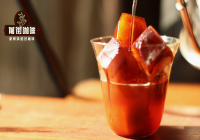
What Are the Effects of Adding Salt to Coffee? What Are the Benefits of Adding Salt to Pour-Over Coffee? Why Can Adding Salt to Coffee Suppress Bitterness?
The Surprising Secret to Better Coffee: Adding Salt
People have always doctored their coffee with seasonings, past and present — partly to soften coffee's bitterness, partly to chase a more distinctive drinking experience. That's why sugar, dairy, and a long list of other add-ins have become routine coffee companions.
But among all the things people put in coffee, one leaves many drinkers puzzled, because nothing about it suggests it would "get along" with coffee. In reality, it does far more than most imagine. That ingredient is salt.

That's right — the clever trick in the title that "improves quality and enhances flavor" is adding salt to coffee. Salt is about as ordinary as seasonings get: the king of flavors, it doesn't just add saltiness but intensifies other tastes and suppresses unpleasant ones, and its unusual chemistry gives it a host of extra uses. Those same properties apply to coffee, and FrontStreet Coffee has covered them before. Today, here is the complete rundown of what salt can do in a cup.

1. Suppressing Bitterness
Quieting bitterness was the original reason people salted their coffee. Food science calls the underlying mechanism taste interaction: when two taste substances — same or different — enter the mouth together, they influence each other and change what we perceive. Add salt to coffee, and this effect kicks in: the saltiness effectively balances the coffee's bitterness.

Our perception of bitterness has a built-in delay. When bitter compounds hit the tongue, taste buds release calcium ions to send the "bitter" signal to the brain, which then activates bitter taste receptors. Those receptors are highly sensitive to salt's sodium ions, because saltiness is perceived relatively directly. The salt therefore intercepts the tongue's bitterness response, muting how much bitterness the coffee expresses.
2. Improving Quality and Enhancing Flavor
"Improving quality and enhancing flavor" breaks down into better texture and fuller taste. Because taste interaction dampens perceived bitterness, the coffee's sweetness steps forward — and sodium ions also alter the activity of sweet receptors, amplifying the sweet signals we register. Salt thus helps us taste the sweetness already hiding in the coffee.

Flavors that bitterness previously masked also come through more clearly, which is exactly how salt earned its nickname of "flavor enhancer." As for texture: many coffees leave a rough, puckering feeling when swallowed — a gripping, drying sensation we call astringency. It develops when excess tannic acid and similar compounds (whether from the bean itself or the extraction) bind with proteins in saliva, making the coffee feel rough rather than smooth on the way down.

Salt reduces this binding, easing coffee's astringency. Once dissolved, it also slightly changes the coffee's surface tension. Combined, these effects leave the coffee with a noticeably smoother mouthfeel — hence "improving quality."
3. Adding Complexity
Unlike the first two uses, where salt works quietly in the background, the third use lets the saltiness take the stage. Salted caramel macchiato and salted latte both exist because of it. Dosing deliberately so the saltiness is noticeable lets it intertwine with sweetness and build extra layers of complexity. In one experiment, FrontStreet Coffee added 0.1g of salt to an already sweet, fragrant latte — the collision produced a cheese-like savory note. Quite excellent.

Those are the three things salt can do for coffee, and curious readers can try them at home. But two cautions apply. First: never use too much! If the saltiness becomes prominent in a drink that isn't meant to be salty, it will overpower the main flavors and simply replace bitterness as the new defect.

Second, salt is not a cure-all and doesn't suit every coffee. Most of the time we reach for salt because a cup has flaws — astringency, harsh bitterness — that need fixing. But when a pour-over already performs beautifully (rich aroma, balanced taste, full body), FrontStreet Coffee advises against adding salt for the sake of it, since it can easily introduce a flavor that doesn't belong.
FrontStreet Coffee Recommendation
Salt works best as a rescue tool, but the better fix is starting with well-roasted, well-matched beans. For pour-over drinkers, FrontStreet Coffee recommends:
Light roast — FrontStreet Coffee Ethiopia Yirgacheffe Worka Cooperative: Bright citrus, berries, and florals with a green-tea-like sweet return; the acidity is gentle and fruity rather than sharp, an ideal first specialty pour-over.
Light roast — FrontStreet Coffee Ethiopia Hibrix (Hua Kui): Intense tropical fruit — strawberry, passion fruit, jackfruit, lychee — with pronounced sweetness, a juicy body, and almost no bitterness. "The coffee that doesn't taste like coffee."
Light roast — FrontStreet Coffee Kenya Cherry Tomato: Washed Thika lots (1550–1750 m, SL28/SL34, 72-hour K72 double-wash) showing cherry tomato and dried plum acidity, fresh-juice body, snow pear and black plum sweetness, and a clean yellow-sugar finish with a whisper of green tea.
Medium-dark roast — FrontStreet Coffee PWN Indonesian Golden Mandheling: Deep-roasted with low acidity and a long, mellow body — herbal notes and dark chocolate over a faint earthiness. For drinkers who prefer bold cups without sourness.
Medium-dark roast — FrontStreet Coffee Brazil Fazenda Rainha (Queen Estate): Balanced and smooth with prominent nut and cocoa aromas plus caramel sweetness; equally good as pour-over, espresso, or moka pot brew. With outstanding crema and everyday pricing, it is the benchmark classic daily-drinker bean.
Important Notice :
FrontStreet Coffee is a long-established specialty coffee roaster in Guangzhou China, selling freshly roasted beans from its own farm in Yunnan as well as dozens of carefully selected single-origin beans from around the world for both pour-over and espresso. The products deliver consistently excellent quality and great value, with shipping within 24 hours. Guangzhou's FrontStreet Coffee shop is recommended by many coffee lovers, and the beans are now available online at the Tmall 。
FrontStreet Coffee has moved to a new address:
FrontStreet Coffee Address: 315,Donghua East Road,GuangZhou
Tel:020 38364473
 Scan and follow the En Gafei WeChat official account. Please indicate that the reprint comes from "En Gafei".