Pot-Brewed Coffee Method: Brewing Steps and Parameter Guide - Can You Boil Coffee Grounds for Drinking?
What Does "Cooking" Coffee Mean?
In the kitchen, "cooking" means putting food into a water-filled pot and heating it steadily until it's done, a method used for countless dishes.

In the world of coffee, though, things are a little different. FrontStreet Coffee often uses the word "brewing," but apart from the intensely strong Turkish coffee, most everyday methods simply let grounds touch hot water briefly to release soluble compounds. Strictly speaking, that isn't cooking at all. At most it's steeping or infusing.
An Experiment with Cooked Coffee
Coffee is a food that needs to meet hot water, so in theory it can be cooked. What would happen if we "prepared" coffee the way we prepare instant noodles? To find out, FrontStreet Coffee called in a favor and borrowed a cooking pot, then brought out the ceramic stove we normally use in the shop. OK, let's get started.

First Attempt: Brazil Red Bourbon
For the first try, FrontStreet Coffee chose a medium-roasted Brazil Red Bourbon. Pour-over brewed, this bean usually shows baked aromas like cream cookies, roasted peanuts and caramel, with excellent body, so it suits a range of methods including moka pot, French press and siphon.
On parameters: since the grounds go in after the water boils and then sit at a full 100°C throughout, soluble compounds will release faster than in conventional brewing. To avoid heavy over-extraction, the first round uses a coarse-salt grind, corresponding to 12 on the shop's EK43s scale, with a 60-65% pass rate on a China #20 sieve.

First Brewing Parameters
Other details got the same treatment. To keep the final concentration in a drinkable range, FrontStreet Coffee holds the time to 1 minute and adjusts the ratio to 1:18. The first round of pot-cooked coffee parameters are as follows:
- Coffee beans: Brazil Red Bourbon
- Amount: 18g
- Ratio: 1:18
- Grind size: EK43s-12
- Planned time: 1 minute
First, FrontStreet Coffee poured 324g of room-temperature drinking water into the pot and heated it on the highest setting until small bubbles appeared. Once the temperature reached 96°C, all the ground coffee went straight in and timing began.

As soon as the brew came to a full boil, FrontStreet Coffee turned the ceramic stove down to its lowest setting and used a small spoon to stir up and down and side to side, so the floating grounds could meet the hot water as thoroughly as possible.

Unfortunately, just as the clock approached one minute, customers walked in and FrontStreet Coffee had to serve them, so the total boiling time far exceeded the plan. We pulled the pot off the heat immediately, separated the grounds with a stainless steel filter and tasted it hot.

First Results and Analysis
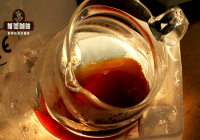
Before tasting, we measured the TDS of the whole pot at 1.53%. Visually, the cup was very turbid, and because FrontStreet Coffee used a metal filter with fairly large holes, some foam from the boil was still floating on the surface. The coffee tasted subdued, dominated by the scorched aroma of burnt rice crust, with almost no distinct flavor, a slight powdery texture and heavy bitterness. The overall impression was thick and muddled, a clear case of severe over-extraction.

Second Attempt: An Improved Method
Although the flavor and mouthfeel were less than ideal, the first round taught us something, and we stopped worrying about ruining the coffee as we worked cautiously. After all, we had already tasted the worst possible outcome.
For the second attempt, to get a richer pot-cooked coffee, FrontStreet Coffee also tried adjusting other parameters: lowering the ratio to raise concentration, adding clockwise stirring during the boil to speed up the release of flavor compounds, and, most importantly, holding the 1-minute boil precisely. In summary, the second round parameters:
- Coffee beans: Brazil Red Bourbon
- Amount: 18g
- Ratio: 1:16
- Grind size: EK43s-12
- Time: 1 minute

Finally, to get a cleaner mouthfeel, FrontStreet Coffee filtered the grounds through a dripper lined with denser non-woven fabric, then shook it even and tasted it hot.

Second Results and Success
The adjusted brew was noticeably clearer than the first pot, with no foam on top, and measured a TDS of 1.35%. On the palate it showed distinct roasted peanut, dark chocolate and cookie flavors, with a rich, solid body, a touch of bitterness, some sweet aftertaste, high body and a clean finish. You could fairly call it a decent cup of black coffee.
Third Attempt: A Light Roast Experiment
Since medium-dark grounds still performed well after cooking, with no sign of over-extraction, FrontStreet Coffee could be bolder with bean selection and turn to light roasts. As it happened, we had just received a Peru washed Geisha that showed rich jasmine florals and grape juice tones in cupping, fresh and full of fruit-juice character, which seemed promising for other methods too.

Third Brewing Parameters
High-altitude beans are naturally harder, and this Geisha was a medium-light roast. To coordinate the release of flavor compounds, FrontStreet Coffee set the grind half a notch finer and left everything else unchanged. Without delay, let's start cooking:
- Coffee beans: Peru Washed Geisha
- Amount: 18g
- Ratio: 1:16
- Grind size: EK43s-11.5
- Time: 1 minute

Final Results and Conclusion
The finished Geisha measured a TDS of 0.94% and was visibly the clearest of the three pots. We expected under-extraction, but instead the cup came in with rich aromas: delicate florals and grape juice first, followed by black tea and plum. The mouthfeel was round and sweet; the body was slightly thin, but the finish was elegant and the complexity gave nothing away to pour-over.
- END -
FrontStreet Coffee Recommendation
If you want to try pot-cooked coffee at home, start with an easygoing, medium-roasted bean like FrontStreet Brazil Cerrado Red Bourbon. This pulped natural single origin is a classic Brazilian cup: at a medium roast it gives off cream peanut, toast, caramel and hazelnut aromas, with a rounded, low-acid body and a light bitter note. It is equally at home in a moka pot, as an espresso SOE, in a siphon or a French press.
For something with more fruit and sweetness, FrontStreet Brazil Queen Estate Yellow Bourbon is worth a look. Grown in Mogiana, where fertile red volcanic soil builds up rich aromatics, this rare yellow Bourbon, a natural mutation of Red Bourbon, has a cleaner fruit character. Through pour-over, moka pot or a home espresso machine it shows a sugarcane sweetness found in few other regions, alongside fruit and chocolate notes.
Important Notice :
FrontStreet Coffee is a long-established specialty coffee roaster in Guangzhou China, selling freshly roasted beans from its own farm in Yunnan as well as dozens of carefully selected single-origin beans from around the world for both pour-over and espresso. The products deliver consistently excellent quality and great value, with shipping within 24 hours. Guangzhou's FrontStreet Coffee shop is recommended by many coffee lovers, and the beans are now available online at the Tmall 。
FrontStreet Coffee has moved to a new address:
FrontStreet Coffee Address: 315,Donghua East Road,GuangZhou
Tel:020 38364473
 Scan and follow the En Gafei WeChat official account. Please indicate that the reprint comes from "En Gafei".