Specialty Coffee Brewing Tutorial: How to Make Apple Water Brewed Coffee
As true Cantonese, when faced with a pile of apples we couldn't finish, FrontStreet Coffee's first instinct would normally be to make soup with them. But a friend insisted that water boiled with apples can replace plain water for brewing coffee — and that the result is amazing. Really?

According to FrontStreet Coffee's research, this method is actually quite new — it only took off in coffee circles about a month ago. Netizens cut or slice apples, boil them in water for a few minutes, then brew pour-over as usual. Beans and details vary, but most who tried it reported positive results. Is it really that good?

Apples carry a naturally light fragrance, so apple water comes out slightly sweet and tart with an overall delicate profile. To keep the coffee's subtlety from being lost, pair it with beans that aren't too darkly roasted — that way the fruit aroma doesn't get buried and the apple water's gentle acidity blends harmoniously with the coffee.
For the first experiment, FrontStreet Coffee used Ethiopian Sidamo Santa Verna, a medium-light roast showing tropical fruit notes of guava, dried mango, and citrus after brewing.

Preparation and Materials
1 apple, 300ml drinking water, a wellness kettle (pot + heating element), and 15g of Santa Verna beans. Pour-over parameters:
Coffee beans: 15g
Powder-to-water ratio: 1:15
Water temperature: 90°C
Grind size: EK43s grinder setting 10
Filter: V60
Brewing method: Three-stage pour
Brewing Steps
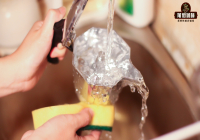
Step 1: Cut the apple into small pieces, add 300ml of room-temperature water, and heat. Once boiling, continue cooking for 5 minutes. (Apple flesh absorbs water as it cooks, so FrontStreet Coffee suggests preparing a little extra.)

Step 2: While the apple water simmers, weigh and grind the beans, then add the grounds to a moistened filter paper.

Step 3: Transfer the freshly boiled apple water to a pour-over kettle. When it cools to 90°C, start the timer and begin pouring.

Step 4: First pour 30g in circles for a 30-second bloom. For the second stage, use a medium vertical flow and pour 100g of apple water in large circles (the scale reads 130g total), aiming to lift the coffee bed as much as possible. As the coffee nearly finishes dripping (around 1:10–1:15), switch to a small flow in tight circles and pour the third stage of 95g, keeping the liquid level even with the bed. Total time: 2:05.

Comparative Analysis
For comparison, FrontStreet Coffee brewed another cup with the same beans using Nongfu Spring water (the shop's regular choice) and identical parameters.
The Santa Verna brewed with apple water looked slightly cloudy, with aromas of apple peel and light sugarcane. The Nongfu Spring version was noticeably clearer and deeper in color, releasing caramel, floral, and sweet-orange aromas.

Nongfu Spring Coffee:
Lemon, blueberry, guava, and fruit-wine notes — rich fruit aroma, moderate body, and a gentle fermented quality. As it cooled, the acidity brightened like lemon, joined by a nutty fragrance: a very layered cup.
Apple Water Coffee:
The first sip delivered sweet-and-tart apple juice with a striking juice-like quality, followed by passion fruit, mango, and a whisper of fermented wine aroma. But these flavors stayed restrained — apple dominated. As the cup cooled, acidity grew more prominent while the coffee's own character never fully surfaced; it lacked some richness.

Scientific Analysis
Coffee is roughly 98% water, and the water's pH shapes how flavors express themselves. Compared with regular bottled water, apple water is slightly acidic, which dampens the release of certain flavor compounds. In the Santa Verna we chose, that muted mid-to-late palate allowed the apple to overshadow the coffee.

Second Round Optimization
For a better experience, FrontStreet Coffee switched to a washed Yirgacheffe for round two — a light roast typically showing white florals, tea-like texture, and distinct lemon-citrus character.
Since round one's apple water was too concentrated and smothered the coffee (likely from boiling too long), we cut the rolling boil to just 3 minutes. And to let the Yirgacheffe express itself fully, we split the original three-stage pour into four pours (30g + 65g + 65g + 65g).

Second Round Brewing Parameters:
Coffee beans: Ethiopian Washed Yirgacheffe
Powder amount: 15g
Powder-to-water ratio: 1:15
Grind size: EK43s setting 10.5
Water temperature: 91°C
Pouring method: Four-stage pour
Pour 30g of apple water first for a 30-second bloom — while degassing, you can already smell fresh apple and citrus. Then pour the second stage of 65g with a slightly larger, straight flow, lifting the whole bed, finishing around 45 seconds, and wait for drainage. When the bed is nearly dry, pour the third 65g, and so on, up to the total 225g.

This apple-water Yirgacheffe was far more harmonious than the Santa Verna version. The apple's natural fragrance blended seamlessly with notes of orange, blueberry, nut kernels, and green tea — moderate concentration, sweet, tart, and bright, like drinking a mixed fruit juice.
Final Experiment: Iced Geisha
To explore further, FrontStreet Coffee finished with an iced pour-over of Panama Boquete Geisha brewed with apple water, using shop-standard parameters: 15g of beans, powder-to-water-to-ice ratio of 1:10:5, water temperature 91°C, EK43s setting 9.5, three-stage pour.

Conclusion
Tasting this "special Geisha drink," the apple-water iced brew worked beautifully. The apple's sweetness and fragrance were so prominent it tasted sugared; with ice enhancing things, the Geisha's citrus acidity and delicate florals emerged for a refreshing, juicy overall experience. Truly a special cup.
- END -
FrontStreet Coffee Recommendation
This experiment lives and dies on Ethiopian character, and FrontStreet's Ethiopia lineup is built for it. The entry-level FrontStreet washed Yirgacheffe — jasmine florals, bright citrus acidity, and a clean tea-like finish like lemon tea — is exactly the bean that made round two shine. For a partner in the same style, the FrontStreet Guodingding cooperative lot (independent since 2012, ~300 member farmers, pulp removed before drying) offers citrus, lemon, and elegant white florals with vivid clarity.
For fruit lovers, the FrontStreet natural Huakui from Hambella — sun-dried 21 days on raised beds with constant turning and hand-sorting — shows light fermented wine aroma, florals, citrus, and mango with thick honeyed sweetness, a natural match for fruit-water brewing and iced pours alike.
Important Notice :
FrontStreet Coffee is a long-established specialty coffee roaster in Guangzhou China, selling freshly roasted beans from its own farm in Yunnan as well as dozens of carefully selected single-origin beans from around the world for both pour-over and espresso. The products deliver consistently excellent quality and great value, with shipping within 24 hours. Guangzhou's FrontStreet Coffee shop is recommended by many coffee lovers, and the beans are now available online at the Tmall 。
FrontStreet Coffee has moved to a new address:
FrontStreet Coffee Address: 315,Donghua East Road,GuangZhou
Tel:020 38364473
 Scan and follow the En Gafei WeChat official account. Please indicate that the reprint comes from "En Gafei".