What Makes Tanzania Special as One of Africa's Coffee Giants? Introduction to Washed Typica from Kilimanjaro Region
In Africa, the best-known coffee producers are the "coffee giants" - Ethiopia, Kenya, and Tanzania. Each holds an important place in African coffee production with its own flavor identity, but Ethiopian and Kenyan coffees dominate the market. So what makes Tanzanian coffee distinctive?

Like its two neighbors, Tanzania is an East African country with ideal climate and geography for coffee, producing high-quality beans. European buyers recognized Tanzanian coffee quality early on, earning it the title "the gentleman of coffee."
Kilimanjaro Coffee Region
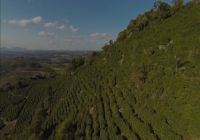
Ask anyone about Tanzanian coffee and they will think of Kilimanjaro. Mount Kilimanjaro sits in the country's northeast - the highest volcanic range on the African continent, snow-capped year-round - and it is also Tanzania's largest coffee-producing region.

Coffee cultivation here began as early as 1893. Beans grow at 1,050-2,500 meters, where high altitude, volcanic-ash soils, and pure snowmelt water create an excellent environment for coffee trees.
At Kilimanjaro's southern foothills lies Moshi, the regional capital and Tanzania's largest coffee trading and processing center. Each harvest, farmers carry their picked cherries down to processing stations at the mountain's base for processing and export.

Coffee Production Structure
During the colonial era, Tanzania's coffee industry was dominated by plantations. After independence, land was divided and distributed to smallholder farmers to promote cultivation. Today more than 90% of production comes from smallholders, with only 10% from larger estates. These farmers form cooperatives - the Kilimanjaro Cooperative Union (KNCU) being particularly significant in the region - chiefly responsible for quality control.
Tanzania grows both Arabica and Robusta. Thanks to Robusta's high yields, Tanzania has become Africa's third-largest coffee producer, behind only Ethiopia and Uganda, with an annual output of nearly 90,000 tons.

Tanzanian Coffee Characteristics
Tanzania's main Arabica varieties are Bourbon, Typica, and Kent. FrontStreet Coffee currently offers a Kilimanjaro coffee from the Typica variety, washed processed. Brewed, it shows gentle acidity with citrus, berry, honey, and nut flavors, a smooth, tea-like mouthfeel, and overall balance.
Alongside Ethiopia and Kenya, Tanzania completes the trio of African coffee giants, all producing superior coffee. Compared with Kenyan and Ethiopian coffees, though, Tanzanian coffee has less bright acidity and leans toward a gentler, smoother mouthfeel, with more sweetness and a wine-like quality.
FrontStreet Coffee Recommendation
If African florals are what you are after, FrontStreet's entry-level Washed Yirgacheffe from Ethiopia is the classic starting point: white jasmine, bright citrus and lemon acidity, and a light tea feel - the same washed clarity expressed through Tanzania's East African cousin, the FrontStreet Kilimanjaro Washed Typica, which trades some of that brightness for gentler acidity, more sweetness, and a wine-like finish.
FrontStreet also carries two other washed stars for fans of clean, bright cups: the FrontStreet Guodingding Cooperative from Yirgacheffe's Worka area, with elegant white florals over citrus and lemon tones, and the FrontStreet Washed Yirgacheffe daily bean that made this flavor family famous. Brew any of them on a V60 at 90-91°C with a 1:15 ratio and three pours for the fullest expression.
Long press the QR code to follow:

Important Notice :
FrontStreet Coffee is a long-established specialty coffee roaster in Guangzhou China, selling freshly roasted beans from its own farm in Yunnan as well as dozens of carefully selected single-origin beans from around the world for both pour-over and espresso. The products deliver consistently excellent quality and great value, with shipping within 24 hours. Guangzhou's FrontStreet Coffee shop is recommended by many coffee lovers, and the beans are now available online at the Tmall 。
FrontStreet Coffee has moved to a new address:
FrontStreet Coffee Address: 315,Donghua East Road,GuangZhou
Tel:020 38364473
 Scan and follow the En Gafei WeChat official account. Please indicate that the reprint comes from "En Gafei".