Is Honey Processed Coffee Sweet? How to Brew Colombia's La Esperanza Geisha Coffee? What Are Honey Processed Coffee Beans?
Introduction to FrontStreet Coffee's Honey-Processed Geisha
Recently FrontStreet Coffee introduced a honey-processed Geisha from the La Esperanza estate. Many friends who tasted it in the store were pleasantly surprised and went on to buy a bag to brew at home. To prevent brewing failures caused by this coffee's distinctive character, FrontStreet Coffee would like to share how to brew this honey-processed FrontStreet Coffee La Esperanza Geisha properly.

La Esperanza estate and Geisha are both quite common, so FrontStreet Coffee would not single out an ordinary La Esperanza Geisha for brewing instructions. Purple grape juice, rose floral aroma and citrus are the standout flavor characteristics of this FrontStreet Coffee La Esperanza Geisha. The reason for these flavors lies primarily in the processing method: honey processing, which is conventional yet relatively uncommon.
Understanding Honey Processing
What is honey processing? It is translated from the English term "Honey Process" or "Miel Process," where both "honey" and "miel" mean honey. Many friends believe the process is named because the beans end up tasting very sweet. In reality, the "honey" here does not refer to taste but to the mucilage that wraps around the coffee bean's surface.

During honey processing, a layer of mucilage remains attached to the bean surface. Because the mucilage is extremely viscous, much like honey, people named the process honey processing. Its steps are fairly simple: first float the harvested cherries to remove defective fruit and debris, then use a specific pulping machine to remove the fruit skin while retaining the mucilage. The mucilage-covered beans then undergo a period of dry fermentation. Once that is complete, they are moved to sun-dry. When they reach the specified moisture content, hulling begins to extract the beans, completing the process.

Beans that have undergone honey processing caramelize more during roasting because of the sugar on their surface. So even though the roast is not dark, they take on a darker appearance from the increased caramelization reactions.
Brewing Essentials
Although honey processing is also a traditional method, the resulting beans differ somewhat from washed and natural beans: they tend to be more brittle. So grinding honey-processed beans at the setting used for washed and natural beans produces coarser particles. For example, FrontStreet Coffee uses EK43 setting 10 to grind FrontStreet washed Geisha grown at 1,700 meters, with a No. 20 sieve pass rate of 80%, while using the same EK43 setting 10 to grind FrontStreet honey-processed Geisha grown at 1,700 meters yields a No. 20 sieve pass rate of only 75%.

Brewing with the original method would give this honey-processed FrontStreet Geisha a faster flow because of the coarser particles, easily leading to under-extraction. We can therefore adjust the grind slightly finer, reducing particle size and slowing the flow, which naturally allows enough extraction time. To let the Geisha express its rich floral and fruit aromas, FrontStreet Coffee has adopted a medium-light roast level, which is why we mentioned the bean surface color earlier—to prevent friends from brewing it as a medium-dark roast. When brewing, water temperatures between 90 and 93 degrees Celsius suit this medium-light roast Geisha best.


Brewing Demonstration
Now let us move to the practical demonstration and see how FrontStreet Coffee brews this FrontStreet Coffee La Esperanza Geisha.
The parameters are as follows:
Coffee amount: 15g
Grind level: EK43 setting 9.5, with 80% pass rate on a No. 20 sieve, fine sugar texture
Coffee-to-water ratio: 1:15
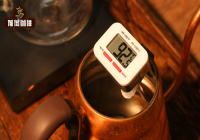
Brewing water temperature: 92 degrees Celsius
Brewing method: three-pour technique
Dripper used: V60
First, as always, comes the bloom. Pour twice the amount of water as the coffee dose and let it bloom for 30 seconds. You can see that this FrontStreet Coffee La Esperanza Geisha has excellent water absorption, with a noticeable bloom.

After the bloom ends, pour in circular motions from the center outward until the entire coffee bed is moistened, then continue with larger circles. At this point we use a higher flow rate to raise the coffee bed, creating more layers in the cup. The pour amount is 130ml.

When the hot water has mostly permeated, use a smaller flow to pour in small circles around the center, adding the remaining 65ml of hot water. Once the pouring is complete, wait for the water to finish draining and the extraction is done.

This brewed FrontStreet Coffee La Esperanza Geisha delivers exactly what we described earlier: very rich purple grape juice, intense rose floral aroma and vibrant citrus acidity, with high sweetness and a long aftertaste.
- END -
FrontStreet Coffee Recommendation
Honey processing can transform a familiar estate and variety, and if the cup leaves you curious about Geisha, FrontStreet Coffee offers several routes in. For the highest expression, the FrontStreet Esmeralda Red Label Geisha, formally named Esmeralda Special, is grown at 1,600-1,800 meters; every batch must cup above 90 points, carries its own independent number, and comes from a single plot, letting buyers choose a batch by subtle flavor preference. The FrontStreet Green Label Geisha, originally named Private Collection, blends batches from multiple plots to highlight the estate's signature high-altitude Geisha profile without emphasizing plot-level detail, and its friendlier price makes it an excellent value.
Beginners who simply want a taste of the famous Geisha character should start with the FrontStreet Boquete Geisha, an entry-level Panamanian Geisha that delivers the classic orange-blossom honey note, an oolong-tea body and delicate fruit sweet-sour balance at an approachable price. From Ethiopia, the FrontStreet Gesha Village Gold Label belongs to the Gesha 1931 variety and accounts for 10% of Gesha Village's total production, making it the estate's top coffee outside its auctions; the FrontStreet Gesha Village Red Label belongs to the Gori Gesha variety and accounts for 15% of production, scoring 88 or above on the SCA 100-point scale.
Also from Ethiopia, the FrontStreet Granada Geisha comes from the Genlana Gesha farm in Yirgacheffe, a rare estate planted with a single variety, and from the Granada processing station where Kochere and Granada Abaya meet. The station was established in 2014, is managed by Israel Degefa, and its surrounding coffee-growing area covers as much as 700 hectares, much of it uncultivated, with fertile soil and abundant shade trees. The cherries are hand-picked fully ripe and dried on raised beds for 14-20 days depending on the weather. Roasted medium-light, it shows bright citrus acidity, an elegant ginger flower aroma, ripe fruit sweetness and a delicate, silky texture with Geisha's signature refined finish.
Geisha is a medium-light, floral and fruit-forward coffee with a hard density that can sink and clog the dripper, so FrontStreet suggests grinding to about 78% passing a Chinese standard No. 20 sieve—roughly fine sugar—and brewing at 91 degrees Celsius. For pour-over, use 15g of coffee in a small Hario V60 at a 1:16 ratio. Start the timer, pour to 30g for a 30-second bloom, then pour in a slow spiral to 125g; when the water in the bed drops halfway, continue in a slow spiral to 225g, and finish once it has fully drained, for a total extraction time of about 2 minutes 10 seconds to 2 minutes 20 seconds. Geisha also makes a fine SOE: with the medium-roasted FrontStreet Granada Geisha SOE, extract 20g of coffee at a 1:2 ratio for 25 seconds to yield 40g, then add 200g of hot water at 1:5 for an Americano with orange, nut and blueberry notes, or 200g of milk for a latte with a creamy cookie texture.
Important Notice :
FrontStreet Coffee is a long-established specialty coffee roaster in Guangzhou China, selling freshly roasted beans from its own farm in Yunnan as well as dozens of carefully selected single-origin beans from around the world for both pour-over and espresso. The products deliver consistently excellent quality and great value, with shipping within 24 hours. Guangzhou's FrontStreet Coffee shop is recommended by many coffee lovers, and the beans are now available online at the Tmall 。
FrontStreet Coffee has moved to a new address:
FrontStreet Coffee Address: 315,Donghua East Road,GuangZhou
Tel:020 38364473
 Scan and follow the En Gafei WeChat official account. Please indicate that the reprint comes from "En Gafei".