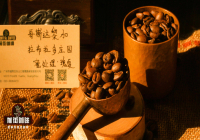
What Does Single-Origin Coffee Mean? Essential Knowledge of Pour-Over Coffee! Why Should Single-Origin Coffee Be Brewed Using Pour-Over Method?
Customer: "Boss, I'll have a single-origin coffee!"
FrontStreet Coffee: "Would you like pour-over or cold drip?" Customer: "Isn't single-origin coffee just pour-over?"

Like the customer above, many people use "single-origin" and "pour-over" interchangeably, as if they meant the same thing. In reality they are entirely different concepts. So why the confusion? Before answering, let's review with FrontStreet Coffee what single-origin coffee actually is, and what pour-over coffee actually is.
What are single-origin coffee beans?
"Single-origin coffee" refers to coffee made from beans of a single origin -- what we now call specialty coffee. Whether brewed by immersion or by drip filtration, as long as only water and beans from one origin go into the cup, it counts as single-origin.

What we want from single-origin coffee is the regional flavor of its terroir. Beans grown in different places develop distinctly different characters. A simple example: the same variety grown in Yirgacheffe might smell of lemon and jasmine, while in Sidamo the same beans might show sweet-tart mango and pineapple. That is "regional flavor." One thing to keep in mind, though: single-origin means a single plot, a single processing method, and a single batch -- it does not mean a single variety. Mixing of varieties in the field is unavoidable; unless humans intervene, a batch almost always contains more than one variety.
What is pour-over coffee?
Pour-over is easier to grasp -- it is a specific brewing method. A filter holds the grounds, hot water is poured by hand, and coffee extracts as water percolates through: a drip filtration extraction.

The reason the two get confused is simply that the vast majority of people choose pour-over as the way to brew their single-origin beans!
Why do single-origin beans prefer pour-over brewing?
Of all the ways to make coffee, few can match pour-over across the board -- it is what we'd call an all-rounder.

With the right parameters, any extraction method can make a tasty cup. But pour-over does more than taste good -- it can do a great deal else.
Feature 1: Speed
Think of busy coffee shops: every cup must be both consistent and fast. Besides espresso, almost no brewing method can deliver an excellent cup quickly. Other methods either involve too many steps or take too long -- smart cups and French presses are dead simple to operate, but their immersion times stretch on and on.

Pour-over, because the brewer intervenes throughout the extraction, reliably produces a flavorful, well-concentrated cup in just two minutes.
Feature 2: High Potential
Because pour-over demands full human participation, it hands you complete control of the cup. Change the grind, adjust the water temperature, or switch the brewing recipe, and the same beans can yield two completely different cups.

Want more sweetness? Concentrate the extraction on the front and middle stages and cut off the bitter tail. Want more balance? Lower the water temperature, grind coarser, and extend the extraction. Other methods allow adjustments too, but they are comparatively unstable and harder to fine-tune.
Feature 3: High Playability
There is also a wealth of gear to explore. Drippers come in different shapes, with different characteristics, made of different materials -- and every difference changes the brew. Drippers alone offer enormous room for experimentation.

And during brewing you can add auxiliary tools to adjust flavor and difficulty: Paragon ice balls that lock in aroma, the Lily Drip that assists pouring, and so on. The playability is enormous.
Feature 4: Excellent Flavor Performance
As a drip method, pour-over can never extract every ground in the dripper perfectly evenly, so different particles release different amounts of flavor -- and that imbalance is exactly what gives the coffee its rich, expressive layers.

Meanwhile, the full coverage of filter paper keeps insoluble residue out of the cup, so the coffee tastes remarkably clean and its flavors are easy to pick out. That is why people instinctively brew single-origin beans by pour-over: it expresses the coffee's character best, while being fast, flexible, and endlessly tunable.
FrontStreet Coffee Recommendation
If you are new to single-origin coffee, FrontStreet Coffee's washed Yirgacheffe is the classic first step. Known for white jasmine florals, bright citrus and lemon acidity, and a gentle tea-like finish -- at a friendly everyday price -- it is the bean that introduces most people to what "regional flavor" really means.
Ready to go deeper within the same region? The FrontStreet Guodingding Cooperative, from the village-level cooperative in the Worka zone, brings the traditional washed character to another level: fresh citrus and lemon over elegant white florals, utterly clean and bright. And for a taste of what natural processing adds, the FrontStreet Red Cherry Project sun-dried Yirgacheffe -- all-ripe cherry drying turned three to four times a week -- offers peach, cocoa, honey, and lemon with a creamy, fruit-juice richness that pour-over shows off beautifully.
Important Notice :
FrontStreet Coffee is a long-established specialty coffee roaster in Guangzhou China, selling freshly roasted beans from its own farm in Yunnan as well as dozens of carefully selected single-origin beans from around the world for both pour-over and espresso. The products deliver consistently excellent quality and great value, with shipping within 24 hours. Guangzhou's FrontStreet Coffee shop is recommended by many coffee lovers, and the beans are now available online at the Tmall 。
FrontStreet Coffee has moved to a new address:
FrontStreet Coffee Address: 315,Donghua East Road,GuangZhou
Tel:020 38364473
 Scan and follow the En Gafei WeChat official account. Please indicate that the reprint comes from "En Gafei".