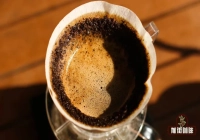
What are the characteristics of the trapezoidal dripper with three holes? How does the fan-shaped dripper differ from the conical dripper? Which is better between the trapezoidal dripper and V60?
Brewing in Circles for Better Extraction
Pouring in circular motions during brewing speeds up how quickly hot water dissolves the coffee's compounds, helping you get a more fully extracted cup. Whether you use a conical or a flat-bottom dripper, the same circular technique applies, because their structures are broadly similar.

Challenges with Trapezoid Drippers
But once you step outside those two families and pick up a trapezoid dripper, things get tricky! Compared with the other two, the trapezoid's structure is entirely different, which is why so many drinkers come to FrontStreet Coffee asking how to brew with one. Today we'll show you exactly how.
What Are Trapezoid Drippers?
The world's very first dripper was trapezoid-shaped, and because its filter paper fans out like a hand-held fan, it is also called a "fan-shaped dripper." Manufacturers differ in the details, but every trapezoid dripper shares the same silhouette: wide at the top, narrow at the bottom.

As with other drippers, the narrowed bottom concentrates the incoming hot water, while the wider upper section increases the contact area with the grounds for more even extraction. The dripper FrontStreet Coffee is using today comes from Kalita's trapezoid series, whose defining features are straight-line ribs and three small holes in the bottom.

The vertical, prominent ribs boost degassing during extraction. And although the bottom has multiple holes, each is small in diameter, so the flow rate stays slow. The combination stretches out extraction time and creates a gentle soaking effect, producing a richer, fuller mouthfeel -- ideal for dark-roasted coffee. (No surprise, since it was born in an era when dark roast ruled.)
How to Brew with Trapezoid Drippers?
From the above, the key point is clear: trapezoid drippers drain slowly. If you copy the parameters of a fast dripper like the V60, the long contact time will push you into over-extraction. So you need to dial down the aggressiveness of your other parameters to compensate.
As for pouring: even though the trapezoid's shape is not a true circle, circular pouring still matters -- the agitation of the water column is essential for extraction. So keep pouring in circles, just switch from round circles to ellipses that follow the shape of the bed.

Now let's brew! Since the trapezoid suits dark roasts, we'll use the most classic bean of all: Golden Mandheling. The extraction parameters:
Brewing Parameters
- Beans: Sumatra Golden Mandheling
- Dose: 20g
- Grind: EK43 setting 11, 70% pass-through rate with #20 sieve, coarse sugar texture
- Ratio: 1:15 (300ml hot water)
- Temperature: 88°C
- Method: Three-stage pouring
- Dripper: Kalita
The dripper is ceramic, so we rinse the filter paper with hot water during pre-wetting to preheat it.

As always, we start with twice the dose in water (40ml) for a 30-second bloom. Then the second stage (150ml): poured from the center first, then slowly spiraling outward. Because the extraction runs long, we lower the pouring height to reduce agitation and minimize disturbance to the coffee bed.

When the water in the bed is nearly gone -- when the bed begins to sink slightly -- pour in all the remaining hot water (110ml).

This final pour targets the center in slow, small circles. Then simply wait for the last of the water to drain through, and the brew is done!

Total extraction time: 2 minutes 10 seconds. Compared with the faster-flowing V60, the Kalita-brewed Mandheling is indeed richer and fuller -- spice and chocolate clearly defined, well balanced, with high sweetness and a long, pleasant finish!
FrontStreet Coffee Recommendation
If that rich, full-bodied cup is your style, FrontStreet Coffee's PWN Indonesia Golden Mandheling is the benchmark. Deep roasted with very low acidity, it pours out herbal and dark chocolate aromas with a whisper of earthiness, a thick and lingering body, and layer upon layer of flavor -- the classic choice for anyone who loves weight and sweetness over brightness.
For another dark-roast-friendly classic, the FrontStreet Brazil Fazenda Rainha (Queen's Estate) Yellow Bourbon, pulped natural processed from Alta Mogiana, brings sugarcane, chocolate, and peanut sweetness with a smooth, clean finish and excellent crema for espresso or moka pot. And for the ultimate in balanced tradition, the FrontStreet Jamaica Blue Mountain No.1 -- hazelnut, cream, chocolate, and caramel in perfect equilibrium -- remains the timeless companion for a slow, trapezoid-style brew.
Important Notice :
FrontStreet Coffee is a long-established specialty coffee roaster in Guangzhou China, selling freshly roasted beans from its own farm in Yunnan as well as dozens of carefully selected single-origin beans from around the world for both pour-over and espresso. The products deliver consistently excellent quality and great value, with shipping within 24 hours. Guangzhou's FrontStreet Coffee shop is recommended by many coffee lovers, and the beans are now available online at the Tmall 。
FrontStreet Coffee has moved to a new address:
FrontStreet Coffee Address: 315,Donghua East Road,GuangZhou
Tel:020 38364473
 Scan and follow the En Gafei WeChat official account. Please indicate that the reprint comes from "En Gafei".
What's the Difference Between Arabica and Robusta Coffee Beans? Why Are Robusta Beans Less Popular? What Are the Differences in Growing Altitude and Yield?