What is AeroPress? What are the features of the AeroPress coffee maker? Detailed instructions on how to use it! What should you pay attention to when making espresso?
In 2005, Alan Adler — then approaching 70 — invented the AeroPress out of dissatisfaction with traditional coffee brewing methods.

As the picture shows, this syringe-like tool is the extraction device known as the AeroPress. (For the history and evolution of the AeroPress, see our detailed article: "Link.") Traditionally it has been used mainly for single-origin coffee, but after too many plain cups, some people crave something richer — a full-flavored milk coffee, say. Milk coffee makes heavy demands on the base: the coffee must be concentrated enough to stand up to the milk without being drowned. Which raises the question: can the AeroPress make an "espresso" that meets those conditions?

It absolutely can. One clarification: in the broad sense, espresso means coffee pulled from an espresso machine — what FrontStreet Coffee means here is simply a cup of high-concentration coffee. And that is not hard to achieve with an AeroPress; you just need to adjust a few extraction parameters.
How to Make "Espresso" with AeroPress?
To raise a coffee's concentration, either increase the dose of grounds or cut the extraction water — in short, tighten the coffee-to-water ratio. A tighter ratio compresses the space available for coffee substances, and the concentration rises.

A tighter ratio alone isn't enough, though. Because the AeroPress extracts through immersion plus pressure, without a continuous supply of "fresh hot water" the extraction efficiency runs comparatively low. So other parameters need tuning as well.

Grinding finer, raising the water temperature, stirring more, and extending the extraction time are all levers you can pull, depending on circumstances. If the grind can't go finer, for instance, push extraction efficiency elsewhere — hotter water, longer time, and so on. Without further ado, here's how FrontStreet Coffee makes a high-concentration coffee with the AeroPress.
Extraction parameters are as follows:
- Beans used: Medium-dark roast Warm Sun Blend
- Coffee amount: 20g
- Coffee-to-water ratio: 1:3 (grounds absorb a certain amount of water; after multiple experiments, FrontStreet Coffee found 1:3 works best)
- Grind setting: Espresso grind (flour-like)
- Extraction water temperature: 94°C
- Extraction method: Inverted brewing
- Time: One minute
First assemble the "syringe," then set it upside down.

Add the coffee grounds and hot water in sequence.

Stir for 10 turns and wait one minute.

When time is up, cap it, set a prepared cup upside down on top, hold the AeroPress and cup firmly, and flip the whole thing over.

Finally, apply some force to the piston and press down slowly.

Press it fully to the bottom and the extraction is complete. The yield is small, but as you can see the color is very dark — a sign of high concentration. A small sip: yes, that distinctive flavor is there. Now, what everyone really wants to know is how it performs in a latte, so FrontStreet Coffee immediately frothed some milk. The parameters:
- AeroPress concentrated coffee: 40ml
- Milk foam: 200ml
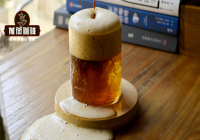
And out came a cup of milk coffee that looks pretty respectable!

One sip, though, and... it's a bit weak. Fair enough: even with the same grind and water temperature as an espresso machine, the AeroPress simply can't generate that much pressure, so it can't match the richness. No problem — just trim the proportion of milk slightly and the coffee flavor comes forward. Sure enough, after readjusting, the taste was noticeably richer than before. Increasing the coffee amount works too, though the cost rises accordingly. The trade-off is yours to make. If you have an AeroPress at hand, give it a try.
- END -
FrontStreet Coffee Recommendation
For a concentrated base strong enough to face milk, choose a blend built for the job. FrontStreet Coffee's Classic Blend is our top pick for espresso-style brewing: designed for espresso machines and moka pots, its standout quality is crema — even a beginner with a basic home machine can pull a dense, silky layer, exactly what lattes, cappuccinos, and Dirty drinks depend on. Its traditional Mamba recipe (Mandheling and Brazil) delivers a mellow, rounded body that suits veterans and newcomers alike, at home or commercially.
For a gentler budget option, our Dark Cocoa Blend uses 100% Arabica beans with ample crema and a rich, chocolatey profile at a friendly price. And if you'd rather your milk coffee taste like dessert, the Strawberry Sugar Blend blends Arabica beans from different origins into a vivid strawberry-gummy sweetness — a fruit-forward base for distinctive milk drinks that won't scare off anyone wary of bitterness.
Important Notice :
FrontStreet Coffee is a long-established specialty coffee roaster in Guangzhou China, selling freshly roasted beans from its own farm in Yunnan as well as dozens of carefully selected single-origin beans from around the world for both pour-over and espresso. The products deliver consistently excellent quality and great value, with shipping within 24 hours. Guangzhou's FrontStreet Coffee shop is recommended by many coffee lovers, and the beans are now available online at the Tmall 。
FrontStreet Coffee has moved to a new address:
FrontStreet Coffee Address: 315,Donghua East Road,GuangZhou
Tel:020 38364473
 Scan and follow the En Gafei WeChat official account. Please indicate that the reprint comes from "En Gafei".