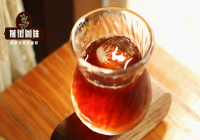
What are the advantages of the KONOs 1925 Noble Dripper? What are the characteristics of the dark roast coffee brewed with it?
A Question About Pour-Over Filters
Yesterday a customer visiting FrontStreet Coffee asked, "I've noticed your pour-over is always brewed with V60s. Don't you ever use anything else?"

Not quite true, actually. FrontStreet Coffee does brew with filters other than the V60—the V60 simply sees the most use, which created the impression. For dark roast coffee beans, for example, we reach for the Kono dripper.

Getting to Know the Kono
Plenty of coffee drinkers have never heard of Kono. In today's market, the conical filter most people own is a fast-draining V60, or something distinctive like the Origami; only a small circle of enthusiasts brew with a Kono, which is exactly why the brand flies under the radar. So today FrontStreet Coffee is making the case for this dripper.
A Short History of Kono
Kono is arguably the coffee equipment brand most beloved by Japanese coffee professionals and enthusiasts alike. It was founded in 1925 by Hoshino Akira—the name "Kono" comes from the Japanese reading of his family name—and its original business was manufacturing siphon brewers.
As the company grew, Kono branched into other equipment and into roasting. Because the firm was built on siphon brewing and a deep love of mellow, dark roast coffee, it was Hoshino Toshio—second-generation president after Hoshino Akira—who in 1973 invented the first ribbed conical dripper, the Kono MD-21. According to the stories, Mr. Hoshino spent over a decade settling the length and depth of the ribs. That first-generation dripper had twelve ribs extending halfway up the body, and naturally it went on to spawn further versions. In 2010, Kono revised the design, shortening the ribs to half their original length and creating the famous Kono Meimon (the "Famous Gate"), model MDN-21. In 2015, a 90th-anniversary commemorative dripper arrived with even shorter ribs, and once it sold out a regular production version followed: the "Konos since 1925," model MDK-21. (Note: "Konos" was Kono's original brand name.)

Because the three models look nearly identical, the model numbers confuse a lot of people. Let FrontStreet Coffee untangle them: the best sellers today are the Meimon and the Konos, which have the shortest ribs and the smallest drain holes. Ranked by flow speed, it goes MD-21 (original Kono) > MDN-21 (Kono Meimon) > MDK-21 (Konos Since 1925).

The Kono's Distinctive Design
On every model, the upper portion of the dripper is rib-free, so the filter paper sits flush against the wall there. During brewing, the section holding the coffee bed and hot water forms a sealed space with no bypass water escaping down the sides. But that seal also cuts off air circulation. As coffee drains through the hole, it drags down air that would otherwise seep in from the sides, creating negative pressure in the lower half of the cone where the paper doesn't fully cling to the wall, while positive pressure builds above the coffee bed. The pressure difference pushes the liquid down, and the brew appears to be drawn out through the drain hole. This is precisely Hoshino Toshio's masterstroke: a dripper engineered to mimic the siphon effect of a siphon pot. Many brewers deliberately skip rinsing the Kono's filter paper, precisely so the grounds have a vent channel during the bloom; the paper then seals itself against the wall under the weight of the grounds and liquid, so by the time real extraction begins, the paper is fully seated. An elegant little mechanism!

Which Coffee Suits a Kono?
Kono drippers run slow, which makes them a natural match for dark roast beans. To make dark roast coffee delicious, you want more complete extraction so the fuller compounds that build body and aftertaste come through. The catch is that dark roast beans are low in density and extract easily—push them with light-roast parameters and they over-extract in a hurry, so they demand a coarser grind. Coarser grounds open up more channels for water and speed drainage, and that is exactly where the Kono's slow flow shines: it gives coarsely ground dark roast the extra contact time it needs, finishing the extraction and delivering a fuller mouthfeel.

Longer contact time does raise extraction efficiency, so we compensate by lowering the water temperature. When FrontStreet Coffee brews dark roast beans on a Kono, we typically use these parameters: a 1:15 coffee-to-water ratio, 88°C–90°C water, an EK43 at setting 11 with a 75% pass-through rate on a #20 sieve, a three-stage pour, and a total brew time of about 2 minutes for 15g of coffee. (Note: these are hot brew parameters.)

With this recipe you get a delicious dark roast with a long finish and a rich, heavy body—plus the highest margin for error. One caution: dark roast beans are brittle after their long time in the roaster and shed a lot of fines when ground, so avoid heavy pours and fast swirls during the brew; too much agitation clogs the bed, stretches the extraction, and pulls out bitter compounds that should have stayed behind. The result would truly be bitter beyond words!
- END -
FrontStreet Coffee Recommendation
For a slow-flow dripper like the Kono, medium-dark and dark roast beans are the natural pairing, and these are the ones FrontStreet Coffee reaches for most. The FrontStreet PWN Indonesian Golden Mandheling is dark roasted, with very low acidity and a thick, lingering body—herbal and dark chocolate aromas with a faint earthiness, layered and satisfying, perfect for drinkers who love intensity and dislike acidity. The FrontStreet Brazil Queen Estate is another excellent match: low acidity, superbly balanced, with rich nut and cocoa aromas, clear caramel sweetness, and a smooth, round finish—equally good pour-over, espresso, or moka pot, with outstanding crema and everyday-drink value. And the FrontStreet Jamaica Blue Mountain No. 1 sits right in the middle: no aggressive fruit acidity like some African coffees and no heavy bitterness like deep dark roasts, but a near-perfect balance of acidity, sweetness, bitterness, and aroma—cream, caramel, chocolate, nuts, honey, and a light fruit note, with a silky round entrance, a rich mid-palate, and a clean, lingering finish. It is the coffee professionals most often call "the specialty coffee almost anyone can love."
Important Notice :
FrontStreet Coffee is a long-established specialty coffee roaster in Guangzhou China, selling freshly roasted beans from its own farm in Yunnan as well as dozens of carefully selected single-origin beans from around the world for both pour-over and espresso. The products deliver consistently excellent quality and great value, with shipping within 24 hours. Guangzhou's FrontStreet Coffee shop is recommended by many coffee lovers, and the beans are now available online at the Tmall 。
FrontStreet Coffee has moved to a new address:
FrontStreet Coffee Address: 315,Donghua East Road,GuangZhou
Tel:020 38364473
 Scan and follow the En Gafei WeChat official account. Please indicate that the reprint comes from "En Gafei".