
Are coffee aroma bottles worth thousands of dollars? How much do 36-flavor coffee noses cost? What are their uses?
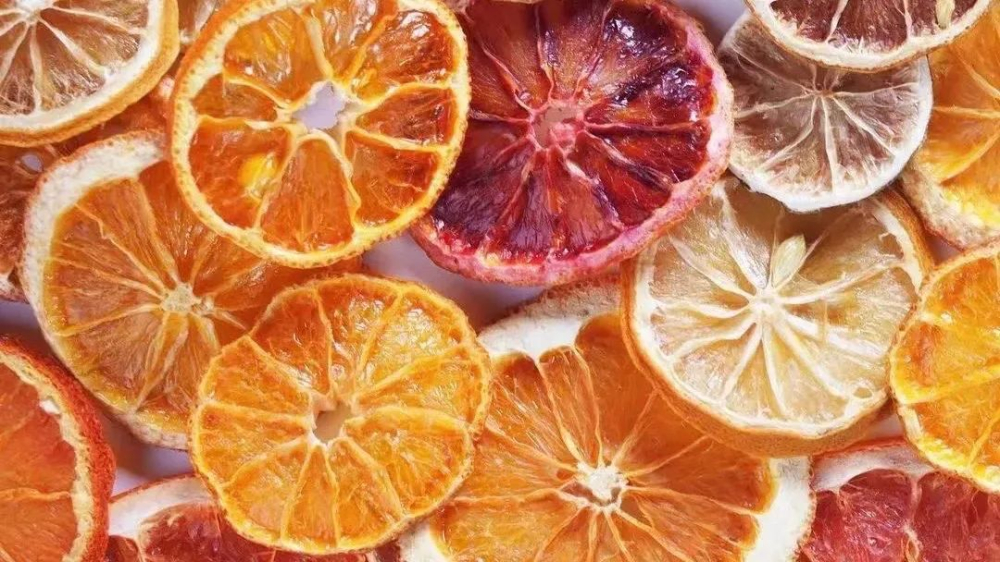
Research has shown that coffee contains as many as a thousand aromatic compounds. But precisely because they are so varied and complex, linguistic descriptions struggle to reach a consensus. When a cup shows sweet-and-sour fruit notes, one person might read them as lemon while another insists they are orange — situations like this create real communication barriers.
And, as with the flaws of the flavor wheel, not all of those aromas are common everyday items that we can taste one by one to commit to memory. So people categorized coffee's aromas and reproduced them with chemical oils, creating independent, clearly defined objects for aroma training: "aroma bottles."
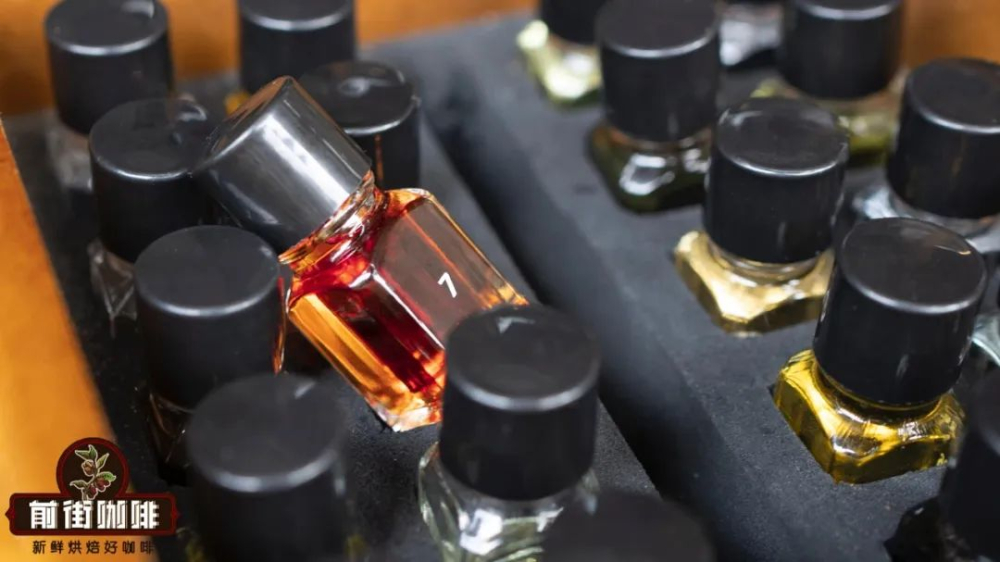
Interestingly, the earliest aroma bottles were not made from chemical oils at all. The original approach was simple: plants and foods corresponding to each aroma were sealed into glass bottles, and sensory training was done by smelling them. Direct and effective — but with obvious drawbacks. Untreated foods and plants cannot keep like specimens; they oxidize quickly as air seeps in, rot, and give off a foul stench of decay. So people turned to chemical reproductions that could be stored long-term.
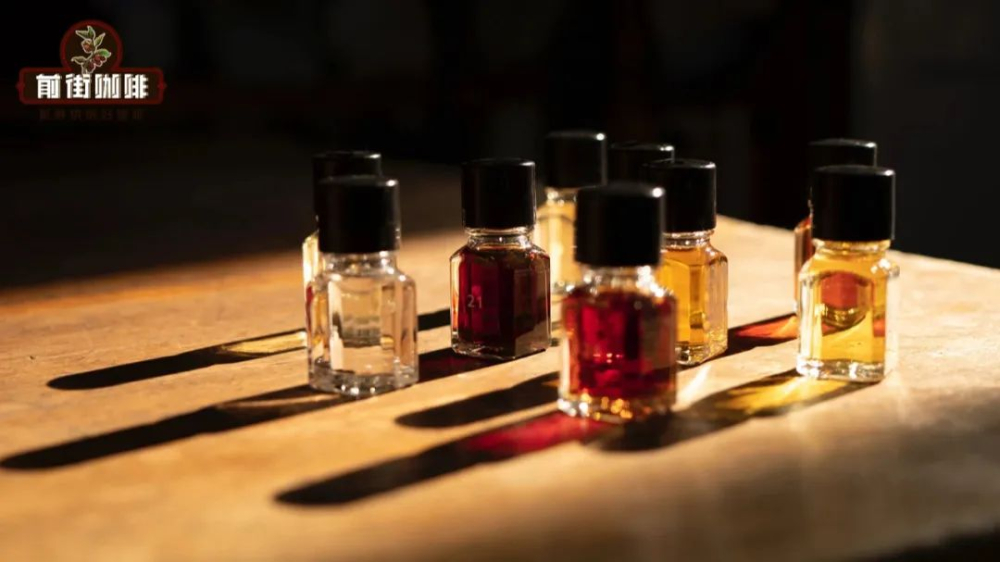
The purpose of aroma bottles is straightforward: to help beginners train their senses systematically and calibrate taste and smell. They are also used in SCA-related coffee courses. Today the two most common sets on the market are "Le Nez du Café" (Coffee Nose) by France's Edition Jean Lenoir — 36 bottles, 36 aromas — and the "Coffee Flavor Map" by Korea's Scentone, with 100 bottles covering 100 aromas. FrontStreet Coffee owns the former, Le Nez du Café, which is organized by the flavors that emerge at different stages of roasting into four major categories totaling 36 aromas. The Scentone set, though not used in SCA courses, is itself SCA-certified. Below, FrontStreet Coffee briefly explains the four categories of Coffee Nose.
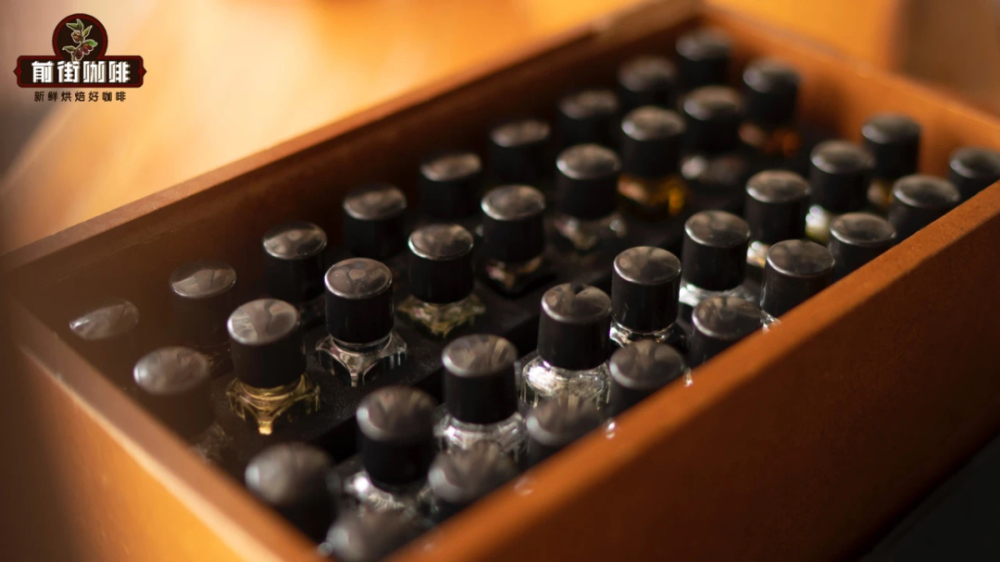
1. Enzymatic Category
Enzymatic refers to the reactions that occur first during roasting. They give coffee its rich floral and fruity aromas, along with varied surface colors. Coffee Nose selected nine representative flavors: Apple, Lemon, Apricot, Cucumber, Garden Peas, Potato, Coffee Blossom, Tea-Rose, and Honeyed.
2. Sugar Browning Category
Sugar Browning refers to caramelization — the reaction that kicks in when sugars reach their melting point during roasting. It deepens the beans' color and brings food-like roasted aromas. The nine representative flavors are: Roasted Almonds, Roasted Peanuts, Roasted Hazelnuts, Walnuts, Caramel, Black Chocolate, Vanilla, Toast, and Fresh Butter.
3. Dry Distillation Category
Dry Distillation covers the dry-distillation reaction, which appears at the end of the second crack, when the beans are nearly carbonized. At these extreme temperatures the coffee fibers begin to break down and carbonize, and both bitterness and aroma intensify. Representative flavors include: Pepper, Coriander Seed, Clove-like, Black Currant-like, Maple Syrup, Malt, Roasted Coffee, Pipe Tobacco, and Cedar.
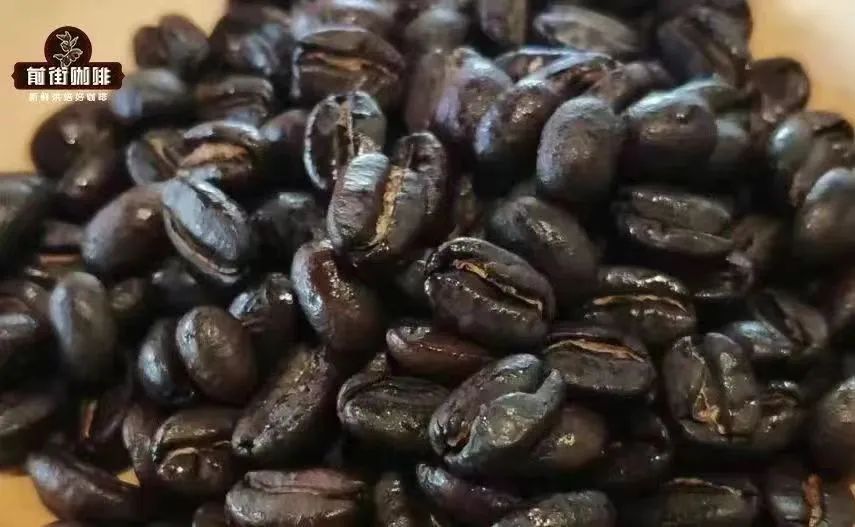
4. Aromatic Taint Category
Note: the Aromatic Taint category does not refer to taint reactions themselves, but to taint flavors that can show up in coffee: Earthy, Straw, Medicinal, Rubber, Leather, Smoke, Coffee Pulp, Basmati Rice, and Cooked Beef.
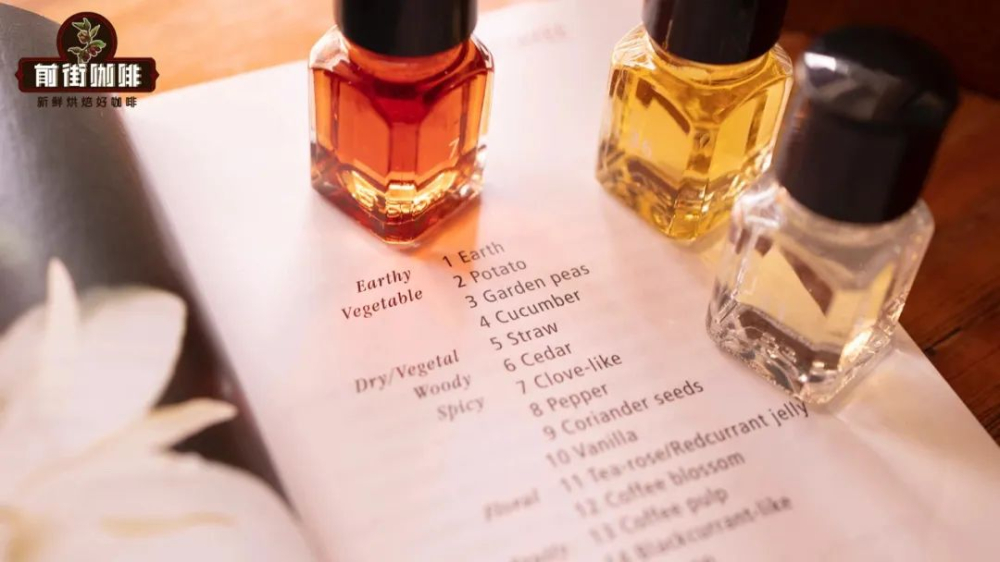
How to Use Aroma Bottles?
Using aroma bottles is essentially the same process as memorizing vocabulary: smell them one by one and build initial memory anchors. FrontStreet Coffee suggests working through them in category order, because as roasting gets deeper, the flavors become more muted — if you smell them at random, your memory anchors get muddled as aromas overwrite one another.
Once you can recall seven or eight out of ten, move to advanced drills: shuffle and blind-test. Separate them by category, shuffle within each group, and blind-test group by group to strengthen your memory and sharpen perception. When you can identify all four groups accurately, mix everything together, shuffle, and blind-test again. If you can still pin down every aroma, you have graduated.
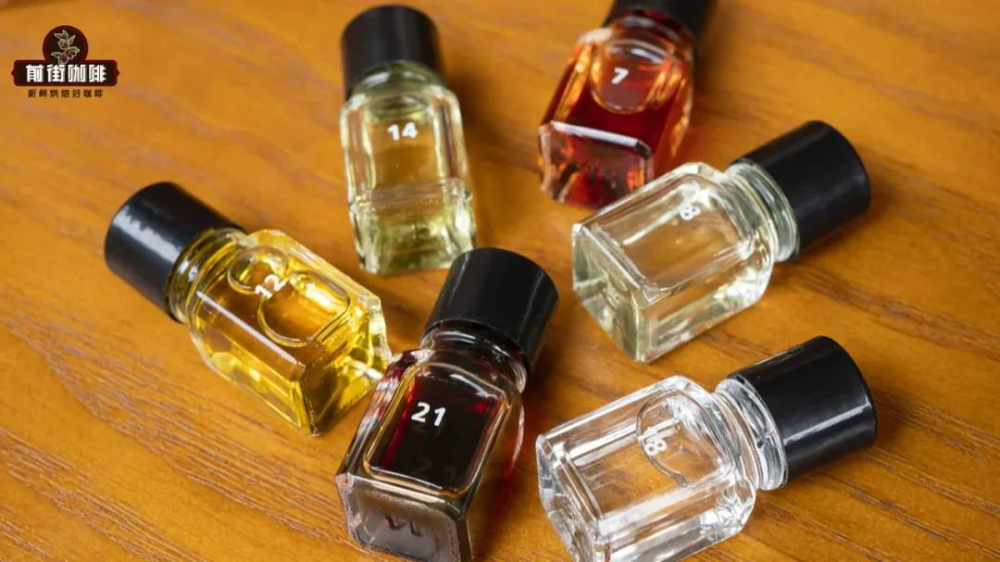
Finally, FrontStreet Coffee wants to stress that this article only shares what aroma bottles are for and how to use them — it is not an invitation to buy a set just to boost your sensory skills. First, the price is steep (several thousand yuan). Second, the aromas are artificially reproduced and never quite match what real coffee emits. So FrontStreet Coffee's standing advice remains: smell more, taste more, experience more.
- END -
FrontStreet Coffee Recommendation
Since aroma bottles exist to train your nose for sweetness, florals, and caramel, why not train on real beans? The FrontStreet Costa Rica Black Honey is an excellent teacher: the black honey process keeps the most mucilage, ferments the deepest, and delivers the highest sweetness of all honey styles. Roasted medium-light, this high-grown Costa Rican lot shows sweet florals, grape, orange, and liqueur-chocolate notes.
For sugar-browning territory, the FrontStreet Brazil Fazenda Rainha at medium roast opens with roasted-peanut and dark-chocolate aromatics, then fades into a lingering gentle sweetness — the classic "returning sweetness" that marks a good dark-leaning roast. And if you want enzymatic florals in the cup, the FrontStreet Strawberry Candy Geisha Blend pairs rose and strawberry-gummy sweetness with blueberry and citrus, working both as pour-over/cold brew and as a smooth, crema-rich espresso base.
Important Notice :
FrontStreet Coffee is a long-established specialty coffee roaster in Guangzhou China, selling freshly roasted beans from its own farm in Yunnan as well as dozens of carefully selected single-origin beans from around the world for both pour-over and espresso. The products deliver consistently excellent quality and great value, with shipping within 24 hours. Guangzhou's FrontStreet Coffee shop is recommended by many coffee lovers, and the beans are now available online at the Tmall 。
FrontStreet Coffee has moved to a new address:
FrontStreet Coffee Address: 315,Donghua East Road,GuangZhou
Tel:020 38364473
 Scan and follow the En Gafei WeChat official account. Please indicate that the reprint comes from "En Gafei".

