
Latte Art Basics: How to Create the Classic White Heart Pattern

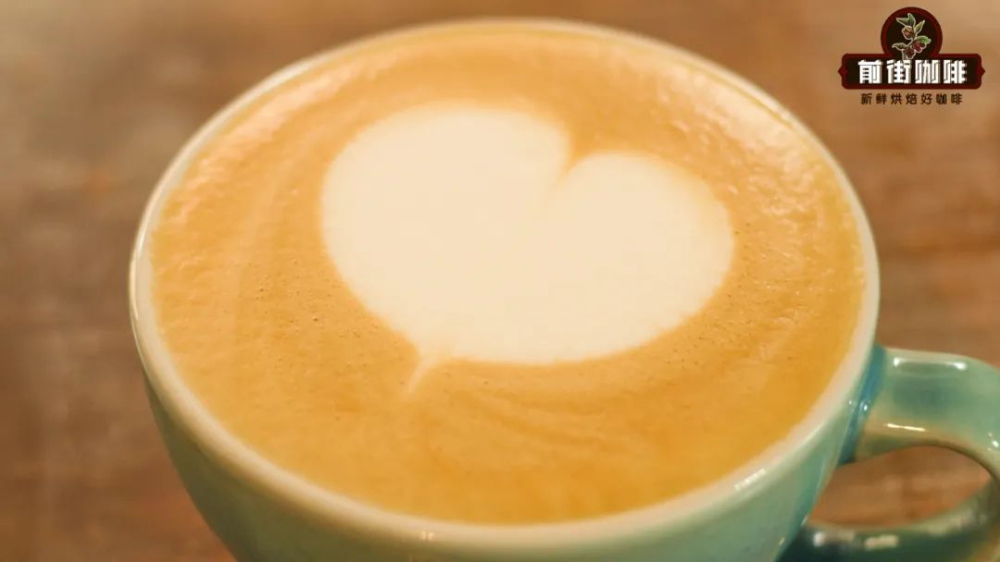
More and more people have been asking FrontStreet Coffee about latte art lately, which shows just how many newcomers are entering the coffee world. So FrontStreet Coffee has decided to relaunch its latte art class, and today's lesson starts now. Today, FrontStreet Coffee shares the most fundamental pattern in latte art: the "big white heart."

Learning latte art does come with a prerequisite: being able to steam milk foam good enough for pouring. The milk will not froth itself into latte-art-quality foam, after all. So if you do not yet have the basics of milk steaming, start with FrontStreet Coffee's article "How to Froth Fine Milk Foam?" for detailed guidance; if you have no steam wand to work with, move on to "How to Froth Milk Without a Steam Wand?"
To be honest, although the big white heart is a basic pattern, that is only true for beginners. When you practice diligently and become a latte art master, you will find you can no longer pour one. Every time you try to make a heart, your hand cannot help but tremble a few times, and the white heart turns into a thousand-layer heart. So in a rough sense, the big white heart is also an advanced pattern. Let us dive into FrontStreet Coffee's tutorial, starting with the key points.
Milk Foam Requirements
Many patterns demand a lot of the foam. If the thickness is not up to standard, the pattern is hard to pour. The big white heart, though, is quite tolerant: it only needs foam that is fine and flowable. Thickness is not much of a constraint - whether it is the very thin foam of a flat white or the thick foam of a cappuccino, both can make a white heart (the thinner the foam, the harder it is). That makes it a friendly pattern for beginners, and for anyone at home without a steam wand.
Milk Integration Volume
Integration is the most important step before drawing the pattern. How well it is done directly affects the cleanliness of the latte art and the difficulty of the design. Since FrontStreet Coffee is sharing a big white heart tutorial today, readers who want to understand how integration affects cleanliness can look up the article "The Importance of Latte Art Integration."

For the big white heart, the key point during integration is the volume of milk used. The more you integrate, the higher the milk level and the weaker the convection current when you pour the pattern; the less you integrate, the lower the level and the stronger the convection. Different patterns need different amounts of convection. Patterns such as leaves and swans, which rely on slight etching, need stronger convection to push out their texture, while patterns such as wheat ears, which need reduced convection to keep the design stable, require more integration. The big white heart needs a certain amount of convection - stronger rather than weaker - but not too much. Integrate only until the cup is 6/10 full. Too much integration makes the white heart too small; too little makes it too large or prone to drifting off-center. That is the thing to watch.
Pattern Starting Point
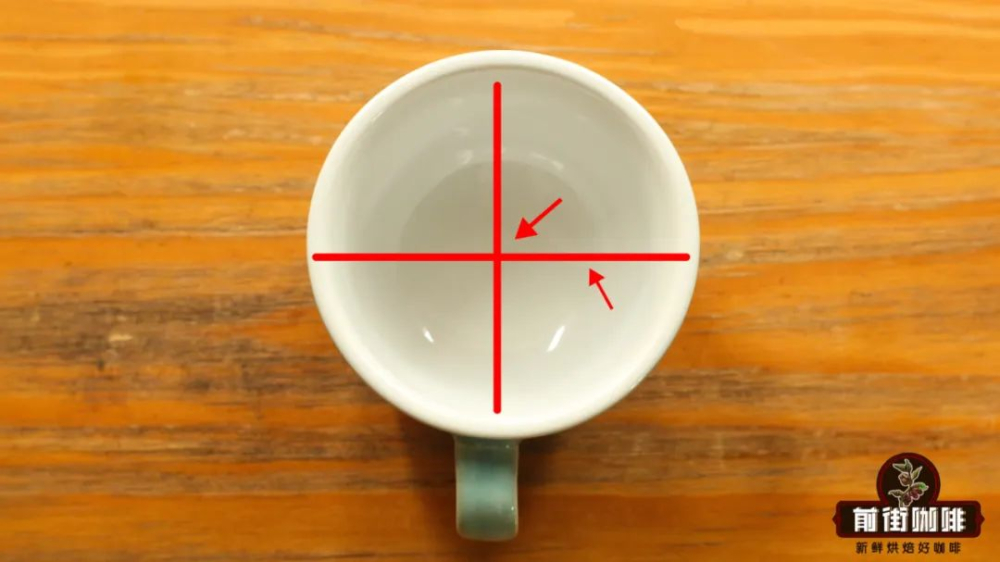
The big white heart is all about symmetry, and that means not only its shape but also where it sits in the cup. So if you want a beautiful white heart, it needs to be symmetrical left and right and positioned exactly in the center of the cup.

So once you have integrated to 6/10 of the cup's capacity, it is best to inject the foam from the quarter point beside the center of the cup (marked in the image below). Combined with the pull of convection, that puts the white heart in the exact center once the cup is full.
Practical Pattern Creation
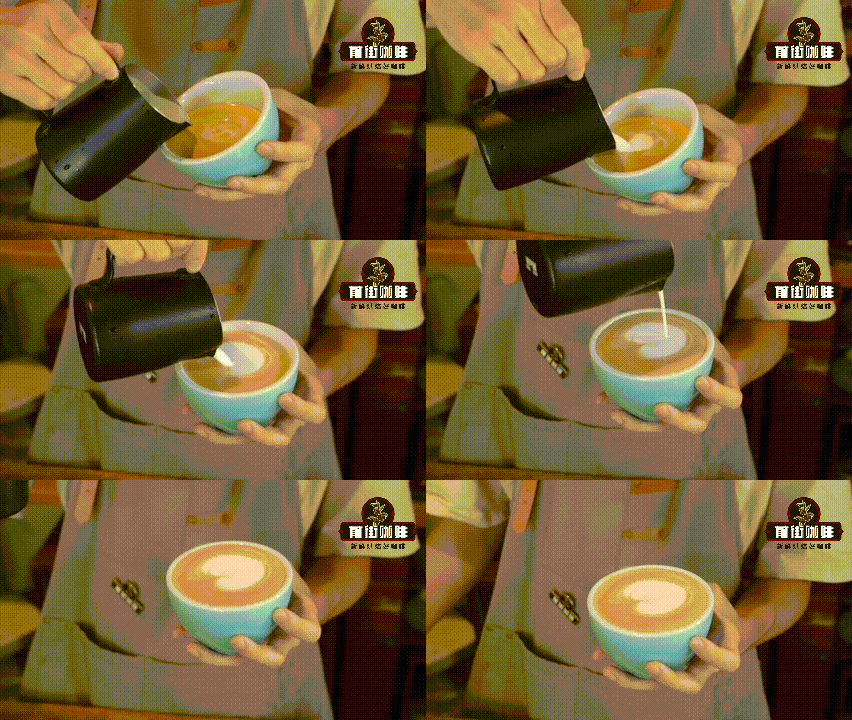
Just like the water flow in pour-over, latte art depends on the flow rate of the milk as you pour. The more milk you pour, the fuller the pattern. The big white heart is a relatively full pattern, so we need a larger volume of milk. As we pour, we must do two things at once. One is to push the pouring point, gradually moving it from the original quarter point toward the center. The other is that the hand holding the cup must gradually steady the cup to keep the coffee from spilling.
Finally, the finishing move - and it matters greatly. Many people turn what should have been a beautiful pattern into something unrecognizable through a mistake here. So when the pour reaches 9/10 full, start preparing to finish. Reduce the milk flow while raising the height of the pitcher, and finally run straight down to the bottom of the heart along the center line, cutting the flow decisively. At that point the big white heart is complete. Let us watch the whole process once more.
It is that simple. Have you got it?
- END -

FrontStreet Coffee Recommendation
Before you can pour a clean white heart, you need crema and foam you can trust - and that is where FrontStreet Classic Blend comes in. Designed for espresso and moka pot, it follows the traditional Mamba recipe with a small amount of Robusta added for extra aroma and crema. Extracting it releases clear butter, toasted bread, and caramel-biscuit aromas, with a strong flavor, a solid body, and fine, delicate crema that stays stable from shot to shot. It is the must-have home coffee for beginners.
If you prefer a nutty, aromatic espresso for your milk drinks, choose FrontStreet Premium Blend. This medium-dark espresso blend pairs washed Colombian with semi-dry Brazilian beans for nuts, dark chocolate, and caramel. Americano, latte, or flat white, it brings out creamy, almond, and cocoa aromas, and its crema is every bit as good as a cafe's - more than enough for practicing latte art, which makes it ideal for anyone thinking of opening a shop or learning at home.
And for those about to open a cafe, there is FrontStreet Commercial Blend. Where the Premium and Classic blends are made for beginners, FrontStreet Coffee's Commercial Blend is tailored for the soon-to-be shop owner: built on FrontStreet Coffee's Premium Blend with a little added Robusta, this traditional espresso recipe delivers more deep-brown, fine crema and a heavier body. Americano, latte, or mocha, it carries nuts, cocoa, and caramel and makes latte art effortless.
Important Notice :
FrontStreet Coffee is a long-established specialty coffee roaster in Guangzhou China, selling freshly roasted beans from its own farm in Yunnan as well as dozens of carefully selected single-origin beans from around the world for both pour-over and espresso. The products deliver consistently excellent quality and great value, with shipping within 24 hours. Guangzhou's FrontStreet Coffee shop is recommended by many coffee lovers, and the beans are now available online at the Tmall 。
FrontStreet Coffee has moved to a new address:
FrontStreet Coffee Address: 315,Donghua East Road,GuangZhou
Tel:020 38364473
 Scan and follow the En Gafei WeChat official account. Please indicate that the reprint comes from "En Gafei".

