Introduction to Queen Estate Yellow Bourbon Coffee Beans from Mogiana Region, São Paulo State, Brazil
Brazilian Coffee Overview
Brazilian coffee commands a huge share of the world market: Brazil is the largest coffee producer and exporter on Earth, accounting for one-third of global coffee exports. The country grows mainly Arabica and Robusta (known locally as Conilon).
Brazilian Coffee Cultivation
Brazil is South America's largest country, bordering ten nations including Uruguay, Peru, Bolivia, and Colombia. Its dominance in coffee owes much to geography and climate: predominantly tropical, with patches of tropical rainforest and tropical savanna, and coffee grown chiefly in the south, where temperatures run between 16–19°C.
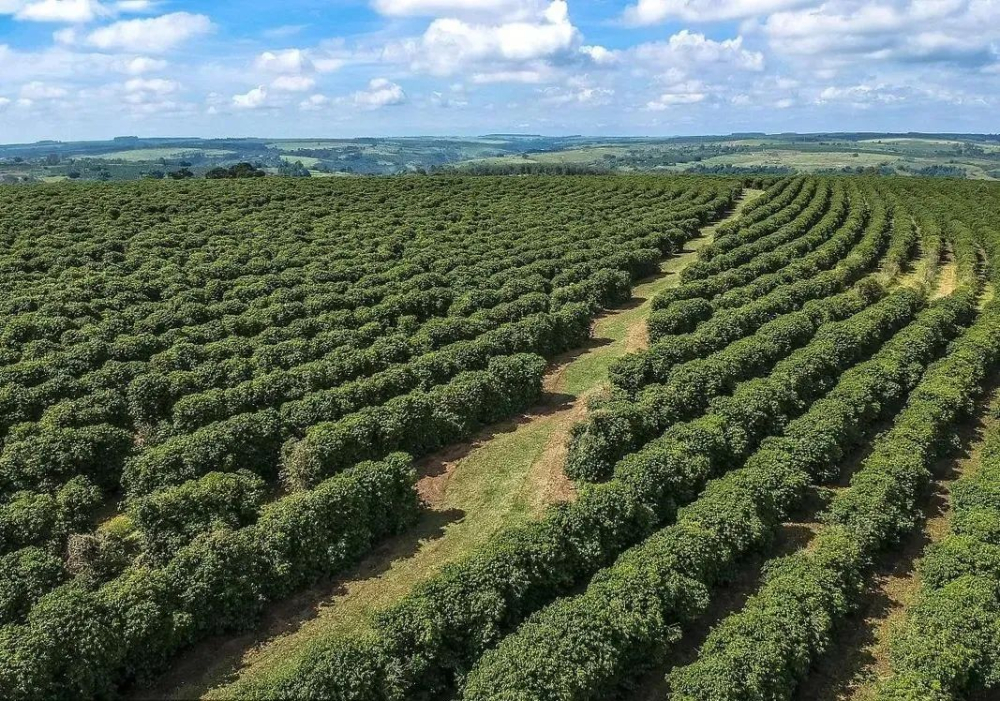
Three main soil types—sedimentary debris soil, red-yellow soil, and brown clay—carry rich organic matter and minerals with good drainage. Add abundant rainfall, fertile ground, and a web of rivers, and you have near-ideal coffee conditions.
Mogiana Region
Brazil has 26 states, and 17 of them grow coffee. Within those 17, Paraná, São Paulo, Minas Gerais, and Espírito Santo account for 80% of total production, with Minas Gerais leading at 30%. Arabica makes up 80% of Brazil's output, Robusta the other 20%. The main varieties are Bourbon, Catuai, Typica, and Mundo Novo, harvested between May and September.
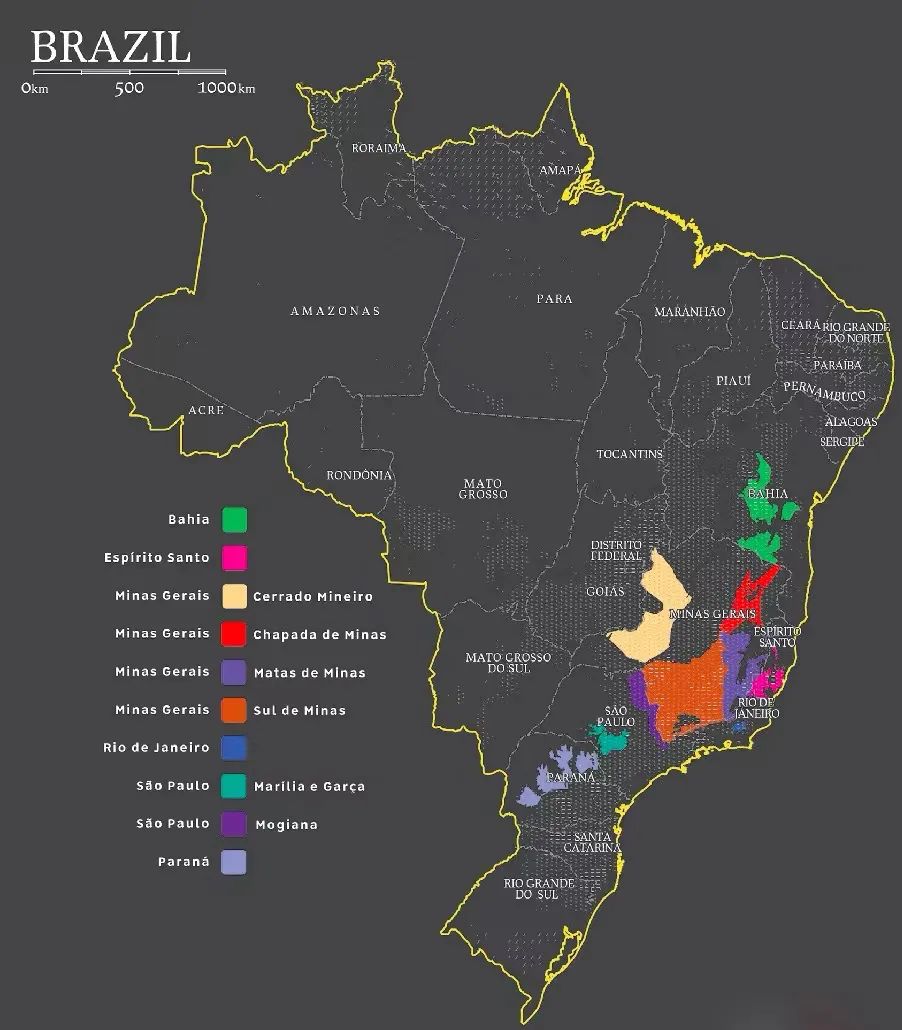
Famous sub-regions dot these states. Minas Gerais has Cerrado—FrontStreet Coffee's introductory series includes beans from there. Mogiana, in São Paulo state, is one of the higher-altitude areas and produces many of Brazil's specialty coffees. Its many farming families blend modern technology with traditional mountain cultivation culture to yield high-quality green coffee.
Yellow Bourbon
Bourbon and Typica are among the oldest coffee varieties in existence. On the tree, Bourbon is distinctive: its leaves have more closely spaced nodes, and its cherries are rounder and shorter than Typica's. Ripe cherry color varies by variety—yellow or orange (pink) among them. Bourbon beans are almost entirely round, slightly smaller than Typica, maturing later but yielding more. High-altitude Bourbon grows denser, sweeter, and brighter in acidity; and while it is an ancient variety like Typica, it resists leaf rust better.
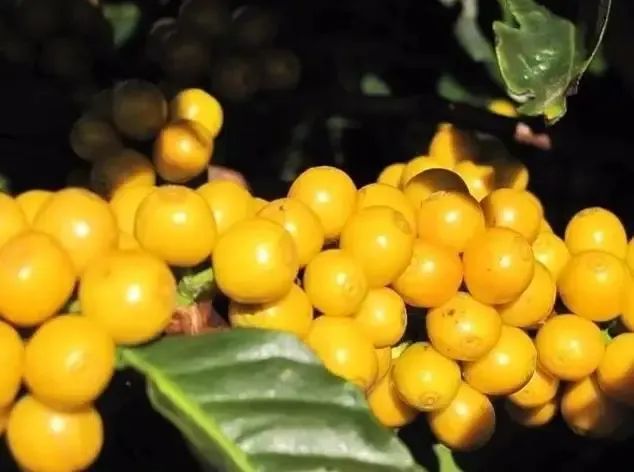
Ordinary Bourbon cherries progress from green through pale yellow and red to deep crimson—this is the Red Bourbon we know. Yellow Bourbon, however, exists exclusively in São Paulo state: its fruit never turns red, ripening instead to an orange-yellow hue, hence the name. Its yields are extremely low and it tolerates wind and rain poorly, so it was never widely planted. But Yellow Bourbon grown at high altitude packs high fructose, giving a sweet, juicy cup.
Pulped Natural Processing
Pulped natural is a processing method invented in Brazil. Natural (dry) processing was the norm, but Brazil's heavy rainfall easily ruined the two-to-three-week drying period with moldy flavors, so pulped natural was developed to shorten the process.
It is a hybrid of natural and washed processing: before drying, the skin, pulp, and part of the mucilage are removed while some mucilage is left on for the natural drying stage. This shortens drying considerably. Coffee processed this way shows higher sweetness, amplified aroma, and richer body.
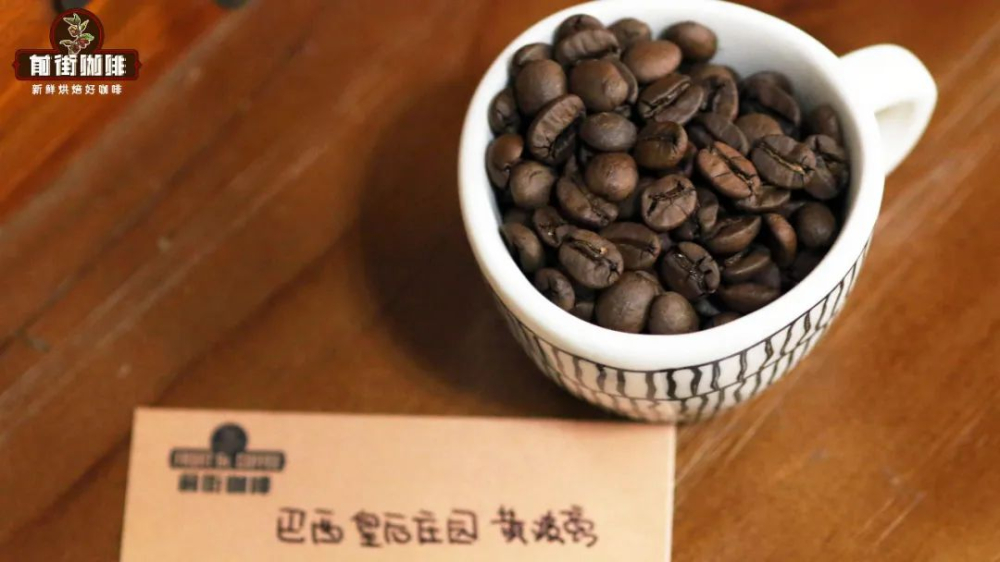
FrontStreet Coffee's Brazil Queen Estate Yellow Bourbon
FrontStreet Coffee's Brazil Queen Estate Yellow Bourbon comes from the Mogiana region, grown at 1,400–1,950 meters, of the Yellow Bourbon variety, and pulped-natural processed—offering flavors of sugarcane, black tea, nuts, and chocolate.
The fertile red volcanic soils near southern Minas Gerais feed the cherries into full, aromatic development, and the region's mix of traditional farms and modern standardized operations has lifted quality dramatically. FrontStreet Coffee brews this Queen Estate lot on a KONO dripper at a 1:15 ratio: sweet fruitiness with sugarcane, black tea, chocolate, and nuts, a subtle clean bitterness, and a smooth, delicate mouthfeel—a sugarcane clarity no other origin quite matches.
FrontStreet Coffee Recommendation
Two Ways Into Brazilian Coffee
If you want just a taste of Brazil, the FrontStreet pulped-natural Cerrado Red Bourbon is the classic gateway: medium roasted, it pours out cream, peanut, toast, caramel, and hazelnut aromas with a rounded, non-acidic body and only a whisper of bitterness—at home in pour-over, moka pot, espresso SOE, siphon, or French press. If you're ready for something rarer, the Queen Estate Yellow Bourbon—a natural mutation of Red Bourbon with cleaner fruit character—adds that signature sugarcane sweetness plus fruit and chocolate notes across pour-over, moka pot, or home espresso machine.
Brazil in Espresso Blends
Low acidity, balance, and friendly pricing have made Brazilian coffee the backbone of many espresso formulas. FrontStreet Coffee's Classic Blend (rich crema), Signature Blend (nut-forward), Black Cocoa Blend (balanced, 100% Arabica), and shop-focused Commercial Blend all contain Brazilian components—the chocolate and cream aromas, gentle sweet-sour-bitter profile, and balanced character Brazil contributes are exactly what keeps extraction stable, shot after shot.
Important Notice :
FrontStreet Coffee is a long-established specialty coffee roaster in Guangzhou China, selling freshly roasted beans from its own farm in Yunnan as well as dozens of carefully selected single-origin beans from around the world for both pour-over and espresso. The products deliver consistently excellent quality and great value, with shipping within 24 hours. Guangzhou's FrontStreet Coffee shop is recommended by many coffee lovers, and the beans are now available online at the Tmall 。
FrontStreet Coffee has moved to a new address:
FrontStreet Coffee Address: 315,Donghua East Road,GuangZhou
Tel:020 38364473
 Scan and follow the En Gafei WeChat official account. Please indicate that the reprint comes from "En Gafei".