
When to Stop Pouring Pour-Over Coffee? What is Flow Termination? Is it Related to Brewing Techniques?
Pour-Over and the "Cut-Off" Technique
There are countless ways to brew pour-over coffee. In many setups, people like to pull the dripper off the carafe the moment the timer hits a set point, and this action is usually called "cutting off." So when should you actually use it?
As the diagram below shows, the substances water draws out of coffee tend to arrive in order: sour first, then sweet, then bitter. The point of pour-over, put simply, is to extract as much of the good flavor as possible while keeping the undesirable parts to a minimum.
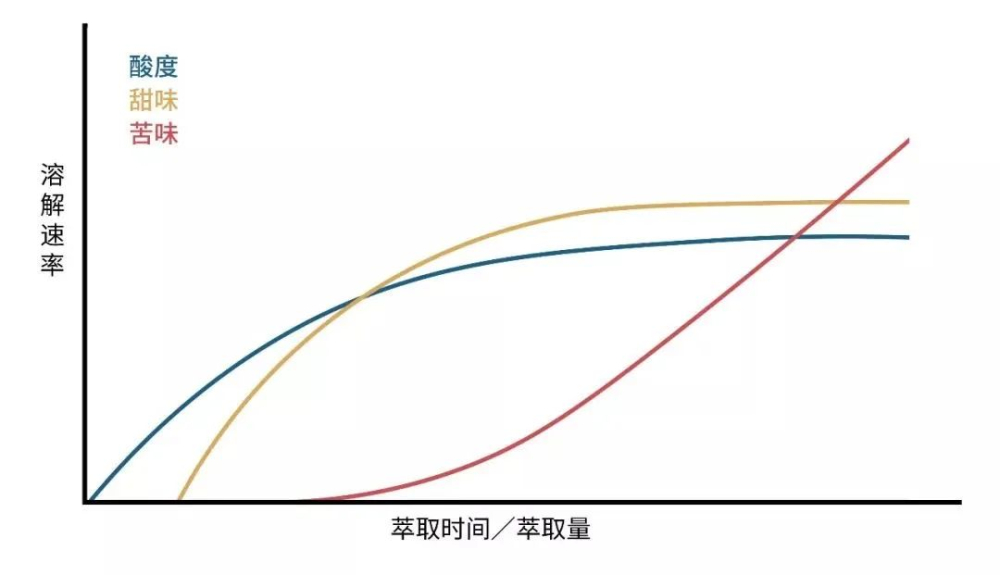
Most people dislike bitterness, so wouldn't cutting off the later, bitter part be a good thing? That is likely why some drinkers prefer the technique — to reduce bitterness and improve balance. It is also why FrontStreet Coffee recommends keeping the brew time for a given bean from running too long, since overshooting the time can push the cup into over-extraction.
That time recommendation does have some give. If the suggested pour-over time ends at 2:00, it does not mean over-extraction is guaranteed at 2:10 in real brewing. Sometimes a slightly longer time is needed for the coffee to reach its optimal profile — drip-bag coffee is a good example. The diagram above shows that compounds in coffee do not dissolve at the same rate. Because of molecular weight, small-molecule acidity is extracted first, then medium-molecule sweetness, and finally large-molecule bitterness and astringency. Only when "excess" passes the "limit" does bitterness become increasingly prominent, until it is unacceptable.
Conversely, when extraction time is too short, the result is a direct lack of body. What is body? It is the tactile sensation in the mouth — the perceived weight or fullness of the drink, a sense of richness and coating rather than a watery feel. During extraction, substances in the grounds can be soluble or insoluble. Soluble compounds show up in taste, while insoluble ones show up in mouthfeel; the former affects the coffee's cleanliness, the latter its body.
Another characteristic of body is its relatively silky mouthfeel. When body drops, the taste turns dry and astringent easily. The sensation that contributes body usually appears in the middle and late stages of extraction. Bitter compounds, tasted on their own, may seem bitter, but across the whole extraction they help build body, aftertaste, and finish. When body falls, the mouthfeel turns lighter and the finish shortens. Losing the flavor compounds from the middle and late stages easily leads to under-extraction. The original intent of cutting off is to stop extraction manually at the right moment. What many people overlook, though, is that cutting off also changes the coffee-to-water ratio. A planned 1:15 will be different after cutting off. You don't know how much water you cut, so you don't know the actual ratio of the cup you made.
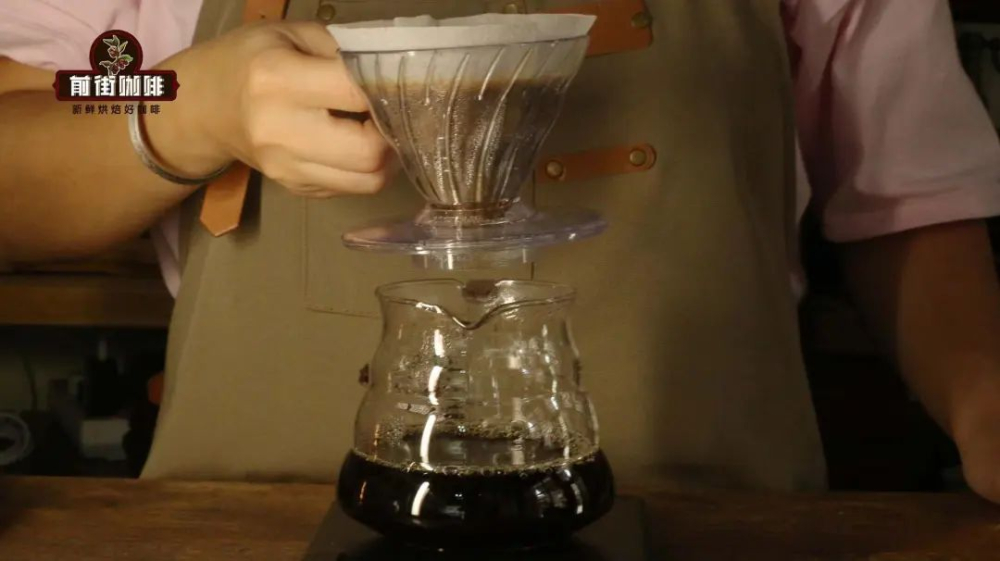
Under certain influences, pour-over brewers may chase timing precision alone and pull the dripper while a significant amount of coffee is still draining. In that case the brew ratio will inevitably differ a great deal from the intended one. The next time you try to repeat that delicious cup, the numbers won't match, and the recipe loses its reference value. Cutting off is not a tool for consistent production; it is a necessary technique for correcting brewing mistakes. Common situations that call for it include clogged filter paper, coffee ground too fine, or an inability to control the timing of the pour. During brewing, if you can tell from the flow rate and the state of the coffee bed that the recommended time has arrived, then use the cut-off as a temporary measure and adjust your pouring speed next time. If you cut off simply because the extraction time is up and there is little water left on the dripper, the impact on flavor may be smaller than you imagine. But if a lot of water remains on the dripper, the impact can be larger than expected.

Since we are chasing both the right time and the right ratio, then from the start pay attention to the grind size, keep the water flow steady, aim to finish pouring by about 1:45, and have the last drop fall into the carafe by 2:00 or a few seconds after. With a method that simple, there is no need to worry that the ratio has shifted, because it means you poured as much water as intended — and once the grounds absorb about 20 grams, everything else becomes coffee in the cup.
The view above focuses on tuning the brewing rhythm while pursuing the right time and the right ratio, with the ideal being that all the water has drained when time is up. Others believe the brewing action comes first: as long as the timing is right, or if they hold a different view of the flavors in the final stage, they adjust to the situation and cut off as needed. In that case, whether to cut off, how much to cut, and what ratio to use all come down to personal preference.
FrontStreet Coffee Recommendation
Coffee with a clear, controlled structure responds best to careful timing, and FrontStreet Ethiopia Huakui is a good bean to practice on. The natural-process Sidamo lot is full of tropical fruit and strawberry notes with low bitterness, and its sweetness shows up early enough that you can taste exactly where the middle of the extraction ends and the finish begins.
If you want to train your palate on a coffee with a more defined finish, FrontStreet Ethiopia Yirgacheffe Gudingding Cooperative is a classic choice. Washed and bright, it carries jasmine, lemon, and berry notes with a green-tea sweetness. The clean structure makes it easy to tell when the cup is balanced and when the late, drying part of the extraction has gone too far.
Important Notice :
FrontStreet Coffee is a long-established specialty coffee roaster in Guangzhou China, selling freshly roasted beans from its own farm in Yunnan as well as dozens of carefully selected single-origin beans from around the world for both pour-over and espresso. The products deliver consistently excellent quality and great value, with shipping within 24 hours. Guangzhou's FrontStreet Coffee shop is recommended by many coffee lovers, and the beans are now available online at the Tmall 。
FrontStreet Coffee has moved to a new address:
FrontStreet Coffee Address: 315,Donghua East Road,GuangZhou
Tel:020 38364473
 Scan and follow the En Gafei WeChat official account. Please indicate that the reprint comes from "En Gafei".

